

190
Land-Ocean Systems in the Siberian Arctic: Dvnamics and History
7
Laptev
Tota~ Po~ynya area 7375 at
Ice-eree water area 2631 ~
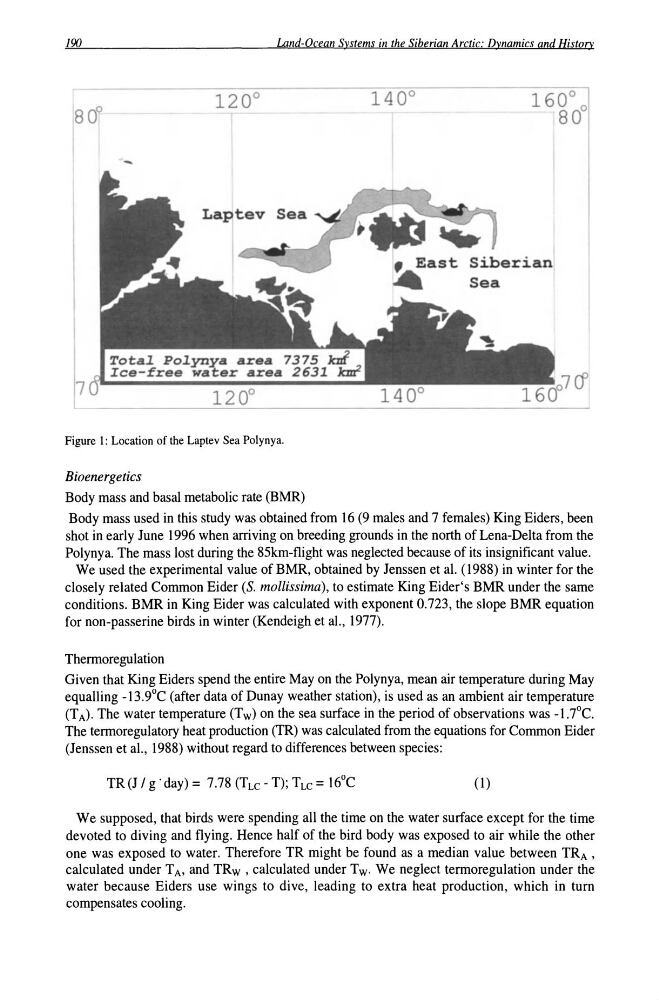
Figure 1: Location of the Laptev Sea Polynya.
Bioenergetics
Body mass and basal metabolic rate (BMR)
, East Siberian
. .
Sea
Body mass used in this study was obtained from 16 (9 males and 7 females) King Eiders, been
shot in early June 1996 when arriving on breeding grounds in the north of Lena-Delta from the
Polynya. The mass lost during the 85km-flight was neglected because of its insignificant value.
We used the experimental value of BMR, obtained by Jenssen et al. (1988) in winter for the
closely related Common Eider (S. mollissima), to estimate King Eider's BMR under the same
conditions. BMR in King Eider was calculated with exponent 0.723, the slope BMR equation
for non-passerine birds in winter (Kendeigh et aI., 1977).
Thermoregulation
Given that King Eiders spend the entire May on the Polynya, mean air temperature during May
equalling -13.9°C (after data of Dunay weather station), is used as an ambient air temperature
(TA)' The water temperature (Tw) on the sea surface in the period of observations was -1.7°C.
The termoregulatory heat production (TR) was calculated from the equations for Common Eider
(Jenssen et aI., 1988) without regard to differences between species:
TR(J I g . day) = 7.78 (TLC T); TLC = 16°C
(1)
We supposed, that birds were spending all the time on the water surface except for the time
devoted to diving and flying. Hence half of the bird body was exposed to air while the other
one was exposed to water. Therefore TR might be found as a median value between TRA ,
calculated under TA, and TRw, calculated under Tw. We neglect termoregulation under the
water because Eiders use wings to dive, leading to extra heat production, which in turn
compensates cooling.
Land-Ocean Systems in the Siberian Arctic: Dvnamics and History
7
Laptev
Tota~ Po~ynya area 7375 at
Ice-eree water area 2631 ~
Figure 1: Location of the Laptev Sea Polynya.
Bioenergetics
Body mass and basal metabolic rate (BMR)
, East Siberian
. .
Sea
Body mass used in this study was obtained from 16 (9 males and 7 females) King Eiders, been
shot in early June 1996 when arriving on breeding grounds in the north of Lena-Delta from the
Polynya. The mass lost during the 85km-flight was neglected because of its insignificant value.
We used the experimental value of BMR, obtained by Jenssen et al. (1988) in winter for the
closely related Common Eider (S. mollissima), to estimate King Eider's BMR under the same
conditions. BMR in King Eider was calculated with exponent 0.723, the slope BMR equation
for non-passerine birds in winter (Kendeigh et aI., 1977).
Thermoregulation
Given that King Eiders spend the entire May on the Polynya, mean air temperature during May
equalling -13.9°C (after data of Dunay weather station), is used as an ambient air temperature
(TA)' The water temperature (Tw) on the sea surface in the period of observations was -1.7°C.
The termoregulatory heat production (TR) was calculated from the equations for Common Eider
(Jenssen et aI., 1988) without regard to differences between species:
TR(J I g . day) = 7.78 (TLC T); TLC = 16°C
(1)
We supposed, that birds were spending all the time on the water surface except for the time
devoted to diving and flying. Hence half of the bird body was exposed to air while the other
one was exposed to water. Therefore TR might be found as a median value between TRA ,
calculated under TA, and TRw, calculated under Tw. We neglect termoregulation under the
water because Eiders use wings to dive, leading to extra heat production, which in turn
compensates cooling.