

V. luterzenkn and Knickmeier: Chlorophyll a Distribution in Water Column and Sea Ice
157
length varied considerably, close relations to at least the sediment load can be seen (Figure 4).
The vertical distribution of algal pigments within ice cores 29101 and 294 04 showed high
concentrations of algal pigments (ChI a and phaeopigments) in sediment-Ioaden layers of "dirty
ice" ( 2.3 mg m- 2 , 3.85 mg m- 2 ) whereas the amount of phaeopigments varied (Figure 4a, b).
At location 294 06 the pigment maximum was measured in the bottom layer (0 -2 cm) of a
"clean" core (Figure 4b).
30
0 outlier
boxes include
25
50% of all values
20
~
"'e
OJ)
.5
15
0
'"
is
10
0
5
0
0
surface
water
water
(n=\O)
(n=ll)
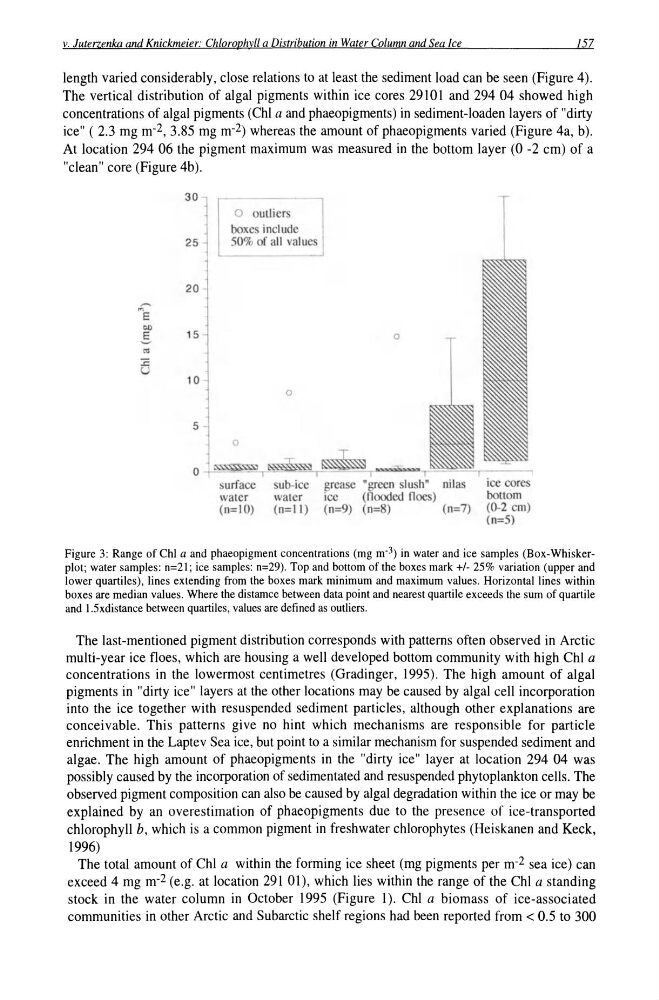
Figure 3: Range of Chi a and phaeopigment concentrations (mg m- 3 ) in water and ice samples (Box-Whiskerplot; water samples: n=21; ice samples: n=29). Top and bottom of the boxes mark +/- 25% variation (upper and
lower quartiles), lines extending from the boxes mark minimum and maximum values. Horizontal lines within
boxes are median values. Where the distamce between data point and nearest quartile exceeds the sum of quartile
and 1.5xdistance between quartiles, values are defined as outliers.
The last-mentioned pigment distribution corresponds with patterns often observed in Arctic
multi-year ice floes, which are housing a well developed bottom community with high ChI a
concentrations in the lowermost centimetres (Gradinger, 1995). The high amount of algal
pigments in "dirty ice" layers at the other locations may be caused by algal cell incorporation
into the ice together with resuspended sediment particles, although other explanations are
conceivable. This patterns give no hint which mechanisms are responsible for particle
enrichment in the Laptev Sea ice, but point to a similar mechanism for suspended sediment and
algae. The high amount of phaeopigments in the "dirty ice" layer at location 294 04 was
possibly caused by the incorporation of sedimentated and resuspended phytoplankton cells. The
observed pigment composition can also be caused by algal degradation within the ice or may be
explained by an overestimation of phaeopigments due to the presence of ice-transported
chlorophyll b, which is a common pigment in freshwater chlorophytes (Heiskanen and Keck,
1996)
The total amount of ChI a within the forming ice sheet (mg pigments per m- 2 sea ice) can
exceed 4 mg m- 2 (e.g. at location 291 01), which lies within the range of the ChI a standing
stock in the water column in October 1995 (Figure 1). ChI a biomass of ice-associated
communities in other Arctic and Subarctic shelf regions had been reported from < 0.5 to 300
157
length varied considerably, close relations to at least the sediment load can be seen (Figure 4).
The vertical distribution of algal pigments within ice cores 29101 and 294 04 showed high
concentrations of algal pigments (ChI a and phaeopigments) in sediment-Ioaden layers of "dirty
ice" ( 2.3 mg m- 2 , 3.85 mg m- 2 ) whereas the amount of phaeopigments varied (Figure 4a, b).
At location 294 06 the pigment maximum was measured in the bottom layer (0 -2 cm) of a
"clean" core (Figure 4b).
30
0 outlier
boxes include
25
50% of all values
20
~
"'e
OJ)
.5
15
0
'"
is
10
0
5
0
0
surface
water
water
(n=\O)
(n=ll)
Figure 3: Range of Chi a and phaeopigment concentrations (mg m- 3 ) in water and ice samples (Box-Whiskerplot; water samples: n=21; ice samples: n=29). Top and bottom of the boxes mark +/- 25% variation (upper and
lower quartiles), lines extending from the boxes mark minimum and maximum values. Horizontal lines within
boxes are median values. Where the distamce between data point and nearest quartile exceeds the sum of quartile
and 1.5xdistance between quartiles, values are defined as outliers.
The last-mentioned pigment distribution corresponds with patterns often observed in Arctic
multi-year ice floes, which are housing a well developed bottom community with high ChI a
concentrations in the lowermost centimetres (Gradinger, 1995). The high amount of algal
pigments in "dirty ice" layers at the other locations may be caused by algal cell incorporation
into the ice together with resuspended sediment particles, although other explanations are
conceivable. This patterns give no hint which mechanisms are responsible for particle
enrichment in the Laptev Sea ice, but point to a similar mechanism for suspended sediment and
algae. The high amount of phaeopigments in the "dirty ice" layer at location 294 04 was
possibly caused by the incorporation of sedimentated and resuspended phytoplankton cells. The
observed pigment composition can also be caused by algal degradation within the ice or may be
explained by an overestimation of phaeopigments due to the presence of ice-transported
chlorophyll b, which is a common pigment in freshwater chlorophytes (Heiskanen and Keck,
1996)
The total amount of ChI a within the forming ice sheet (mg pigments per m- 2 sea ice) can
exceed 4 mg m- 2 (e.g. at location 291 01), which lies within the range of the ChI a standing
stock in the water column in October 1995 (Figure 1). ChI a biomass of ice-associated
communities in other Arctic and Subarctic shelf regions had been reported from < 0.5 to 300