

Zatsepin et al.: SteD-Like Vertical Structure Fonnation Due to Turbulent Mixing
95
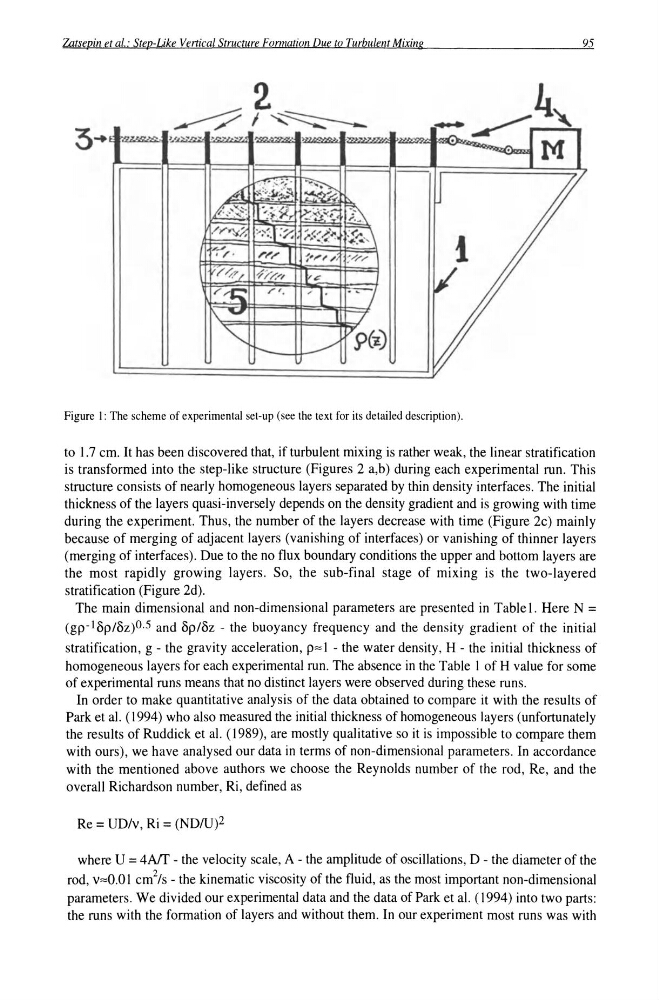
Figure 1: The scheme of experimental set-up (see the text for its detailed description).
to 1.7 cm. It has been discovered that, if turbulent mixing is rather weak, the linear stratification
is transformed into the step-like structure (Figures 2 a,b) during each experimental run. This
structure consists of nearly homogeneous layers separated by thin density interfaces. The initial
thickness of the layers quasi-inversely depends on the density gradient and is growing with time
during the experiment. Thus, the number of the layers decrease with time (Figure 2c) mainly
because of merging of adjacent layers (vanishing of interfaces) or vanishing of thinner layers
(merging of interfaces). Due to the no flux boundary conditions the upper and bottom layers are
the most rapidly growing layers. So, the sub-final stage of mixing is the two-layered
stratification (Figure 2d).
The main dimensional and non-dimensional parameters are presented in Table 1. Here N =
(gp- 1 0p/Oz)O.5 and op/oz - the buoyancy frequency and the density gradient of the initial
stratification, g - the gravity acceleration, p'" 1 - the water density, H - the initial thickness of
homogeneous layers for each experimental run. The absence in the Table I of H value for some
of experimental runs means that no distinct layers were observed during these runs.
In order to make quantitative analysis of the data obtained to compare it with the results of
Park et al. (1994) who also measured the initial thickness of homogeneous layers (unfortunately
the results of Ruddick et al. (1989), are mostly qualitative so it is impossible to compare them
with ours), we have analysed our data in terms of non-dimensional parameters. In accordance
with the mentioned above authors we choose the Reynolds number of the rod, Re, and the
overall Richardson number, Ri, defined as
Re = UD/v, Ri = (ND/U)2
where U = 4AIT - the velocity scale, A - the amplitude of oscillations, D - the diameter of the
rod, v",O.O 1 cm 2 /s - the kinematic viscosity of the fluid, as the most important non-dimensional
parameters. We divided our experimental data and the data of Park et al. (1994) into two parts:
the runs with the formation of layers and without them. In our experiment most runs was with
95
Figure 1: The scheme of experimental set-up (see the text for its detailed description).
to 1.7 cm. It has been discovered that, if turbulent mixing is rather weak, the linear stratification
is transformed into the step-like structure (Figures 2 a,b) during each experimental run. This
structure consists of nearly homogeneous layers separated by thin density interfaces. The initial
thickness of the layers quasi-inversely depends on the density gradient and is growing with time
during the experiment. Thus, the number of the layers decrease with time (Figure 2c) mainly
because of merging of adjacent layers (vanishing of interfaces) or vanishing of thinner layers
(merging of interfaces). Due to the no flux boundary conditions the upper and bottom layers are
the most rapidly growing layers. So, the sub-final stage of mixing is the two-layered
stratification (Figure 2d).
The main dimensional and non-dimensional parameters are presented in Table 1. Here N =
(gp- 1 0p/Oz)O.5 and op/oz - the buoyancy frequency and the density gradient of the initial
stratification, g - the gravity acceleration, p'" 1 - the water density, H - the initial thickness of
homogeneous layers for each experimental run. The absence in the Table I of H value for some
of experimental runs means that no distinct layers were observed during these runs.
In order to make quantitative analysis of the data obtained to compare it with the results of
Park et al. (1994) who also measured the initial thickness of homogeneous layers (unfortunately
the results of Ruddick et al. (1989), are mostly qualitative so it is impossible to compare them
with ours), we have analysed our data in terms of non-dimensional parameters. In accordance
with the mentioned above authors we choose the Reynolds number of the rod, Re, and the
overall Richardson number, Ri, defined as
Re = UD/v, Ri = (ND/U)2
where U = 4AIT - the velocity scale, A - the amplitude of oscillations, D - the diameter of the
rod, v",O.O 1 cm 2 /s - the kinematic viscosity of the fluid, as the most important non-dimensional
parameters. We divided our experimental data and the data of Park et al. (1994) into two parts:
the runs with the formation of layers and without them. In our experiment most runs was with