

spreading over subduction zones has been a nursery for
a number of ophiolites. These supra-subduction zone
(SSZ) ophiolites are opposed to mid-oceanic ridge
(MOR) ophiolites.
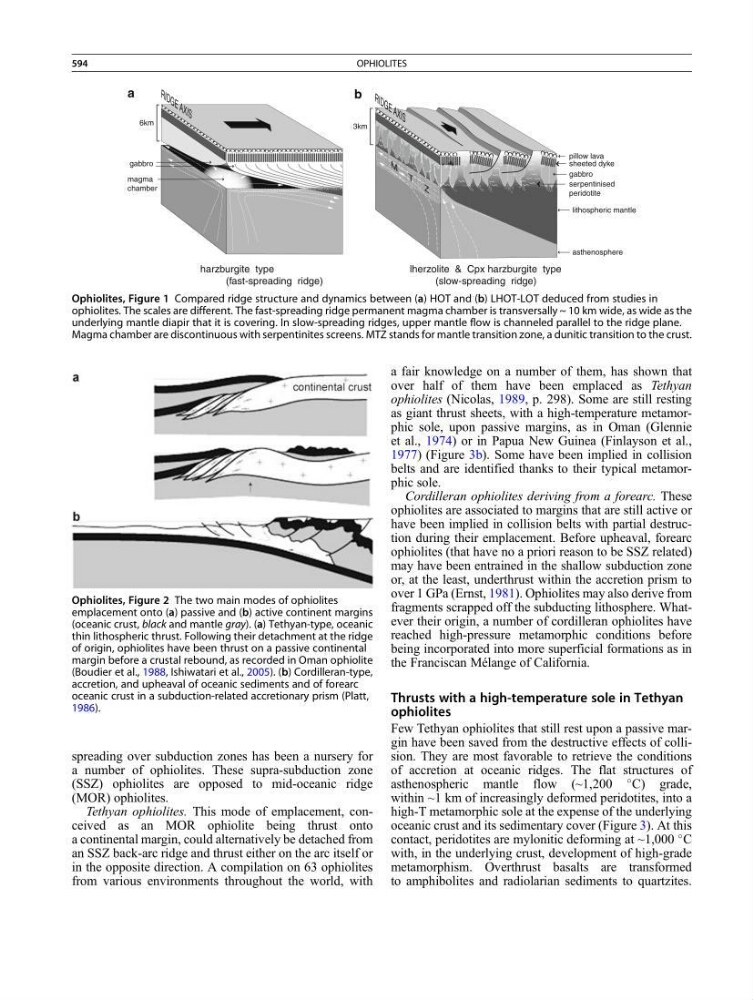
Tethyan ophiolites. This mode of emplacement, conceived as an MOR ophiolite being thrust onto
a continental margin, could alternatively be detached from
an SSZ back-arc ridge and thrust either on the arc itself or
in the opposite direction. A compilation on 63 ophiolites
from various environments throughout the world, with
a fair knowledge on a number of them, has shown that
over half of them have been emplaced as Tethyan
ophiolites (Nicolas, 1989, p. 298). Some are still resting
as giant thrust sheets, with a high-temperature metamorphic sole, upon passive margins, as in Oman (Glennie
et al., 1974) or in Papua New Guinea (Finlayson et al.,
1977) (Figure 3b). Some have been implied in collision
belts and are identified thanks to their typical metamorphic sole.
Cordilleran ophiolites deriving from a forearc. These
ophiolites are associated to margins that are still active or
have been implied in collision belts with partial destruction during their emplacement. Before upheaval, forearc
ophiolites (that have no a priori reason to be SSZ related)
may have been entrained in the shallow subduction zone
or, at the least, underthrust within the accretion prism to
over 1 GPa (Ernst, 1981). Ophiolites may also derive from
fragments scrapped off the subducting lithosphere. Whatever their origin, a number of cordilleran ophiolites have
reached high-pressure metamorphic conditions before
being incorporated into more superficial formations as in
the Franciscan Mélange of California.
Thrusts with a high-temperature sole in Tethyan
ophiolites
Few Tethyan ophiolites that still rest upon a passive margin have been saved from the destructive effects of collision. They are most favorable to retrieve the conditions
of accretion at oceanic ridges. The flat structures of
asthenospheric mantle flow (~1,200
C) grade,
within ~1 km of increasingly deformed peridotites, into a
high-T metamorphic sole at the expense of the underlying
oceanic crust and its sedimentary cover (Figure 3). At this
contact, peridotites are mylonitic deforming at ~1,000
C
with, in the underlying crust, development of high-grade
metamorphism. Overthrust basalts are transformed
to amphibolites and radiolarian sediments to quartzites.
lherzolite & Cpx harzburgite type
(slow-spreading ridge)
harzburgite type
(fast-spreading ridge)
a
b
. .
.
. . .
.. . .
. .
.
. . . . .
. . . .
. . . . .. .
. .
. .
. . . . .
. . . .. . .
..
. . . . .
.
. . .
. . .
.
.
.
.
.
.
..
.
. .. . . . .
.
. .
. .
.
.
. . . .
. . .
.
.
. .
..
.
. .
. . . . . . . . . .
. .
.
... . . .. .
.
. .. . ... . .
. .
.. . . .
.
. . . .
.
.. .
.
. .. . ... . .
. .
.. . . .
.. .
.
. .. . .. . .
. .
.. . .
.
. . . .
. .
.
. .
. .
.
... . . .. .
.
. .. .. . .
. .
.. . .
.
. . . .
. .
.. .
.
. .. .. . .
. .
.. . .
.. .
.
. .. .. . .
. .
.. . .
.
. . . .
. .
.
. .
.
.
.. . . .. .
.
. .. .. . .
. .
.. . .
.
. . . .
. .
.. .
.
. .. .. . .
. .
.. . .
.. .
.
. .. .. . .
. .
.. . .
.
. . . .
. .
.
. .
. .
.. .
. .. . .
. .
..
.. .
.
.. . ... . .
. .
. . . .
. . .. .
. .
.
.. . .. .
. .. .
. .
.
. . .
.. . . .
.
.
.. .
.
. . .
. . .
.
. . .
. . . . .
.
.
.. .
.
.
.
. . .
.
. .
.
. . .
. . . . .
.
.
.. .
.
. . .
. . .
.
. . .
. . . . . . .
.
.
.. .
.
.
.
. . . .
.
.
. . . .
. . .
. .
.
. . .
. . . . .
.
.
.. .
.
.
.
. . . .
. . . .
.
. . .
.. . . .
.
.
.. .
.
. . .
. . .
.
. . . .
.
. .. . . . . .
.
. .
.. .
.
.
.
. . .
.
. .... . . . .
. . . .
.. .
.
. .. . . . . .... . .
. .
. . . . . .
. . .. .
. . . . .
.. . . .
. . .
.. .
. . .
... . .... . .
. .
.
. .. .
. . . . . . . . . . . .
. . .. .
. . .
. ... . .
. . . .
. .
.
.
.
. .
.. .
.
. .. . . ... . .
. .
. .
. . . ...
.
. . .. .
. . . . .
.. . . .
. .
.. ... . .
. .
. .. .
.. .
. . . .
.. . .
.. .
. . .
... .
.... . .
. .
.
. .. .
. . . . . . . . . .
.
. . .. .
. . .
. .... . . . .
. . . .
. . .. .
.
. . .. . . ... . .
. .
.. . . .
. .
... . .
. .
. . .
.. . . .
.. .
. .
.. .
.
. .. . . . .... . .
. .
. . . . .
. . .
. . .. .
. . . . .
.. . . .
. . .
.. .
. .. . .
. .
. .
. . .
... . . .. .
. . .
. ..
. . . .
.. .. . . . ... . .
. .
.. .
. .. . . .
. . . . . . . . . .
.
. . . .
. . .
. .. .
.
.. .
. . . .
.. . .
.. .
. . .
... . .... . .
. .
.
. .. .
. . . . . . . . . . . .
. . .. .
. . .
. ... . .
. . . .
. .
.. . ... . . .. .
.
. . .. . . ... . .
. .
.. .
. . . ...
.
. . . . .
.
. .
.
... . .
. . .. .
.
. . .. . ... . .
. .
. .
.. .
. ...
.
. . . . . .
. . . .
.
.. .
. .
.. .
.
. .. . . ... . .
. .
. .
. . . ...
.
. . .. .
. . . . .
.. . . .
. .
.. .
.. .
.. .. . . .
. . . .
.. . .
. .
... .
. .. . . .
.. .
. . .
..
. .
... . .. . .
. .
.. . .. .
. . . . . . . . . .
.
. . . .
. .
.
.. . .
.
... . . .. .
. . .
. .. .
. . . .
.. .. . ... . .
. .
.. .
. .. . . .
. . . . . . . . . .
.
. . . .
. . . .. .
.
.
.. . .
.. .
. . .
... . .... . .
. .
.
. .. .
. . . . . . . . . . .
. . .. .
. .
.
..
.
. . .
.. . . .. .
. .
. . .
. . .
. . .
. .
. . ..
. .
.
.
. .
.
. .
.
.
.
.
. . . . . .. . . .
. . . . . . . .
.. .
.. . .. . . .
. . . . .
. .. .
.
. . . .
.. . . .
.. .
. . . .. . .
. . .
. . .
. . .
. ..
..
.
. .
. .. . .
. . .
. . . .
. .
. . . .. . .
. . .
.
. . .
. . .. .
. . . . . .
.
. .
. . .
.
.
.
.
. . .
. . .. . . .
.
. . .
. . .
. .. . . .
.
. .
.
. . .
. .
.
. . . . . .
. . .
. . . .
. .
. .
.
. . .
. . .
. . . .
.
. .
.
6km
3km
R ID G E A X IS
R ID G E A X IS
pillow lava
sheeted dyke
lithospheric mantle
asthenosphere
serpentinised
peridotite
gabbro
gabbro
magma
chamber
M
T
Z
Ophiolites, Figure 1 Compared ridge structure and dynamics between (a) HOT and (b) LHOT-LOT deduced from studies in
ophiolites. The scales are different. The fast-spreading ridge permanent magma chamber is transversally ~ 10 km wide, as wide as the
underlying mantle diapir that it is covering. In slow-spreading ridges, upper mantle flow is channeled parallel to the ridge plane.
Magma chamber are discontinuous with serpentinites screens. MTZ stands for mantle transition zone, a dunitic transition to the crust.
Ophiolites, Figure 2 The two main modes of ophiolites
emplacement onto (a) passive and (b) active continent margins
(oceanic crust, black and mantle gray). (a) Tethyan-type, oceanic
thin lithospheric thrust. Following their detachment at the ridge
of origin, ophiolites have been thrust on a passive continental
margin before a crustal rebound, as recorded in Oman ophiolite
(Boudier et al., 1988, Ishiwatari et al., 2005). (b) Cordilleran-type,
accretion, and upheaval of oceanic sediments and of forearc
oceanic crust in a subduction-related accretionary prism (Platt,
1986).
594
OPHIOLITES