

attenuated continental crust shoulders. Nowadays, this
Red Sea rift expands northwards in a continental lithosphere, being fed by a hot spot located in the Southern
Red Sea, at the triple junction with Aden Gulf and the Afar
continental rift. The hot spot volcanic activity is 30 Ma old
(Jones, 1976). In the Southern Red Sea, rifting is more
complex with asymmetrical features (Buck et al., 1988;
Coleman and McGuire, 1988; Dixon et al., 1989).
In the Northern Red Sea, a first episode of failed rifting
opened small, elongated basins during Miocene, 23 Myr
ago (Cochran and Martinez, 1984). Such an early episode
of rifting is also recorded in powerful injections of N-S
diabase dikes and intrusions (Coleman and McGuire,
1988; Baldridge et al., 1991). Narrow basins, locally
opening within the attenuated continental margin of the
Red Sea, anticipate the subsequent and successful Red
Sea northwards rifting. One of those basins opened in
the western margin of the Red Sea is now the Zabargad
Island standing over a large gravity high. It displays a peridotite massif, a piece of former and melting asthenosphere
that intruded and heated the lower continental crust. It was
accompanied by copious diabase diking, parallel to dikes
in the Northern Red Sea, with an early age (Sebai et al.,
1991). The peridotite massif is a pristine and fertile plagioclase lherzolite, hardly molten during its ascent (Styles
and Gerdes, 1983; Bonatti and Seyler, 1987; Nicolas
et al., 1994).
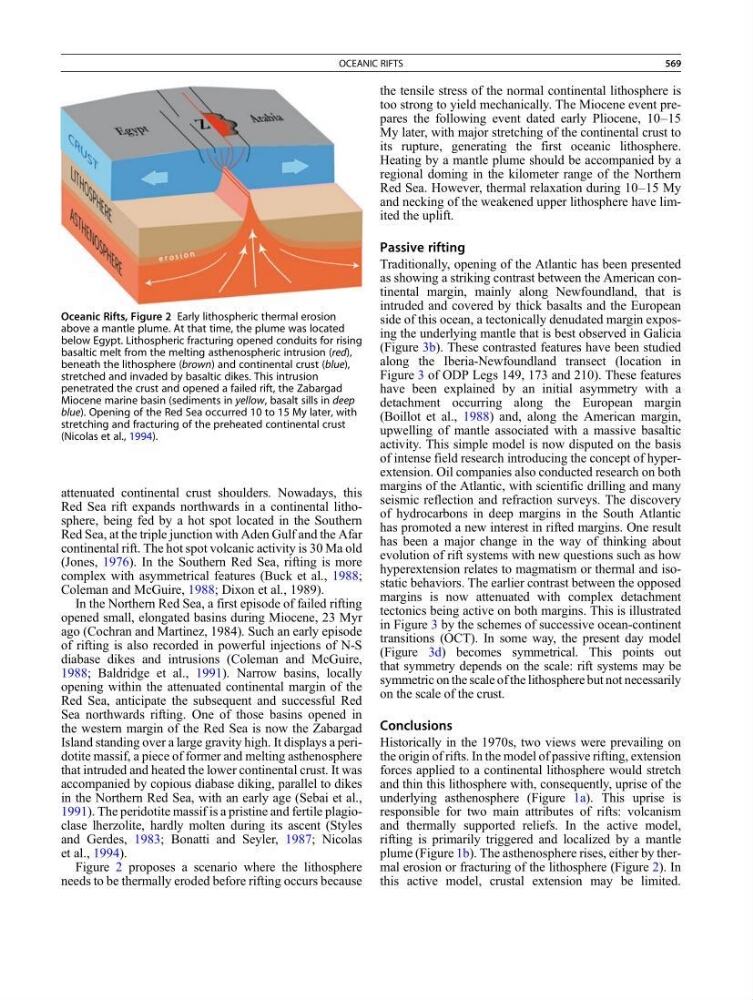
Figure 2 proposes a scenario where the lithosphere
needs to be thermally eroded before rifting occurs because
the tensile stress of the normal continental lithosphere is
too strong to yield mechanically. The Miocene event prepares the following event dated early Pliocene, 10–15
My later, with major stretching of the continental crust to
its rupture, generating the first oceanic lithosphere.
Heating by a mantle plume should be accompanied by a
regional doming in the kilometer range of the Northern
Red Sea. However, thermal relaxation during 10–15 My
and necking of the weakened upper lithosphere have limited the uplift.
Passive rifting
Traditionally, opening of the Atlantic has been presented
as showing a striking contrast between the American continental margin, mainly along Newfoundland, that is
intruded and covered by thick basalts and the European
side of this ocean, a tectonically denudated margin exposing the underlying mantle that is best observed in Galicia
(Figure 3b). These contrasted features have been studied
along the Iberia-Newfoundland transect (location in
Figure 3 of ODP Legs 149, 173 and 210). These features
have been explained by an initial asymmetry with a
detachment occurring along the European margin
(Boillot et al., 1988) and, along the American margin,
upwelling of mantle associated with a massive basaltic
activity. This simple model is now disputed on the basis
of intense field research introducing the concept of hyperextension. Oil companies also conducted research on both
margins of the Atlantic, with scientific drilling and many
seismic reflection and refraction surveys. The discovery
of hydrocarbons in deep margins in the South Atlantic
has promoted a new interest in rifted margins. One result
has been a major change in the way of thinking about
evolution of rift systems with new questions such as how
hyperextension relates to magmatism or thermal and isostatic behaviors. The earlier contrast between the opposed
margins is now attenuated with complex detachment
tectonics being active on both margins. This is illustrated
in Figure 3 by the schemes of successive ocean-continent
transitions (OCT). In some way, the present day model
(Figure 3d) becomes symmetrical. This points out
that symmetry depends on the scale: rift systems may be
symmetric on the scale of the lithosphere but not necessarily
on the scale of the crust.
Conclusions
Historically in the 1970s, two views were prevailing on
the origin of rifts. In the model of passive rifting, extension
forces applied to a continental lithosphere would stretch
and thin this lithosphere with, consequently, uprise of the
underlying asthenosphere (Figure 1a). This uprise is
responsible for two main attributes of rifts: volcanism
and thermally supported reliefs. In the active model,
rifting is primarily triggered and localized by a mantle
plume (Figure 1b). The asthenosphere rises, either by thermal erosion or fracturing of the lithosphere (Figure 2). In
this active model, crustal extension may be limited.
Oceanic Rifts, Figure 2 Early lithospheric thermal erosion
above a mantle plume. At that time, the plume was located
below Egypt. Lithospheric fracturing opened conduits for rising
basaltic melt from the melting asthenospheric intrusion (red),
beneath the lithosphere (brown) and continental crust (blue),
stretched and invaded by basaltic dikes. This intrusion
penetrated the crust and opened a failed rift, the Zabargad
Miocene marine basin (sediments in yellow, basalt sills in deep
blue). Opening of the Red Sea occurred 10 to 15 My later, with
stretching and fracturing of the preheated continental crust
(Nicolas et al., 1994).
OCEANIC RIFTS
569