

temperatures seep through cracks in the seafloor. The
metals discharged and minerals formed by the vent fluids
are important for the formation of potentially valuable ore
deposits at the seafloor and contribute to the chemical
composition of the ocean. The reduced gases in the fluids
also nurture rich specially adapted hydrothermal ecosystems that are based on chemosynthetic primary production
(i.e., by gaining energy and chemical components directly
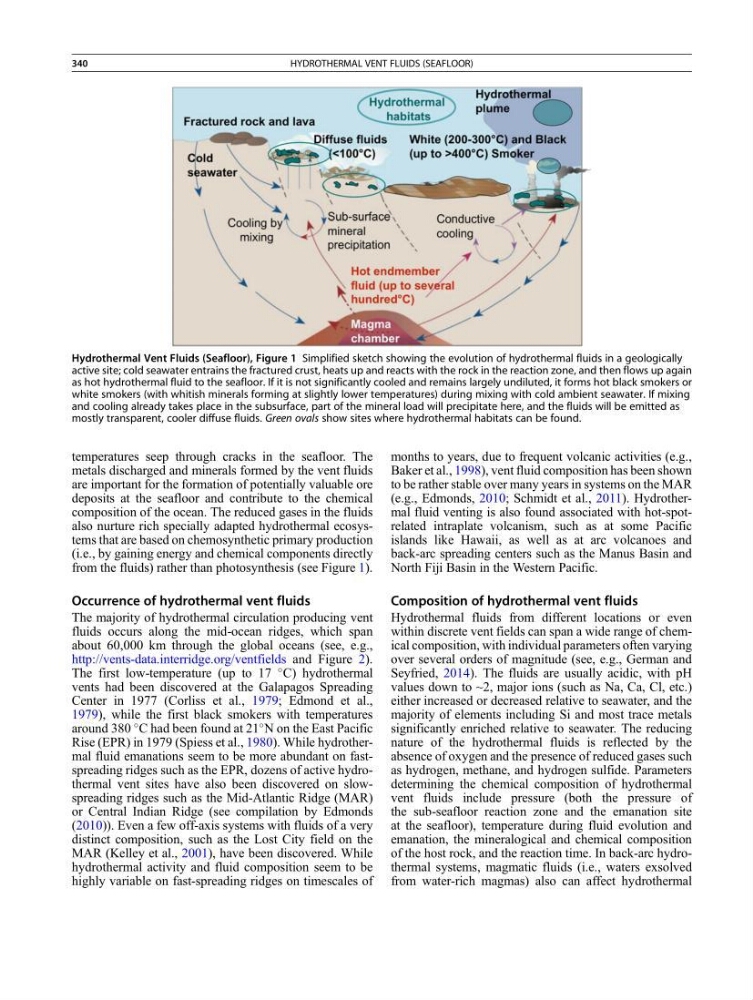
from the fluids) rather than photosynthesis (see Figure 1).
Occurrence of hydrothermal vent fluids
The majority of hydrothermal circulation producing vent
fluids occurs along the mid-ocean ridges, which span
about 60,000 km through the global oceans (see, e.g.,
http://vents-data.interridge.org/ventfields and Figure 2).
The first low-temperature (up to 17
C) hydrothermal
vents had been discovered at the Galapagos Spreading
Center in 1977 (Corliss et al., 1979; Edmond et al.,
1979), while the first black smokers with temperatures
around 380
C had been found at 21
N on the East Pacific
Rise (EPR) in 1979 (Spiess et al., 1980). While hydrothermal fluid emanations seem to be more abundant on fastspreading ridges such as the EPR, dozens of active hydrothermal vent sites have also been discovered on slowspreading ridges such as the Mid-Atlantic Ridge (MAR)
or Central Indian Ridge (see compilation by Edmonds
(2010)). Even a few off-axis systems with fluids of a very
distinct composition, such as the Lost City field on the
MAR (Kelley et al., 2001), have been discovered. While
hydrothermal activity and fluid composition seem to be
highly variable on fast-spreading ridges on timescales of
months to years, due to frequent volcanic activities (e.g.,
Baker et al., 1998), vent fluid composition has been shown
to be rather stable over many years in systems on the MAR
(e.g., Edmonds, 2010; Schmidt et al., 2011). Hydrothermal fluid venting is also found associated with hot-spotrelated intraplate volcanism, such as at some Pacific
islands like Hawaii, as well as at arc volcanoes and
back-arc spreading centers such as the Manus Basin and
North Fiji Basin in the Western Pacific.
Composition of hydrothermal vent fluids
Hydrothermal fluids from different locations or even
within discrete vent fields can span a wide range of chemical composition, with individual parameters often varying
over several orders of magnitude (see, e.g., German and
Seyfried, 2014). The fluids are usually acidic, with pH
values down to ~2, major ions (such as Na, Ca, Cl, etc.)
either increased or decreased relative to seawater, and the
majority of elements including Si and most trace metals
significantly enriched relative to seawater. The reducing
nature of the hydrothermal fluids is reflected by the
absence of oxygen and the presence of reduced gases such
as hydrogen, methane, and hydrogen sulfide. Parameters
determining the chemical composition of hydrothermal
vent fluids include pressure (both the pressure of
the sub-seafloor reaction zone and the emanation site
at the seafloor), temperature during fluid evolution and
emanation, the mineralogical and chemical composition
of the host rock, and the reaction time. In back-arc hydrothermal systems, magmatic fluids (i.e., waters exsolved
from water-rich magmas) also can affect hydrothermal
Hydrothermal Vent Fluids (Seafloor), Figure 1 Simplified sketch showing the evolution of hydrothermal fluids in a geologically
active site; cold seawater entrains the fractured crust, heats up and reacts with the rock in the reaction zone, and then flows up again
as hot hydrothermal fluid to the seafloor. If it is not significantly cooled and remains largely undiluted, it forms hot black smokers or
white smokers (with whitish minerals forming at slightly lower temperatures) during mixing with cold ambient seawater. If mixing
and cooling already takes place in the subsurface, part of the mineral load will precipitate here, and the fluids will be emitted as
mostly transparent, cooler diffuse fluids. Green ovals show sites where hydrothermal habitats can be found.
340
HYDROTHERMAL VENT FLUIDS (SEAFLOOR)
metals discharged and minerals formed by the vent fluids
are important for the formation of potentially valuable ore
deposits at the seafloor and contribute to the chemical
composition of the ocean. The reduced gases in the fluids
also nurture rich specially adapted hydrothermal ecosystems that are based on chemosynthetic primary production
(i.e., by gaining energy and chemical components directly
from the fluids) rather than photosynthesis (see Figure 1).
Occurrence of hydrothermal vent fluids
The majority of hydrothermal circulation producing vent
fluids occurs along the mid-ocean ridges, which span
about 60,000 km through the global oceans (see, e.g.,
http://vents-data.interridge.org/ventfields and Figure 2).
The first low-temperature (up to 17
C) hydrothermal
vents had been discovered at the Galapagos Spreading
Center in 1977 (Corliss et al., 1979; Edmond et al.,
1979), while the first black smokers with temperatures
around 380
C had been found at 21
N on the East Pacific
Rise (EPR) in 1979 (Spiess et al., 1980). While hydrothermal fluid emanations seem to be more abundant on fastspreading ridges such as the EPR, dozens of active hydrothermal vent sites have also been discovered on slowspreading ridges such as the Mid-Atlantic Ridge (MAR)
or Central Indian Ridge (see compilation by Edmonds
(2010)). Even a few off-axis systems with fluids of a very
distinct composition, such as the Lost City field on the
MAR (Kelley et al., 2001), have been discovered. While
hydrothermal activity and fluid composition seem to be
highly variable on fast-spreading ridges on timescales of
months to years, due to frequent volcanic activities (e.g.,
Baker et al., 1998), vent fluid composition has been shown
to be rather stable over many years in systems on the MAR
(e.g., Edmonds, 2010; Schmidt et al., 2011). Hydrothermal fluid venting is also found associated with hot-spotrelated intraplate volcanism, such as at some Pacific
islands like Hawaii, as well as at arc volcanoes and
back-arc spreading centers such as the Manus Basin and
North Fiji Basin in the Western Pacific.
Composition of hydrothermal vent fluids
Hydrothermal fluids from different locations or even
within discrete vent fields can span a wide range of chemical composition, with individual parameters often varying
over several orders of magnitude (see, e.g., German and
Seyfried, 2014). The fluids are usually acidic, with pH
values down to ~2, major ions (such as Na, Ca, Cl, etc.)
either increased or decreased relative to seawater, and the
majority of elements including Si and most trace metals
significantly enriched relative to seawater. The reducing
nature of the hydrothermal fluids is reflected by the
absence of oxygen and the presence of reduced gases such
as hydrogen, methane, and hydrogen sulfide. Parameters
determining the chemical composition of hydrothermal
vent fluids include pressure (both the pressure of
the sub-seafloor reaction zone and the emanation site
at the seafloor), temperature during fluid evolution and
emanation, the mineralogical and chemical composition
of the host rock, and the reaction time. In back-arc hydrothermal systems, magmatic fluids (i.e., waters exsolved
from water-rich magmas) also can affect hydrothermal
Hydrothermal Vent Fluids (Seafloor), Figure 1 Simplified sketch showing the evolution of hydrothermal fluids in a geologically
active site; cold seawater entrains the fractured crust, heats up and reacts with the rock in the reaction zone, and then flows up again
as hot hydrothermal fluid to the seafloor. If it is not significantly cooled and remains largely undiluted, it forms hot black smokers or
white smokers (with whitish minerals forming at slightly lower temperatures) during mixing with cold ambient seawater. If mixing
and cooling already takes place in the subsurface, part of the mineral load will precipitate here, and the fluids will be emitted as
mostly transparent, cooler diffuse fluids. Green ovals show sites where hydrothermal habitats can be found.
340
HYDROTHERMAL VENT FLUIDS (SEAFLOOR)