

Upper delta plain Many of the features of the upper
delta plain are inherited from its alluvial valley. In the
upper delta plain, deposition is primarily fluvial as the
main stem of the river leaves the alluvial valley
discharging sediment onto the upper delta plain. The vegetative landscape of the upper delta plain is a freshwater
environment, generally beyond the influence of marine
incursions created by the tidal regime of the receiving
basin. The major landform includes distributary channels
with their subaerial natural levees, point bars, and crevasse
splays, as well as interdistributary environments characterized by low-lying swampy areas.
Lower delta plain The lower delta plain is low relief and
characterized by tidal incursion and greater sedimentation
compared to the upper delta plain. Elevations of the natural levees are relatively low, producing frequent overbank
flooding, which results in channel crevassing and avulsion. Distributary shifting is a common dynamic process,
resulting in a complex pattern of multi-aged distributary
channels in various stages of evolution (Figure 5). The
lower delta plain contains active and abandoned distributary channels leading to different stages of regression
and transgression within a single delta complex (Penland
et al., 1988). Because the lower delta plain is a transitional
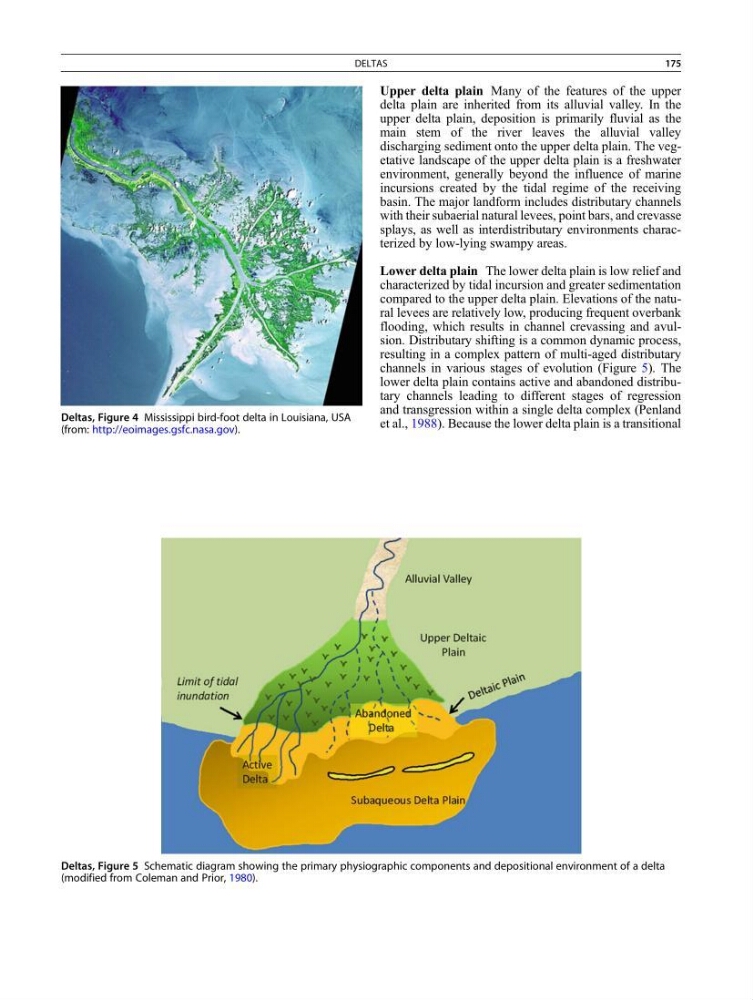
Deltas, Figure 4 Mississippi bird-foot delta in Louisiana, USA
(from: http://eoimages.gsfc.nasa.gov).
Deltas, Figure 5 Schematic diagram showing the primary physiographic components and depositional environment of a delta
(modified from Coleman and Prior, 1980).
DELTAS
175
delta plain are inherited from its alluvial valley. In the
upper delta plain, deposition is primarily fluvial as the
main stem of the river leaves the alluvial valley
discharging sediment onto the upper delta plain. The vegetative landscape of the upper delta plain is a freshwater
environment, generally beyond the influence of marine
incursions created by the tidal regime of the receiving
basin. The major landform includes distributary channels
with their subaerial natural levees, point bars, and crevasse
splays, as well as interdistributary environments characterized by low-lying swampy areas.
Lower delta plain The lower delta plain is low relief and
characterized by tidal incursion and greater sedimentation
compared to the upper delta plain. Elevations of the natural levees are relatively low, producing frequent overbank
flooding, which results in channel crevassing and avulsion. Distributary shifting is a common dynamic process,
resulting in a complex pattern of multi-aged distributary
channels in various stages of evolution (Figure 5). The
lower delta plain contains active and abandoned distributary channels leading to different stages of regression
and transgression within a single delta complex (Penland
et al., 1988). Because the lower delta plain is a transitional
Deltas, Figure 4 Mississippi bird-foot delta in Louisiana, USA
(from: http://eoimages.gsfc.nasa.gov).
Deltas, Figure 5 Schematic diagram showing the primary physiographic components and depositional environment of a delta
(modified from Coleman and Prior, 1980).
DELTAS
175