

(Tunnicliffe et al., 2003). At hydrothermal vents, high
rates of fluid flux form strong gradients of compounds.
Within smoker chimneys, zonation of minerals and of
microbial diversity reflects a wide array of microhabitats
available for chemoautotrophy (Kormas et al., 2006).
The geological setting of high temperature rock/water
interactions influences the composition of emergent fluids
and the resulting microbial community (Amend et al.,
2011). Oxidizing habitats on the periphery of vents, and
on particulates in hydrothermal plumes, support
chemolithoautotrophs that influence metal cycles in the
ocean (Holden et al., 2012). Oxidation of reduced minerals within inactive sulfide deposits provides chemical
energy to microbes that undergo ecological succession
that reflects changing metabolic pathways as the sulfides
age (Sylvan et al., 2012). Many similar sources of
lithotrophic energy exist in the seafloor, not the least of
which includes microbial weathering of basalts (Edwards
et al., 2005).
At subduction zones, the pressure of sediment accumulation and mineral dehydration forces fluids upwards
through organic matter-rich sediments along faults or bedding planes of the accretionary prism. Seepage that supports chemosynthesis can occur in association with gas
hydrate or hydrocarbon deposits and also with brines near
salt domes (Tunnicliffe et al., 2003; Levin, 2005). Rising
bubbles, carbonate structures, or pockmarks may occur
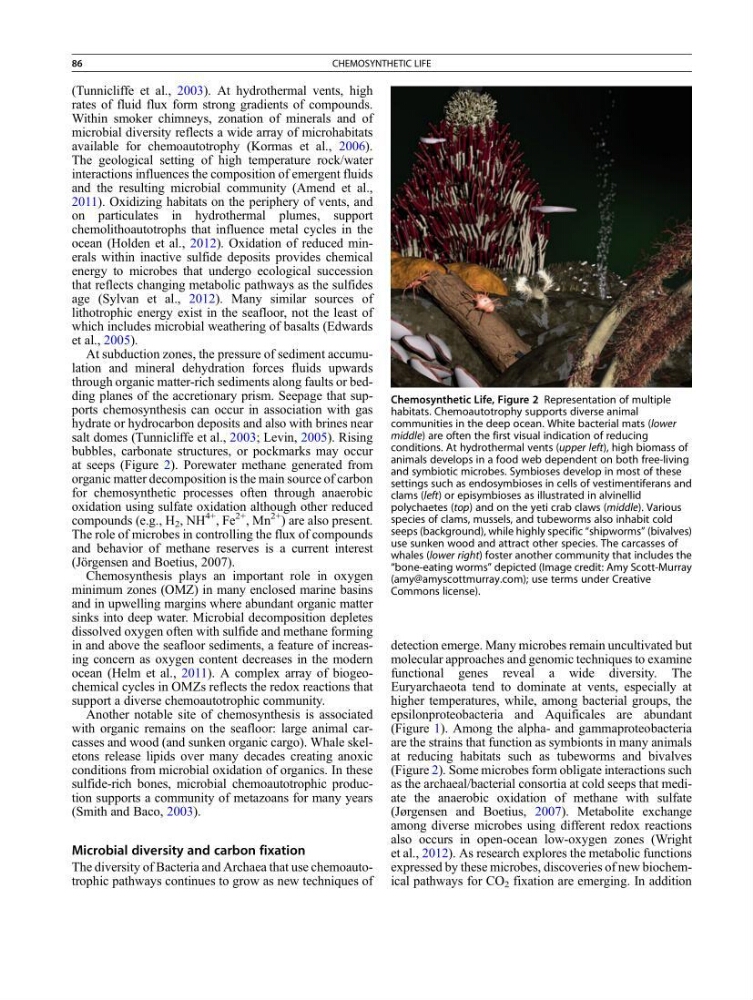
at seeps (Figure 2). Porewater methane generated from
organic matter decomposition is the main source of carbon
for chemosynthetic processes often through anaerobic
oxidation using sulfate oxidation although other reduced
compounds (e.g., H 2 , NH
4+ , Fe
2+ , Mn
2+ ) are also present.
The role of microbes in controlling the flux of compounds
and behavior of methane reserves is a current interest
(Jörgensen and Boetius, 2007).
Chemosynthesis plays an important role in oxygen
minimum zones (OMZ) in many enclosed marine basins
and in upwelling margins where abundant organic matter
sinks into deep water. Microbial decomposition depletes
dissolved oxygen often with sulfide and methane forming
in and above the seafloor sediments, a feature of increasing concern as oxygen content decreases in the modern
ocean (Helm et al., 2011). A complex array of biogeochemical cycles in OMZs reflects the redox reactions that
support a diverse chemoautotrophic community.
Another notable site of chemosynthesis is associated
with organic remains on the seafloor: large animal carcasses and wood (and sunken organic cargo). Whale skeletons release lipids over many decades creating anoxic
conditions from microbial oxidation of organics. In these
sulfide-rich bones, microbial chemoautotrophic production supports a community of metazoans for many years
(Smith and Baco, 2003).
Microbial diversity and carbon fixation
The diversity of Bacteria and Archaea that use chemoautotrophic pathways continues to grow as new techniques of
detection emerge. Many microbes remain uncultivated but
molecular approaches and genomic techniques to examine
functional genes reveal a wide diversity. The
Euryarchaeota tend to dominate at vents, especially at
higher temperatures, while, among bacterial groups, the
epsilonproteobacteria and Aquificales are abundant
(Figure 1). Among the alpha- and gammaproteobacteria
are the strains that function as symbionts in many animals
at reducing habitats such as tubeworms and bivalves
(Figure 2). Some microbes form obligate interactions such
as the archaeal/bacterial consortia at cold seeps that mediate the anaerobic oxidation of methane with sulfate
(Jørgensen and Boetius, 2007). Metabolite exchange
among diverse microbes using different redox reactions
also occurs in open-ocean low-oxygen zones (Wright
et al., 2012). As research explores the metabolic functions
expressed by these microbes, discoveries of new biochemical pathways for CO 2 fixation are emerging. In addition
Chemosynthetic Life, Figure 2 Representation of multiple
habitats. Chemoautotrophy supports diverse animal
communities in the deep ocean. White bacterial mats (lower
middle) are often the first visual indication of reducing
conditions. At hydrothermal vents (upper left), high biomass of
animals develops in a food web dependent on both free-living
and symbiotic microbes. Symbioses develop in most of these
settings such as endosymbioses in cells of vestimentiferans and
clams (left) or episymbioses as illustrated in alvinellid
polychaetes (top) and on the yeti crab claws (middle). Various
species of clams, mussels, and tubeworms also inhabit cold
seeps (background), while highly specific “shipworms” (bivalves)
use sunken wood and attract other species. The carcasses of
whales (lower right) foster another community that includes the
“bone-eating worms” depicted (Image credit: Amy Scott-Murray
(amy@amyscottmurray.com); use terms under Creative
Commons license).
86
CHEMOSYNTHETIC LIFE
rates of fluid flux form strong gradients of compounds.
Within smoker chimneys, zonation of minerals and of
microbial diversity reflects a wide array of microhabitats
available for chemoautotrophy (Kormas et al., 2006).
The geological setting of high temperature rock/water
interactions influences the composition of emergent fluids
and the resulting microbial community (Amend et al.,
2011). Oxidizing habitats on the periphery of vents, and
on particulates in hydrothermal plumes, support
chemolithoautotrophs that influence metal cycles in the
ocean (Holden et al., 2012). Oxidation of reduced minerals within inactive sulfide deposits provides chemical
energy to microbes that undergo ecological succession
that reflects changing metabolic pathways as the sulfides
age (Sylvan et al., 2012). Many similar sources of
lithotrophic energy exist in the seafloor, not the least of
which includes microbial weathering of basalts (Edwards
et al., 2005).
At subduction zones, the pressure of sediment accumulation and mineral dehydration forces fluids upwards
through organic matter-rich sediments along faults or bedding planes of the accretionary prism. Seepage that supports chemosynthesis can occur in association with gas
hydrate or hydrocarbon deposits and also with brines near
salt domes (Tunnicliffe et al., 2003; Levin, 2005). Rising
bubbles, carbonate structures, or pockmarks may occur
at seeps (Figure 2). Porewater methane generated from
organic matter decomposition is the main source of carbon
for chemosynthetic processes often through anaerobic
oxidation using sulfate oxidation although other reduced
compounds (e.g., H 2 , NH
4+ , Fe
2+ , Mn
2+ ) are also present.
The role of microbes in controlling the flux of compounds
and behavior of methane reserves is a current interest
(Jörgensen and Boetius, 2007).
Chemosynthesis plays an important role in oxygen
minimum zones (OMZ) in many enclosed marine basins
and in upwelling margins where abundant organic matter
sinks into deep water. Microbial decomposition depletes
dissolved oxygen often with sulfide and methane forming
in and above the seafloor sediments, a feature of increasing concern as oxygen content decreases in the modern
ocean (Helm et al., 2011). A complex array of biogeochemical cycles in OMZs reflects the redox reactions that
support a diverse chemoautotrophic community.
Another notable site of chemosynthesis is associated
with organic remains on the seafloor: large animal carcasses and wood (and sunken organic cargo). Whale skeletons release lipids over many decades creating anoxic
conditions from microbial oxidation of organics. In these
sulfide-rich bones, microbial chemoautotrophic production supports a community of metazoans for many years
(Smith and Baco, 2003).
Microbial diversity and carbon fixation
The diversity of Bacteria and Archaea that use chemoautotrophic pathways continues to grow as new techniques of
detection emerge. Many microbes remain uncultivated but
molecular approaches and genomic techniques to examine
functional genes reveal a wide diversity. The
Euryarchaeota tend to dominate at vents, especially at
higher temperatures, while, among bacterial groups, the
epsilonproteobacteria and Aquificales are abundant
(Figure 1). Among the alpha- and gammaproteobacteria
are the strains that function as symbionts in many animals
at reducing habitats such as tubeworms and bivalves
(Figure 2). Some microbes form obligate interactions such
as the archaeal/bacterial consortia at cold seeps that mediate the anaerobic oxidation of methane with sulfate
(Jørgensen and Boetius, 2007). Metabolite exchange
among diverse microbes using different redox reactions
also occurs in open-ocean low-oxygen zones (Wright
et al., 2012). As research explores the metabolic functions
expressed by these microbes, discoveries of new biochemical pathways for CO 2 fixation are emerging. In addition
Chemosynthetic Life, Figure 2 Representation of multiple
habitats. Chemoautotrophy supports diverse animal
communities in the deep ocean. White bacterial mats (lower
middle) are often the first visual indication of reducing
conditions. At hydrothermal vents (upper left), high biomass of
animals develops in a food web dependent on both free-living
and symbiotic microbes. Symbioses develop in most of these
settings such as endosymbioses in cells of vestimentiferans and
clams (left) or episymbioses as illustrated in alvinellid
polychaetes (top) and on the yeti crab claws (middle). Various
species of clams, mussels, and tubeworms also inhabit cold
seeps (background), while highly specific “shipworms” (bivalves)
use sunken wood and attract other species. The carcasses of
whales (lower right) foster another community that includes the
“bone-eating worms” depicted (Image credit: Amy Scott-Murray
(amy@amyscottmurray.com); use terms under Creative
Commons license).
86
CHEMOSYNTHETIC LIFE