

339
volcano
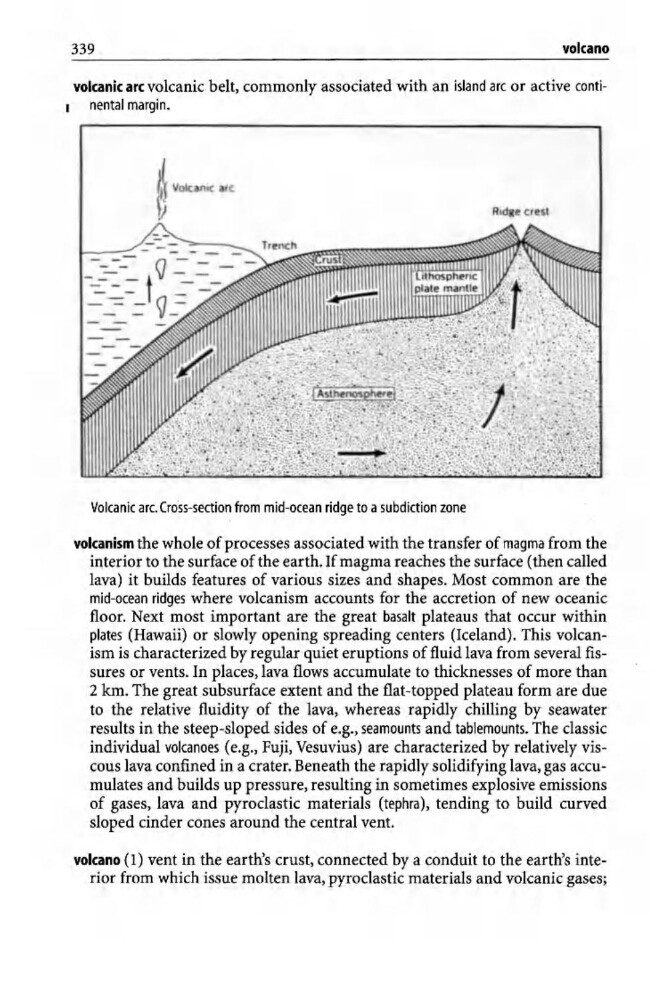
volcanic arc volcanic belt, commonly associated with an island arc or active continental margin.
Volcanic arc. Cross-section from mid-ocean ridge to a subdiction zone
volcanism the whole of processes associated with the transfer of magma from the
interior to the surface of the earth. If magma reaches the surface (then called
lava) it builds features of various sizes and shapes. Most common are the
mid-ocean ridges where volcanism accounts for the accretion of new oceanic
floor. Next most important are the great basalt plateaus that occur within
plates (Hawaii) or slowly opening spreading centers (Iceland). This volcanism is characterized by regular quiet eruptions of fluid lava from several fissures or vents. In places, lava flows accumulate to thicknesses of more than
2 km. The great subsurface extent and the flat-topped plateau form are due
to the relative fluidity of the lava, whereas rapidly chilling by seawater
results in the steep-sloped sides of e.g., seamounts and tablemounts. The classic
individual volcanoes (e.g., Fuji, Vesuvius) are characterized by relatively viscous lava confined in a crater. Beneath the rapidly solidifying lava, gas accumulates and builds up pressure, resulting in sometimes explosive emissions
of gases, lava and pyroclastic materials (tephra), tending to build curved
sloped cinder cones around the central vent.
volcano (1) vent in the earth's crust, connected by a conduit to the earth's interior from which issue molten lava, pyroclastic materials and volcanic gases;
volcano
volcanic arc volcanic belt, commonly associated with an island arc or active continental margin.
Volcanic arc. Cross-section from mid-ocean ridge to a subdiction zone
volcanism the whole of processes associated with the transfer of magma from the
interior to the surface of the earth. If magma reaches the surface (then called
lava) it builds features of various sizes and shapes. Most common are the
mid-ocean ridges where volcanism accounts for the accretion of new oceanic
floor. Next most important are the great basalt plateaus that occur within
plates (Hawaii) or slowly opening spreading centers (Iceland). This volcanism is characterized by regular quiet eruptions of fluid lava from several fissures or vents. In places, lava flows accumulate to thicknesses of more than
2 km. The great subsurface extent and the flat-topped plateau form are due
to the relative fluidity of the lava, whereas rapidly chilling by seawater
results in the steep-sloped sides of e.g., seamounts and tablemounts. The classic
individual volcanoes (e.g., Fuji, Vesuvius) are characterized by relatively viscous lava confined in a crater. Beneath the rapidly solidifying lava, gas accumulates and builds up pressure, resulting in sometimes explosive emissions
of gases, lava and pyroclastic materials (tephra), tending to build curved
sloped cinder cones around the central vent.
volcano (1) vent in the earth's crust, connected by a conduit to the earth's interior from which issue molten lava, pyroclastic materials and volcanic gases;