

2 Topography, Hydrography, Circulation and Modelling of the Baltic Sea
55
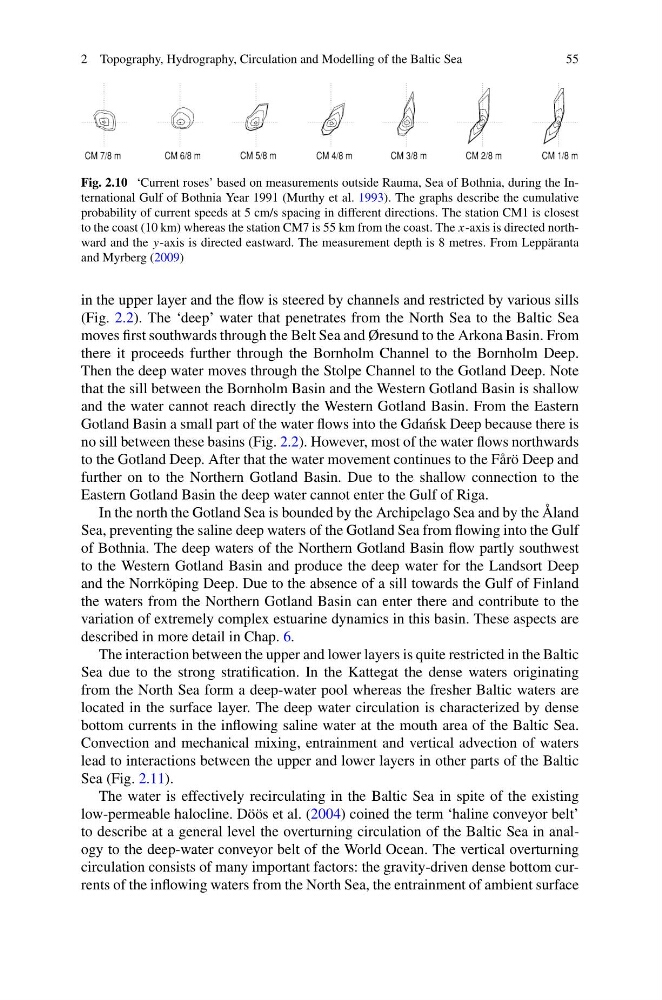
Fig. 2.10 ‘Current roses’ based on measurements outside Rauma, Sea of Bothnia, during the International Gulf of Bothnia Year 1991 (Murthy et al. 1993). The graphs describe the cumulative
probability of current speeds at 5 cm/s spacing in different directions. The station CM1 is closest
to the coast (10 km) whereas the station CM7 is 55 km from the coast. The x-axis is directed northward and the y-axis is directed eastward. The measurement depth is 8 metres. From Leppäranta
and Myrberg (2009)
in the upper layer and the flow is steered by channels and restricted by various sills
(Fig. 2.2). The ‘deep’ water that penetrates from the North Sea to the Baltic Sea
moves first southwards through the Belt Sea and Øresund to the Arkona Basin. From
there it proceeds further through the Bornholm Channel to the Bornholm Deep.
Then the deep water moves through the Stolpe Channel to the Gotland Deep. Note
that the sill between the Bornholm Basin and the Western Gotland Basin is shallow
and the water cannot reach directly the Western Gotland Basin. From the Eastern
Gotland Basin a small part of the water flows into the Gda´ nsk Deep because there is
no sill between these basins (Fig. 2.2). However, most of the water flows northwards
to the Gotland Deep. After that the water movement continues to the Fårö Deep and
further on to the Northern Gotland Basin. Due to the shallow connection to the
Eastern Gotland Basin the deep water cannot enter the Gulf of Riga.
In the north the Gotland Sea is bounded by the Archipelago Sea and by the Åland
Sea, preventing the saline deep waters of the Gotland Sea from flowing into the Gulf
of Bothnia. The deep waters of the Northern Gotland Basin flow partly southwest
to the Western Gotland Basin and produce the deep water for the Landsort Deep
and the Norrköping Deep. Due to the absence of a sill towards the Gulf of Finland
the waters from the Northern Gotland Basin can enter there and contribute to the
variation of extremely complex estuarine dynamics in this basin. These aspects are
described in more detail in Chap. 6.
The interaction between the upper and lower layers is quite restricted in the Baltic
Sea due to the strong stratification. In the Kattegat the dense waters originating
from the North Sea form a deep-water pool whereas the fresher Baltic waters are
located in the surface layer. The deep water circulation is characterized by dense
bottom currents in the inflowing saline water at the mouth area of the Baltic Sea.
Convection and mechanical mixing, entrainment and vertical advection of waters
lead to interactions between the upper and lower layers in other parts of the Baltic
Sea (Fig. 2.11).
The water is effectively recirculating in the Baltic Sea in spite of the existing
low-permeable halocline. Döös et al. (2004) coined the term ‘haline conveyor belt’
to describe at a general level the overturning circulation of the Baltic Sea in analogy to the deep-water conveyor belt of the World Ocean. The vertical overturning
circulation consists of many important factors: the gravity-driven dense bottom currents of the inflowing waters from the North Sea, the entrainment of ambient surface
55
Fig. 2.10 ‘Current roses’ based on measurements outside Rauma, Sea of Bothnia, during the International Gulf of Bothnia Year 1991 (Murthy et al. 1993). The graphs describe the cumulative
probability of current speeds at 5 cm/s spacing in different directions. The station CM1 is closest
to the coast (10 km) whereas the station CM7 is 55 km from the coast. The x-axis is directed northward and the y-axis is directed eastward. The measurement depth is 8 metres. From Leppäranta
and Myrberg (2009)
in the upper layer and the flow is steered by channels and restricted by various sills
(Fig. 2.2). The ‘deep’ water that penetrates from the North Sea to the Baltic Sea
moves first southwards through the Belt Sea and Øresund to the Arkona Basin. From
there it proceeds further through the Bornholm Channel to the Bornholm Deep.
Then the deep water moves through the Stolpe Channel to the Gotland Deep. Note
that the sill between the Bornholm Basin and the Western Gotland Basin is shallow
and the water cannot reach directly the Western Gotland Basin. From the Eastern
Gotland Basin a small part of the water flows into the Gda´ nsk Deep because there is
no sill between these basins (Fig. 2.2). However, most of the water flows northwards
to the Gotland Deep. After that the water movement continues to the Fårö Deep and
further on to the Northern Gotland Basin. Due to the shallow connection to the
Eastern Gotland Basin the deep water cannot enter the Gulf of Riga.
In the north the Gotland Sea is bounded by the Archipelago Sea and by the Åland
Sea, preventing the saline deep waters of the Gotland Sea from flowing into the Gulf
of Bothnia. The deep waters of the Northern Gotland Basin flow partly southwest
to the Western Gotland Basin and produce the deep water for the Landsort Deep
and the Norrköping Deep. Due to the absence of a sill towards the Gulf of Finland
the waters from the Northern Gotland Basin can enter there and contribute to the
variation of extremely complex estuarine dynamics in this basin. These aspects are
described in more detail in Chap. 6.
The interaction between the upper and lower layers is quite restricted in the Baltic
Sea due to the strong stratification. In the Kattegat the dense waters originating
from the North Sea form a deep-water pool whereas the fresher Baltic waters are
located in the surface layer. The deep water circulation is characterized by dense
bottom currents in the inflowing saline water at the mouth area of the Baltic Sea.
Convection and mechanical mixing, entrainment and vertical advection of waters
lead to interactions between the upper and lower layers in other parts of the Baltic
Sea (Fig. 2.11).
The water is effectively recirculating in the Baltic Sea in spite of the existing
low-permeable halocline. Döös et al. (2004) coined the term ‘haline conveyor belt’
to describe at a general level the overturning circulation of the Baltic Sea in analogy to the deep-water conveyor belt of the World Ocean. The vertical overturning
circulation consists of many important factors: the gravity-driven dense bottom currents of the inflowing waters from the North Sea, the entrainment of ambient surface