

7 TRACMASS—A Lagrangian Trajectory Model
243
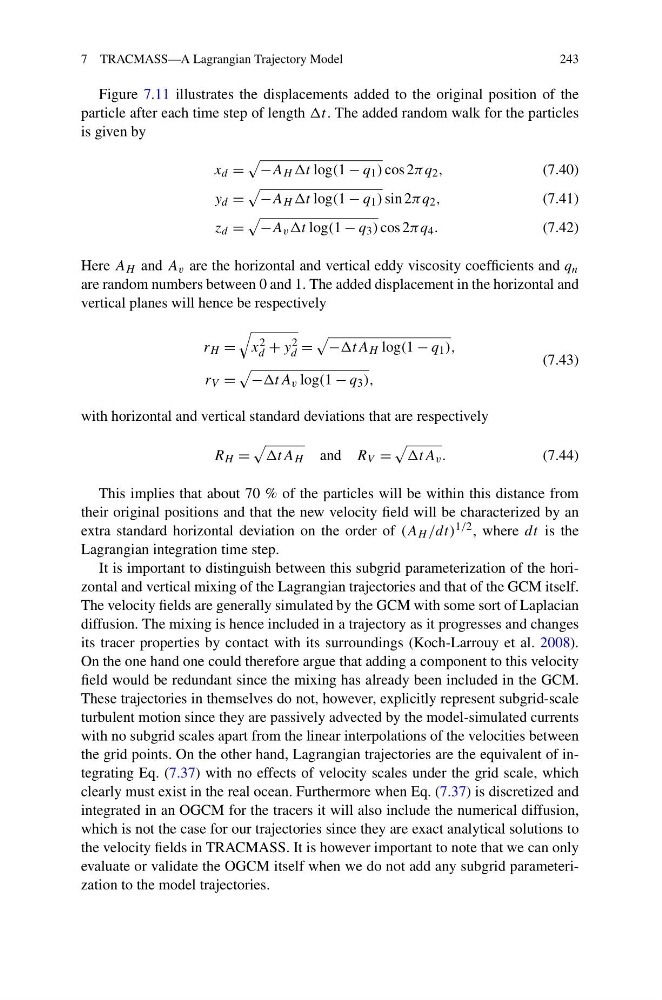
Figure 7.11 illustrates the displacements added to the original position of the
particle after each time step of length t. The added random walk for the particles
is given by
x d =
−A H t log(1 − q 1 ) cos 2πq 2 ,
(7.40)
y d =
−A H t log(1 − q 1 ) sin 2πq 2 ,
(7.41)
z d =
−A v t log(1 − q 3 ) cos 2πq 4 .
(7.42)
Here A H and A v are the horizontal and vertical eddy viscosity coefficients and q n
are random numbers between 0 and 1. The added displacement in the horizontal and
vertical planes will hence be respectively
r H =
x 2
d + y 2
d =
− H log(1 − q 1 ),
r V =
− v log(1 − q 3 ),
(7.43)
with horizontal and vertical standard deviations that are respectively
R H =
H and R V =
v .
(7.44)
This implies that about 70 % of the particles will be within this distance from
their original positions and that the new velocity field will be characterized by an
extra standard horizontal deviation on the order of (A H /dt) 1/2 , where dt is the
Lagrangian integration time step.
It is important to distinguish between this subgrid parameterization of the horizontal and vertical mixing of the Lagrangian trajectories and that of the GCM itself.
The velocity fields are generally simulated by the GCM with some sort of Laplacian
diffusion. The mixing is hence included in a trajectory as it progresses and changes
its tracer properties by contact with its surroundings (Koch-Larrouy et al. 2008).
On the one hand one could therefore argue that adding a component to this velocity
field would be redundant since the mixing has already been included in the GCM.
These trajectories in themselves do not, however, explicitly represent subgrid-scale
turbulent motion since they are passively advected by the model-simulated currents
with no subgrid scales apart from the linear interpolations of the velocities between
the grid points. On the other hand, Lagrangian trajectories are the equivalent of integrating Eq. (7.37) with no effects of velocity scales under the grid scale, which
clearly must exist in the real ocean. Furthermore when Eq. (7.37) is discretized and
integrated in an OGCM for the tracers it will also include the numerical diffusion,
which is not the case for our trajectories since they are exact analytical solutions to
the velocity fields in TRACMASS. It is however important to note that we can only
evaluate or validate the OGCM itself when we do not add any subgrid parameterization to the model trajectories.
243
Figure 7.11 illustrates the displacements added to the original position of the
particle after each time step of length t. The added random walk for the particles
is given by
x d =
−A H t log(1 − q 1 ) cos 2πq 2 ,
(7.40)
y d =
−A H t log(1 − q 1 ) sin 2πq 2 ,
(7.41)
z d =
−A v t log(1 − q 3 ) cos 2πq 4 .
(7.42)
Here A H and A v are the horizontal and vertical eddy viscosity coefficients and q n
are random numbers between 0 and 1. The added displacement in the horizontal and
vertical planes will hence be respectively
r H =
x 2
d + y 2
d =
− H log(1 − q 1 ),
r V =
− v log(1 − q 3 ),
(7.43)
with horizontal and vertical standard deviations that are respectively
R H =
H and R V =
v .
(7.44)
This implies that about 70 % of the particles will be within this distance from
their original positions and that the new velocity field will be characterized by an
extra standard horizontal deviation on the order of (A H /dt) 1/2 , where dt is the
Lagrangian integration time step.
It is important to distinguish between this subgrid parameterization of the horizontal and vertical mixing of the Lagrangian trajectories and that of the GCM itself.
The velocity fields are generally simulated by the GCM with some sort of Laplacian
diffusion. The mixing is hence included in a trajectory as it progresses and changes
its tracer properties by contact with its surroundings (Koch-Larrouy et al. 2008).
On the one hand one could therefore argue that adding a component to this velocity
field would be redundant since the mixing has already been included in the GCM.
These trajectories in themselves do not, however, explicitly represent subgrid-scale
turbulent motion since they are passively advected by the model-simulated currents
with no subgrid scales apart from the linear interpolations of the velocities between
the grid points. On the other hand, Lagrangian trajectories are the equivalent of integrating Eq. (7.37) with no effects of velocity scales under the grid scale, which
clearly must exist in the real ocean. Furthermore when Eq. (7.37) is discretized and
integrated in an OGCM for the tracers it will also include the numerical diffusion,
which is not the case for our trajectories since they are exact analytical solutions to
the velocity fields in TRACMASS. It is however important to note that we can only
evaluate or validate the OGCM itself when we do not add any subgrid parameterization to the model trajectories.