

6 The Gulf of Finland
187
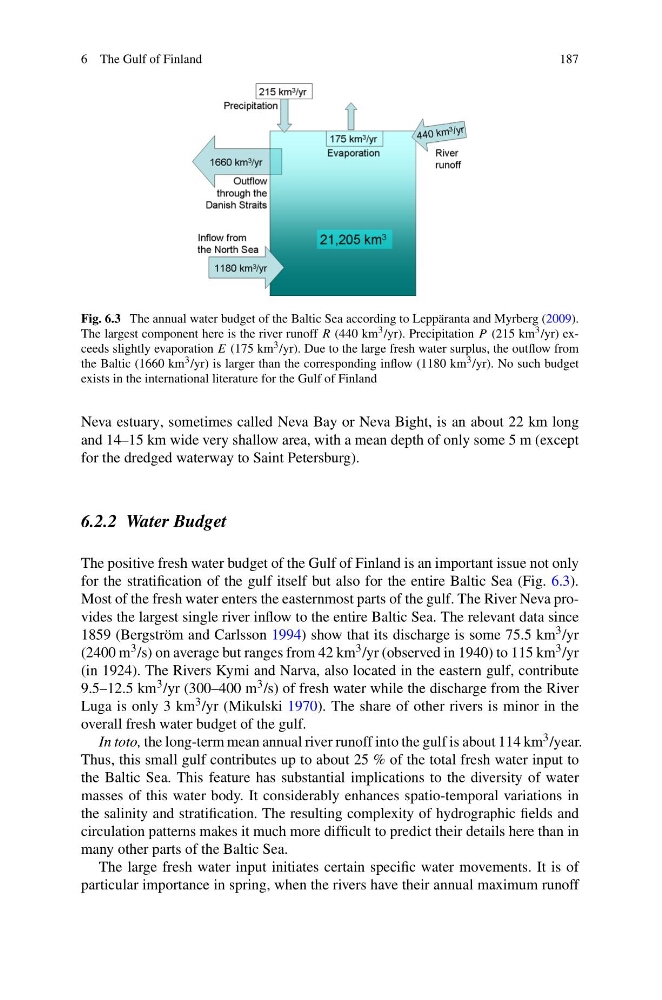
Fig. 6.3 The annual water budget of the Baltic Sea according to Leppäranta and Myrberg (2009).
The largest component here is the river runoff R (440 km 3 /yr). Precipitation P (215 km 3 /yr) exceeds slightly evaporation E (175 km 3 /yr). Due to the large fresh water surplus, the outflow from
the Baltic (1660 km 3 /yr) is larger than the corresponding inflow (1180 km 3 /yr). No such budget
exists in the international literature for the Gulf of Finland
Neva estuary, sometimes called Neva Bay or Neva Bight, is an about 22 km long
and 14–15 km wide very shallow area, with a mean depth of only some 5 m (except
for the dredged waterway to Saint Petersburg).
6.2.2 Water Budget
The positive fresh water budget of the Gulf of Finland is an important issue not only
for the stratification of the gulf itself but also for the entire Baltic Sea (Fig. 6.3).
Most of the fresh water enters the easternmost parts of the gulf. The River Neva provides the largest single river inflow to the entire Baltic Sea. The relevant data since
1859 (Bergström and Carlsson 1994) show that its discharge is some 75.5 km 3 /yr
(2400 m 3 /s) on average but ranges from 42 km 3 /yr (observed in 1940) to 115 km 3 /yr
(in 1924). The Rivers Kymi and Narva, also located in the eastern gulf, contribute
9.5–12.5 km 3 /yr (300–400 m 3 /s) of fresh water while the discharge from the River
Luga is only 3 km 3 /yr (Mikulski 1970). The share of other rivers is minor in the
overall fresh water budget of the gulf.
In toto, the long-term mean annual river runoff into the gulf is about 114 km 3 /year.
Thus, this small gulf contributes up to about 25 % of the total fresh water input to
the Baltic Sea. This feature has substantial implications to the diversity of water
masses of this water body. It considerably enhances spatio-temporal variations in
the salinity and stratification. The resulting complexity of hydrographic fields and
circulation patterns makes it much more difficult to predict their details here than in
many other parts of the Baltic Sea.
The large fresh water input initiates certain specific water movements. It is of
particular importance in spring, when the rivers have their annual maximum runoff
187
Fig. 6.3 The annual water budget of the Baltic Sea according to Leppäranta and Myrberg (2009).
The largest component here is the river runoff R (440 km 3 /yr). Precipitation P (215 km 3 /yr) exceeds slightly evaporation E (175 km 3 /yr). Due to the large fresh water surplus, the outflow from
the Baltic (1660 km 3 /yr) is larger than the corresponding inflow (1180 km 3 /yr). No such budget
exists in the international literature for the Gulf of Finland
Neva estuary, sometimes called Neva Bay or Neva Bight, is an about 22 km long
and 14–15 km wide very shallow area, with a mean depth of only some 5 m (except
for the dredged waterway to Saint Petersburg).
6.2.2 Water Budget
The positive fresh water budget of the Gulf of Finland is an important issue not only
for the stratification of the gulf itself but also for the entire Baltic Sea (Fig. 6.3).
Most of the fresh water enters the easternmost parts of the gulf. The River Neva provides the largest single river inflow to the entire Baltic Sea. The relevant data since
1859 (Bergström and Carlsson 1994) show that its discharge is some 75.5 km 3 /yr
(2400 m 3 /s) on average but ranges from 42 km 3 /yr (observed in 1940) to 115 km 3 /yr
(in 1924). The Rivers Kymi and Narva, also located in the eastern gulf, contribute
9.5–12.5 km 3 /yr (300–400 m 3 /s) of fresh water while the discharge from the River
Luga is only 3 km 3 /yr (Mikulski 1970). The share of other rivers is minor in the
overall fresh water budget of the gulf.
In toto, the long-term mean annual river runoff into the gulf is about 114 km 3 /year.
Thus, this small gulf contributes up to about 25 % of the total fresh water input to
the Baltic Sea. This feature has substantial implications to the diversity of water
masses of this water body. It considerably enhances spatio-temporal variations in
the salinity and stratification. The resulting complexity of hydrographic fields and
circulation patterns makes it much more difficult to predict their details here than in
many other parts of the Baltic Sea.
The large fresh water input initiates certain specific water movements. It is of
particular importance in spring, when the rivers have their annual maximum runoff