

5 European Semi-enclosed Seas
159
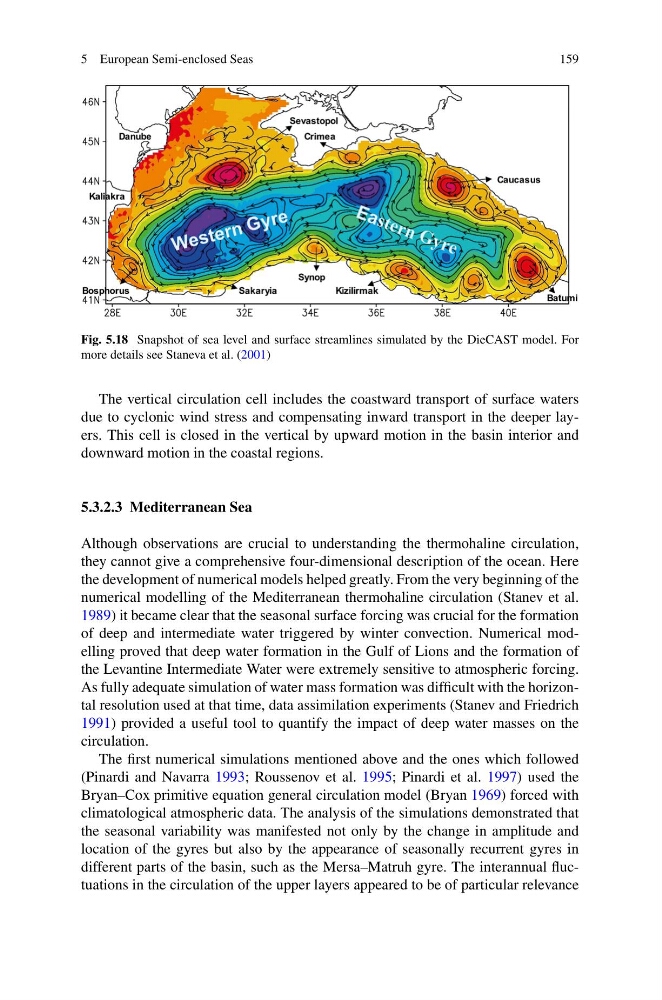
Fig. 5.18 Snapshot of sea level and surface streamlines simulated by the DieCAST model. For
more details see Staneva et al. (2001)
The vertical circulation cell includes the coastward transport of surface waters
due to cyclonic wind stress and compensating inward transport in the deeper layers. This cell is closed in the vertical by upward motion in the basin interior and
downward motion in the coastal regions.
5.3.2.3 Mediterranean Sea
Although observations are crucial to understanding the thermohaline circulation,
they cannot give a comprehensive four-dimensional description of the ocean. Here
the development of numerical models helped greatly. From the very beginning of the
numerical modelling of the Mediterranean thermohaline circulation (Stanev et al.
1989) it became clear that the seasonal surface forcing was crucial for the formation
of deep and intermediate water triggered by winter convection. Numerical modelling proved that deep water formation in the Gulf of Lions and the formation of
the Levantine Intermediate Water were extremely sensitive to atmospheric forcing.
As fully adequate simulation of water mass formation was difficult with the horizontal resolution used at that time, data assimilation experiments (Stanev and Friedrich
1991) provided a useful tool to quantify the impact of deep water masses on the
circulation.
The first numerical simulations mentioned above and the ones which followed
(Pinardi and Navarra 1993; Roussenov et al. 1995; Pinardi et al. 1997) used the
Bryan–Cox primitive equation general circulation model (Bryan 1969) forced with
climatological atmospheric data. The analysis of the simulations demonstrated that
the seasonal variability was manifested not only by the change in amplitude and
location of the gyres but also by the appearance of seasonally recurrent gyres in
different parts of the basin, such as the Mersa–Matruh gyre. The interannual fluctuations in the circulation of the upper layers appeared to be of particular relevance
159
Fig. 5.18 Snapshot of sea level and surface streamlines simulated by the DieCAST model. For
more details see Staneva et al. (2001)
The vertical circulation cell includes the coastward transport of surface waters
due to cyclonic wind stress and compensating inward transport in the deeper layers. This cell is closed in the vertical by upward motion in the basin interior and
downward motion in the coastal regions.
5.3.2.3 Mediterranean Sea
Although observations are crucial to understanding the thermohaline circulation,
they cannot give a comprehensive four-dimensional description of the ocean. Here
the development of numerical models helped greatly. From the very beginning of the
numerical modelling of the Mediterranean thermohaline circulation (Stanev et al.
1989) it became clear that the seasonal surface forcing was crucial for the formation
of deep and intermediate water triggered by winter convection. Numerical modelling proved that deep water formation in the Gulf of Lions and the formation of
the Levantine Intermediate Water were extremely sensitive to atmospheric forcing.
As fully adequate simulation of water mass formation was difficult with the horizontal resolution used at that time, data assimilation experiments (Stanev and Friedrich
1991) provided a useful tool to quantify the impact of deep water masses on the
circulation.
The first numerical simulations mentioned above and the ones which followed
(Pinardi and Navarra 1993; Roussenov et al. 1995; Pinardi et al. 1997) used the
Bryan–Cox primitive equation general circulation model (Bryan 1969) forced with
climatological atmospheric data. The analysis of the simulations demonstrated that
the seasonal variability was manifested not only by the change in amplitude and
location of the gyres but also by the appearance of seasonally recurrent gyres in
different parts of the basin, such as the Mersa–Matruh gyre. The interannual fluctuations in the circulation of the upper layers appeared to be of particular relevance