

CHAPTER 18 • Management of Tokyo Bay
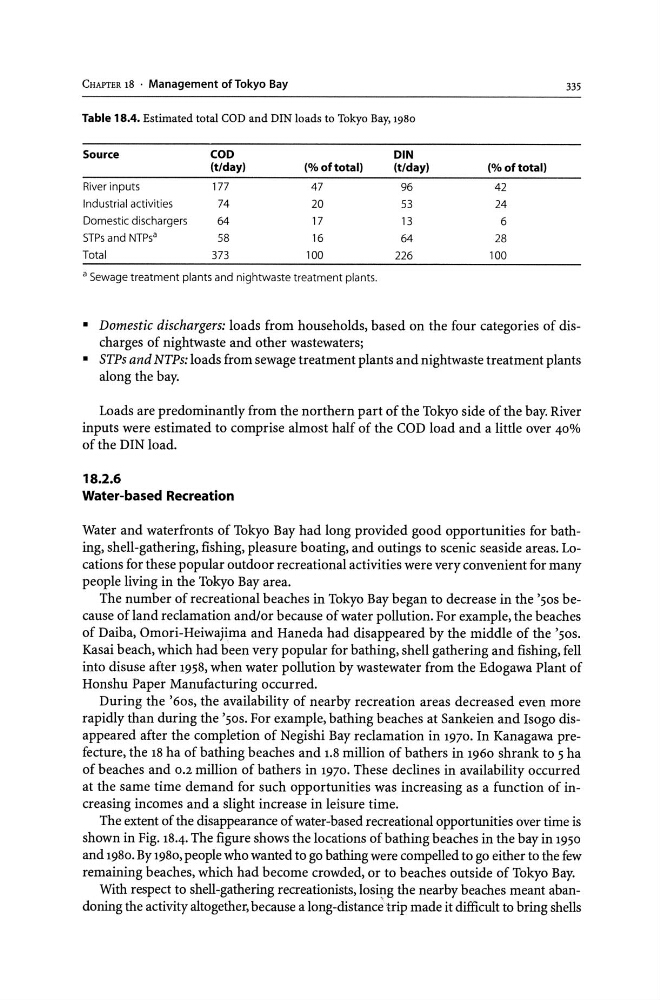
Table 18.4. Estimated total COD and DIN loads to Tokyo Bay, 1980
Source
COD
DIN
(t/day)
(%oftotal)
(t/day)
River inputs
177
47
96
Industrial activities
74
20
53
Domestic dischargers
64
17
13
STPs and NTPs a
58
16
64
Total
373
100
226
a Sewage treatment plants and nightwaste treatment plants.
(%oftotal)
42
24
6
28
100
335
• Domestic dischargers: loads from households, based on the four categories of discharges of nightwaste and other wastewaters;
• STPs and NTPs: loads from sewage treatment plants and nightwaste treatment plants
along the bay.
Loads are predominantly from the northern part of the Tokyo side of the bay. River
inputs were estimated to comprise almost half of the COD load and a little over 40%
of the DIN load.
18.2.6
Water-based Recreation
Water and waterfronts of Tokyo Bay had long provided good opportunities for bathing, shell-gathering, fishing, pleasure boating, and outings to scenic seaside areas. Locations for these popular outdoor recreational activities were very convenient for many
people living in the Tokyo Bay area.
The number of recreational beaches in Tokyo Bay began to decrease in the '50S because ofland reclamation and/or because of water pollution. For example, the beaches
of Daiba, Omori-Heiwajima and Haneda had disappeared by the middle of the '50S.
Kasai beach, which had been very popular for bathing, shell gathering and fishing, fell
into disuse after 1958, when water pollution by wastewater from the Edogawa Plant of
Honshu Paper Manufacturing occurred.
During the '60S, the availability of nearby recreation areas decreased even more
rapidly than during the '50S. For example, bathing beaches at Sankeien and Isogo disappeared after the completion of Negishi Bay reclamation in 1970. In Kanagawa prefecture, the 18 ha of bathing beaches and 1.8 million of bathers in 1960 shrank to 5 ha
of beaches and 0.2 million of bathers in 1970. These declines in availability occurred
at the same time demand for such opportunities was increasing as a function of increasing incomes and a slight increase in leisure time.
The extent of the disappearance of water-based recreational opportunities over time is
shown in Fig. 18.4. The figure shows the locations of bathing beaches in the bay in 1950
and 1980. By 1980, people who wanted to go bathing were compelled to go either to the few
remaining beaches, which had become crowded, or to beaches outside of Tokyo Bay.
With respect to shell-gathering recreationists, losing the nearby beaches meant abandoning the activity altogether, because a long-distanc~ trip made it difficult to bring shells
Table 18.4. Estimated total COD and DIN loads to Tokyo Bay, 1980
Source
COD
DIN
(t/day)
(%oftotal)
(t/day)
River inputs
177
47
96
Industrial activities
74
20
53
Domestic dischargers
64
17
13
STPs and NTPs a
58
16
64
Total
373
100
226
a Sewage treatment plants and nightwaste treatment plants.
(%oftotal)
42
24
6
28
100
335
• Domestic dischargers: loads from households, based on the four categories of discharges of nightwaste and other wastewaters;
• STPs and NTPs: loads from sewage treatment plants and nightwaste treatment plants
along the bay.
Loads are predominantly from the northern part of the Tokyo side of the bay. River
inputs were estimated to comprise almost half of the COD load and a little over 40%
of the DIN load.
18.2.6
Water-based Recreation
Water and waterfronts of Tokyo Bay had long provided good opportunities for bathing, shell-gathering, fishing, pleasure boating, and outings to scenic seaside areas. Locations for these popular outdoor recreational activities were very convenient for many
people living in the Tokyo Bay area.
The number of recreational beaches in Tokyo Bay began to decrease in the '50S because ofland reclamation and/or because of water pollution. For example, the beaches
of Daiba, Omori-Heiwajima and Haneda had disappeared by the middle of the '50S.
Kasai beach, which had been very popular for bathing, shell gathering and fishing, fell
into disuse after 1958, when water pollution by wastewater from the Edogawa Plant of
Honshu Paper Manufacturing occurred.
During the '60S, the availability of nearby recreation areas decreased even more
rapidly than during the '50S. For example, bathing beaches at Sankeien and Isogo disappeared after the completion of Negishi Bay reclamation in 1970. In Kanagawa prefecture, the 18 ha of bathing beaches and 1.8 million of bathers in 1960 shrank to 5 ha
of beaches and 0.2 million of bathers in 1970. These declines in availability occurred
at the same time demand for such opportunities was increasing as a function of increasing incomes and a slight increase in leisure time.
The extent of the disappearance of water-based recreational opportunities over time is
shown in Fig. 18.4. The figure shows the locations of bathing beaches in the bay in 1950
and 1980. By 1980, people who wanted to go bathing were compelled to go either to the few
remaining beaches, which had become crowded, or to beaches outside of Tokyo Bay.
With respect to shell-gathering recreationists, losing the nearby beaches meant abandoning the activity altogether, because a long-distanc~ trip made it difficult to bring shells