

330
K. Takao . B.T. Bower
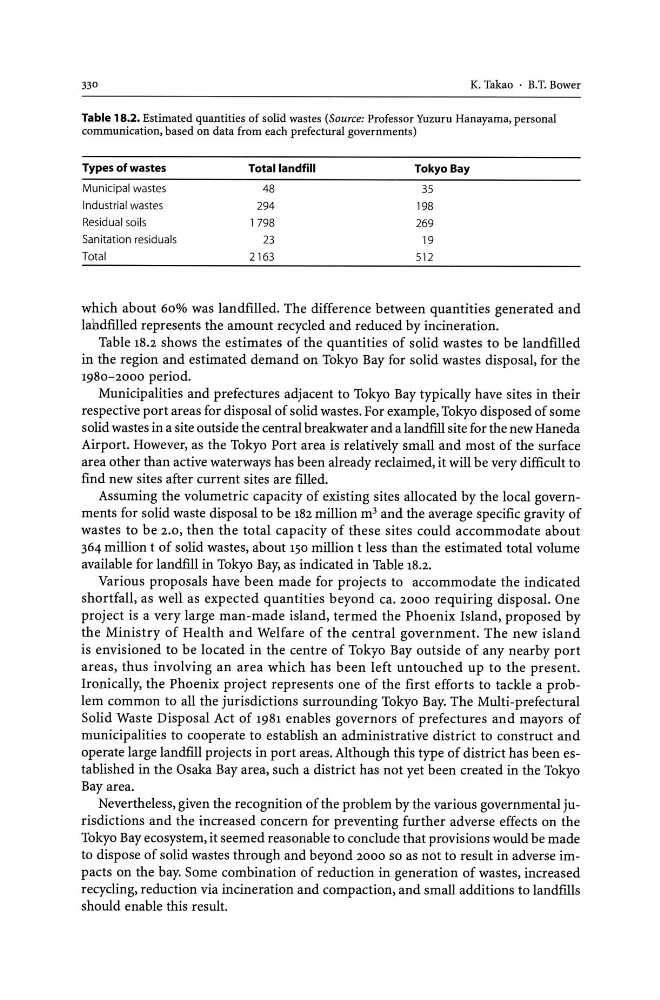
Table 18.2. Estimated quantities of solid wastes (Source: Professor Yuzuru Hanayama, personal
communication, based on data from each prefectural governments)
Types of wastes
Total landfill
Tokyo Bay
Municipal wastes
48
35
Industrial wastes
294
198
Residual soils
1798
269
Sanitation residuals
23
19
Total
2163
512
which about 60% was landfilled. The difference between quantities generated and
lahdfilled represents the amount recycled and reduced by incineration.
Table 18.2 shows the estimates of the quantities of solid wastes to be landfilled
in the region and estimated demand on Tokyo Bay for solid wastes disposal, for the
1980-2000 period.
Municipalities and prefectures adjacent to Tokyo Bay typically have sites in their
respective port areas for disposal of solid wastes. For example, Tokyo disposed of some
solid wastes in a site outside the central breakwater and a landfill site for the new Haneda
Airport. However, as the Tokyo Port area is relatively small and most of the surface
area other than active waterways has been already reclaimed, it will be very difficult to
find new sites after current sites are filled.
Assuming the volumetric capacity of existing sites allocated by the local governments for solid waste disposal to be 182 million m 3 and the average specific gravity of
wastes to be 2.0, then the total capacity of these sites could accommodate about
364 million t of solid wastes, about 150 million t less than the estimated total volume
available for landfill in Tokyo Bay, as indicated in Table 18.2.
Various proposals have been made for projects to accommodate the indicated
shortfall, as well as expected quantities beyond ca. 2000 requiring disposal. One
project is a very large man-made island, termed the Phoenix Island, proposed by
the Ministry of Health and Welfare of the central government. The new island
is envisioned to be located in the centre of Tokyo Bay outside of any nearby port
areas, thus involving an area which has been left untouched up to the present.
Ironically, the Phoenix project represents one of the first efforts to tackle a problem common to all the jurisdictions surrounding Tokyo Bay. The Multi-prefectural
Solid Waste Disposal Act of 1981 enables governors of prefectures and mayors of
municipalities to cooperate to establish an administrative district to construct and
operate large landfill projects in port areas. Although this type of district has been established in the Osaka Bay area, such a district has not yet been created in the Tokyo
Bay area.
Nevertheless, given the recognition of the problem by the various governmental jurisdictions and the increased concern for preventing further adverse effects on the
Tokyo Bay ecosystem, it seemed reasonable to conclude that provisions would be made
to dispose of solid wastes through and beyond 2000 so as not to result in adverse impacts on the bay. Some combination of reduction in generation of wastes, increased
recycling, reduction via incineration and compaction, and small additions to landfills
should enable this result.
K. Takao . B.T. Bower
Table 18.2. Estimated quantities of solid wastes (Source: Professor Yuzuru Hanayama, personal
communication, based on data from each prefectural governments)
Types of wastes
Total landfill
Tokyo Bay
Municipal wastes
48
35
Industrial wastes
294
198
Residual soils
1798
269
Sanitation residuals
23
19
Total
2163
512
which about 60% was landfilled. The difference between quantities generated and
lahdfilled represents the amount recycled and reduced by incineration.
Table 18.2 shows the estimates of the quantities of solid wastes to be landfilled
in the region and estimated demand on Tokyo Bay for solid wastes disposal, for the
1980-2000 period.
Municipalities and prefectures adjacent to Tokyo Bay typically have sites in their
respective port areas for disposal of solid wastes. For example, Tokyo disposed of some
solid wastes in a site outside the central breakwater and a landfill site for the new Haneda
Airport. However, as the Tokyo Port area is relatively small and most of the surface
area other than active waterways has been already reclaimed, it will be very difficult to
find new sites after current sites are filled.
Assuming the volumetric capacity of existing sites allocated by the local governments for solid waste disposal to be 182 million m 3 and the average specific gravity of
wastes to be 2.0, then the total capacity of these sites could accommodate about
364 million t of solid wastes, about 150 million t less than the estimated total volume
available for landfill in Tokyo Bay, as indicated in Table 18.2.
Various proposals have been made for projects to accommodate the indicated
shortfall, as well as expected quantities beyond ca. 2000 requiring disposal. One
project is a very large man-made island, termed the Phoenix Island, proposed by
the Ministry of Health and Welfare of the central government. The new island
is envisioned to be located in the centre of Tokyo Bay outside of any nearby port
areas, thus involving an area which has been left untouched up to the present.
Ironically, the Phoenix project represents one of the first efforts to tackle a problem common to all the jurisdictions surrounding Tokyo Bay. The Multi-prefectural
Solid Waste Disposal Act of 1981 enables governors of prefectures and mayors of
municipalities to cooperate to establish an administrative district to construct and
operate large landfill projects in port areas. Although this type of district has been established in the Osaka Bay area, such a district has not yet been created in the Tokyo
Bay area.
Nevertheless, given the recognition of the problem by the various governmental jurisdictions and the increased concern for preventing further adverse effects on the
Tokyo Bay ecosystem, it seemed reasonable to conclude that provisions would be made
to dispose of solid wastes through and beyond 2000 so as not to result in adverse impacts on the bay. Some combination of reduction in generation of wastes, increased
recycling, reduction via incineration and compaction, and small additions to landfills
should enable this result.