

CHAPTER 18 • Management of Tokyo Bay
329
There are still a number of land reclamation projects in Tokyo Bay after 1980.
They include new Haneda Airport, Minato Mirai 21 city development, Kawasaki
Civil Port Island, and Sanban-se Reclamation in Chiba. They are typically smaller in
physical scale, but greater in monetary scale than the reclamation done in the '60S,
because many are aimed at urban development emphasizing concentrated commercial and residential uses, taking advantage of the proximity to the centres of Tokyo or
Yokohama.
18.2.2
Disposal of Solid Wastes
System~ for collecting and disposing of solid wastes differ from municipality to municipality in Japan. Some cities require separation of certain types of post-consumer
wastes for collection while other cities collect unsorted, mixed wastes. Tokyo and many
other cities are asking citizens to separate solid wastes into two classes, combustibles
and noncombustibles. The former materials are incinerated; the latter are transported
directly to landfills along with residual ash from incineration. Other municipalities ask
for further separation of noncombustibles, i.e., into recyclable glass, metals, and plastics. The national Solid Waste Disposal and Sanitation Act requires each prefectural
governor to have a plan for solid wastes disposal.
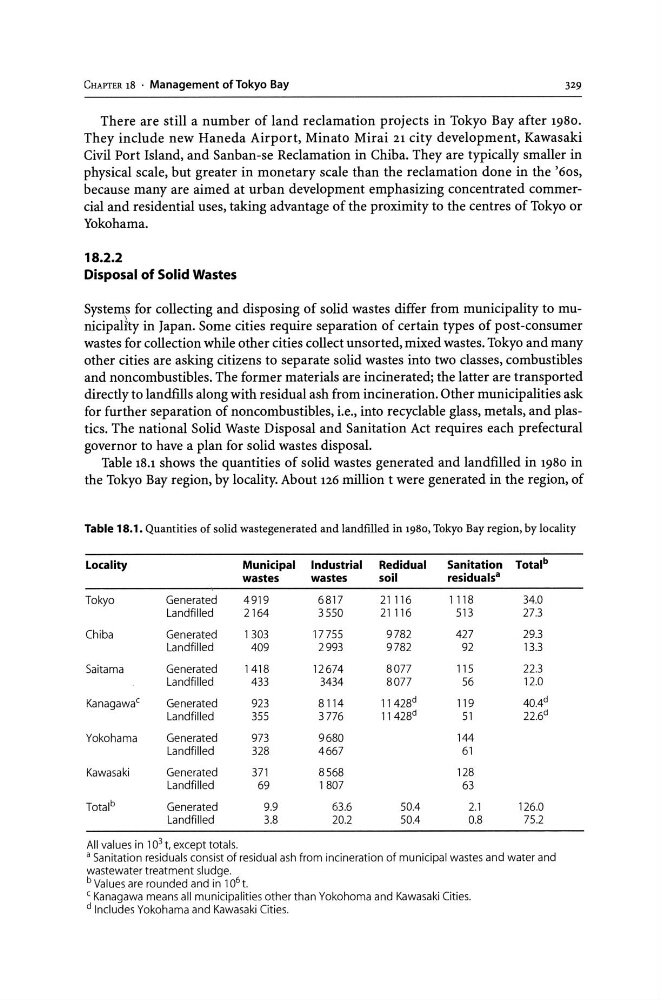
Table 18.1 shows the quantities of solid wastes generated and landfilled in 1980 in
the Tokyo Bay region, by locality. About 126 million t were generated in the region, of
Table 18.1. Quantities of solid wastegenerated and landfilled in 1980, Tokyo Bay region, by locality
Locality
Municipal Industrial Redidual
Sanitation Total b
wastes
wastes
soil
residuals a
Tokyo
Generated
4919
6817
21116
1118
34.0
Landfilled
2164
3550
21116
513
27.3
Chiba
Generated
1303
17755
9782
427
29.3
Landfilled
409
2993
9782
92
13.3
Saitama
Generated
1418
12674
8077
115
22.3
Landfilled
433
3434
8077
56
12.0
Kanagawa C
Generated
923
8114
11428 d
119
40.4 d
Landfilled
355
3776
11428 d
51
22.6 d
Yokohama
Generated
973
9680
144
Landfilled
328
4667
61
Kawasaki
Generated
371
8568
128
Landfilled
69
1807
63
Total b
Generated
9.9
63.6
50.4
2.1
126.0
Landfilled
3.8
20.2
50.4
0.8
75.2
All values in 10 3 t, except totals.
a Sanitation residuals consist of residual ash from incineration of municipal wastes and water and
wastewater treatment sludge.
b Values are rounded and in 10 6 t.
C Kanagawa means all municipalities other than Yokohoma and Kawasaki Cities.
d Includes Yokohama and Kawasaki Cities.
329
There are still a number of land reclamation projects in Tokyo Bay after 1980.
They include new Haneda Airport, Minato Mirai 21 city development, Kawasaki
Civil Port Island, and Sanban-se Reclamation in Chiba. They are typically smaller in
physical scale, but greater in monetary scale than the reclamation done in the '60S,
because many are aimed at urban development emphasizing concentrated commercial and residential uses, taking advantage of the proximity to the centres of Tokyo or
Yokohama.
18.2.2
Disposal of Solid Wastes
System~ for collecting and disposing of solid wastes differ from municipality to municipality in Japan. Some cities require separation of certain types of post-consumer
wastes for collection while other cities collect unsorted, mixed wastes. Tokyo and many
other cities are asking citizens to separate solid wastes into two classes, combustibles
and noncombustibles. The former materials are incinerated; the latter are transported
directly to landfills along with residual ash from incineration. Other municipalities ask
for further separation of noncombustibles, i.e., into recyclable glass, metals, and plastics. The national Solid Waste Disposal and Sanitation Act requires each prefectural
governor to have a plan for solid wastes disposal.
Table 18.1 shows the quantities of solid wastes generated and landfilled in 1980 in
the Tokyo Bay region, by locality. About 126 million t were generated in the region, of
Table 18.1. Quantities of solid wastegenerated and landfilled in 1980, Tokyo Bay region, by locality
Locality
Municipal Industrial Redidual
Sanitation Total b
wastes
wastes
soil
residuals a
Tokyo
Generated
4919
6817
21116
1118
34.0
Landfilled
2164
3550
21116
513
27.3
Chiba
Generated
1303
17755
9782
427
29.3
Landfilled
409
2993
9782
92
13.3
Saitama
Generated
1418
12674
8077
115
22.3
Landfilled
433
3434
8077
56
12.0
Kanagawa C
Generated
923
8114
11428 d
119
40.4 d
Landfilled
355
3776
11428 d
51
22.6 d
Yokohama
Generated
973
9680
144
Landfilled
328
4667
61
Kawasaki
Generated
371
8568
128
Landfilled
69
1807
63
Total b
Generated
9.9
63.6
50.4
2.1
126.0
Landfilled
3.8
20.2
50.4
0.8
75.2
All values in 10 3 t, except totals.
a Sanitation residuals consist of residual ash from incineration of municipal wastes and water and
wastewater treatment sludge.
b Values are rounded and in 10 6 t.
C Kanagawa means all municipalities other than Yokohoma and Kawasaki Cities.
d Includes Yokohama and Kawasaki Cities.