

FRANC~ .. : __ ., .. /··""~""""
/ CATALONIA
............ ..-:
Mugariver
L'Alt Emporda
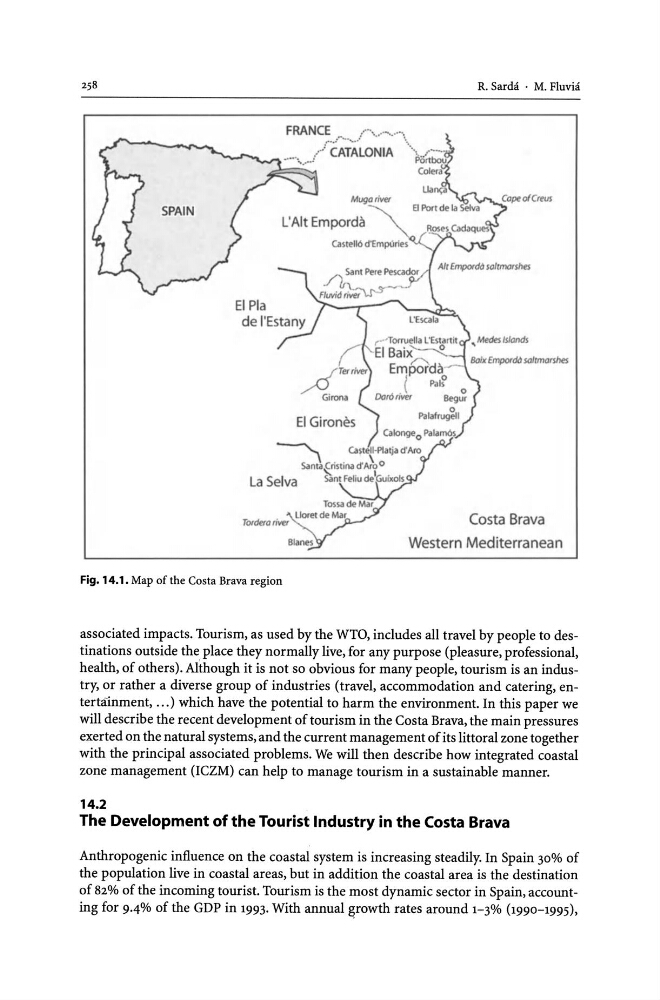
Fig. 14.1. Map of the Costa Brava region
R. Sarda . M. Fluvia
CapeofCreul
Costa Brava
Western Mediterranean
associated impacts. Tourism, as used by the WTO, includes all travel by people to destinations outside the place they normally live, for any purpose (pleasure, professional,
health, of others). Although it is not so obvious for many people, tourism is an industry, or rather a diverse group of industries (travel, accommodation and catering, entertainment, ... ) which have the potential to harm the environment. In this paper we
will describe the recent development of tourism in the Costa Brava, the main pressures
exerted on the natural systems, and the current management of its littoral zone together
with the principal associated problems. We will then describe how integrated coastal
zone management (ICZM) can help to manage tourism in a sustainable manner.
14.2
The Development of the Tourist Industry in the Costa Brava
Anthropogenic influence on the coastal system is increasing steadily. In Spain 30% of
the population live in coastal areas, but in addition the coastal area is the destination
of 82% of the incoming tourist. Tourism is the most dynamic sector in Spain, accounting for 9.4% of the GDP in 1993. With annual &rowth rates around 1-3% (1990-1995),
/ CATALONIA
............ ..-:
Mugariver
L'Alt Emporda
Fig. 14.1. Map of the Costa Brava region
R. Sarda . M. Fluvia
CapeofCreul
Costa Brava
Western Mediterranean
associated impacts. Tourism, as used by the WTO, includes all travel by people to destinations outside the place they normally live, for any purpose (pleasure, professional,
health, of others). Although it is not so obvious for many people, tourism is an industry, or rather a diverse group of industries (travel, accommodation and catering, entertainment, ... ) which have the potential to harm the environment. In this paper we
will describe the recent development of tourism in the Costa Brava, the main pressures
exerted on the natural systems, and the current management of its littoral zone together
with the principal associated problems. We will then describe how integrated coastal
zone management (ICZM) can help to manage tourism in a sustainable manner.
14.2
The Development of the Tourist Industry in the Costa Brava
Anthropogenic influence on the coastal system is increasing steadily. In Spain 30% of
the population live in coastal areas, but in addition the coastal area is the destination
of 82% of the incoming tourist. Tourism is the most dynamic sector in Spain, accounting for 9.4% of the GDP in 1993. With annual &rowth rates around 1-3% (1990-1995),