

CHAPTER 12 • Integrated Coastal Zone Management (lCZM) in 1ndonesia
229
ecological stability and their multiple use attributes is of great importance. Further,
attractive coastal areas with unique scenic views have always existed in Indonesia.
Consequently, tourism poses serious pressures on some settlements along with their
agricultural lands in the coastal zone. A pattern of increasing use of coastal resources in each province continue up to now to yield a very impressive picture of economic development at the present. But, the rapid changes occurring in the nearshore
areas and lands in the coastal zones, is not adequately understood and hamper development in Indonesia. The most critical point in sustainable development as enunciated in the GDHN (Garis Besar Haluan Negara) is the generation of new employment
opportunities. The coastal zones offer possibilities of enabling more and more people
to engage in meaningful activities in a development oriented society. Furthermore,
maritime activities can help solving problems like unemployment and underemployment i.n Indonesia. So, integrated coastal zone management is very important today
in Indonesia.
12.4
Integrated Coastal Zone Management in Indonesia
Coastal zones in Indonesia need to be managed as complete systems in which the many
complex relations among the different environments and their interactions with local
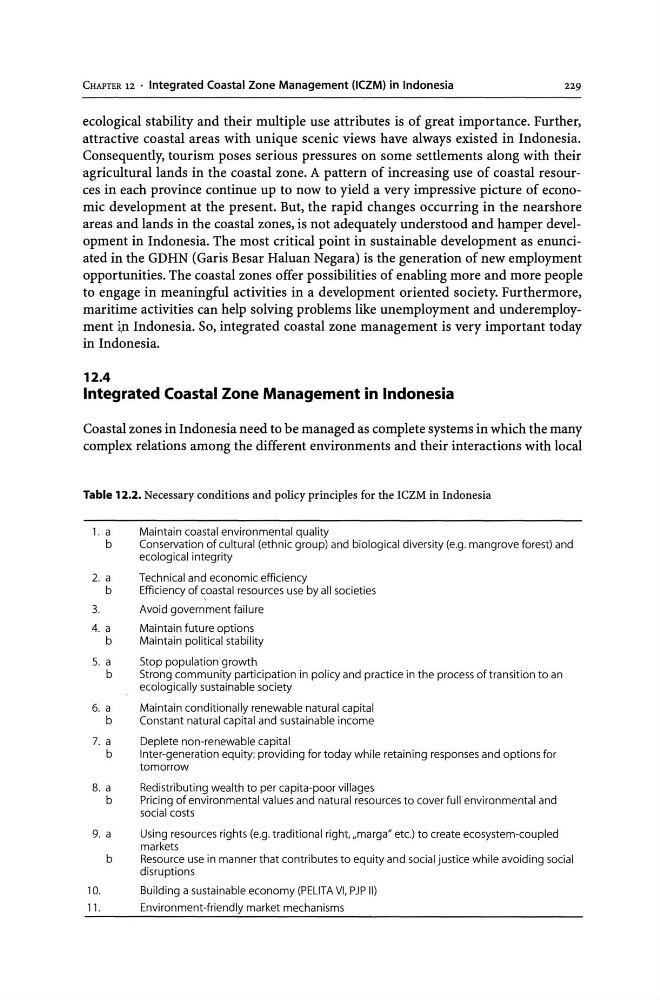
Table 12.2. Necessary conditions and policy principles for the ICZM in Indonesia
1. a
Maintain coastal environmental quality
b
Conservation of cultural (ethnic group) and biological diversity (e.g. mangrove forest) and
ecological integrity
2. a
Technical and economic effiCiency
b
Efficiency of ~oastal resources use by all societies
3.
Avoid government failure
4. a
Maintain future options
b
Maintain political stability
5. a
Stop population'growth
b
Strong community participation in policy and practice in the process of transition to an
ecologically sustainable society
6. a
Maintain conditionally renewable natural capital
b
Constant natural capital and sustainable income
7. a
Deplete non-renewable capital
b
Inter-generation equity: providing for today while retaining responses and options for
tomorrow
8. a
Redistributing wealth to per capita-poor villages
b
Pricing of environmental values and natural resources to cover full environmental and
social costs
9. a
Using resources rights (e.g. traditional right, "marga" etc.) to create ecosystem-coupled
markets
b
Resource use in manner that contributes to equity and social justice while avoiding social
disruptions
10.
Building a sustainable economy (PELITA VI, PJP II)
11.
Environment-friendly market mechanisms
229
ecological stability and their multiple use attributes is of great importance. Further,
attractive coastal areas with unique scenic views have always existed in Indonesia.
Consequently, tourism poses serious pressures on some settlements along with their
agricultural lands in the coastal zone. A pattern of increasing use of coastal resources in each province continue up to now to yield a very impressive picture of economic development at the present. But, the rapid changes occurring in the nearshore
areas and lands in the coastal zones, is not adequately understood and hamper development in Indonesia. The most critical point in sustainable development as enunciated in the GDHN (Garis Besar Haluan Negara) is the generation of new employment
opportunities. The coastal zones offer possibilities of enabling more and more people
to engage in meaningful activities in a development oriented society. Furthermore,
maritime activities can help solving problems like unemployment and underemployment i.n Indonesia. So, integrated coastal zone management is very important today
in Indonesia.
12.4
Integrated Coastal Zone Management in Indonesia
Coastal zones in Indonesia need to be managed as complete systems in which the many
complex relations among the different environments and their interactions with local
Table 12.2. Necessary conditions and policy principles for the ICZM in Indonesia
1. a
Maintain coastal environmental quality
b
Conservation of cultural (ethnic group) and biological diversity (e.g. mangrove forest) and
ecological integrity
2. a
Technical and economic effiCiency
b
Efficiency of ~oastal resources use by all societies
3.
Avoid government failure
4. a
Maintain future options
b
Maintain political stability
5. a
Stop population'growth
b
Strong community participation in policy and practice in the process of transition to an
ecologically sustainable society
6. a
Maintain conditionally renewable natural capital
b
Constant natural capital and sustainable income
7. a
Deplete non-renewable capital
b
Inter-generation equity: providing for today while retaining responses and options for
tomorrow
8. a
Redistributing wealth to per capita-poor villages
b
Pricing of environmental values and natural resources to cover full environmental and
social costs
9. a
Using resources rights (e.g. traditional right, "marga" etc.) to create ecosystem-coupled
markets
b
Resource use in manner that contributes to equity and social justice while avoiding social
disruptions
10.
Building a sustainable economy (PELITA VI, PJP II)
11.
Environment-friendly market mechanisms