

foredune has experienced some minor erosion. The zone of active sedimentation
reached the relict storm scarp south of T3 (Fig. 5.16) in 2010. This sandsheet
should overtop the relict scarp before 2015. In general, the dune ridges of the
northern section of the barrier are eroding relatively rapidly, fueling downwind
sedimentation and the development of a slip face. This feature is advancing
landward (i.e., to the east).
Depositional and erosional features, aligned more or less parallel to the prevailing westerly winds, now etch the surface of the barrier. The foredune ridges are
now no longer evident. Shadow dunes have formed behind surviving specimens of
flax (Phormium tenax), and clusters of pı ¯ngao (Fig. 5.17). Pı ¯ngao was systematically planted across the barrier in 2002, 2003, and 2004, in clusters of 5–7 plants,
20–30 m apart. The subsequent plant growth and associated shadow dune development has been rapid. These dunes are now 2–3 high and 10–20 m in length. The
plantings located between T2 and T3 were initially successful; however, many are
now eroding as the surrounding surface of the barrier is lowered and the sides of
the shadow dunes are undercut. This section of the barrier only formed in conjunction with marram grass establishment—aeolian processes now exceed the
capacity of pı ¯ngao to sustain these shadow dunes.
5.4.4 Problems Associated with Marram Eradication
We anticipated that marram would be eradicated over a period of 3–5 years at the
outset of the MEP in Doughboy Bay. In fact, spray operations are ongoing,
although the scale of the operations will be significantly reduced by 2013. Completion of the Doughboy Bay operation has been delayed by two processes—
germination of in situ seed and two marram rhizome stranding events (Hilton and
Konlechner 2011). The latter is relatively trivial, but worthy of mention. A patch
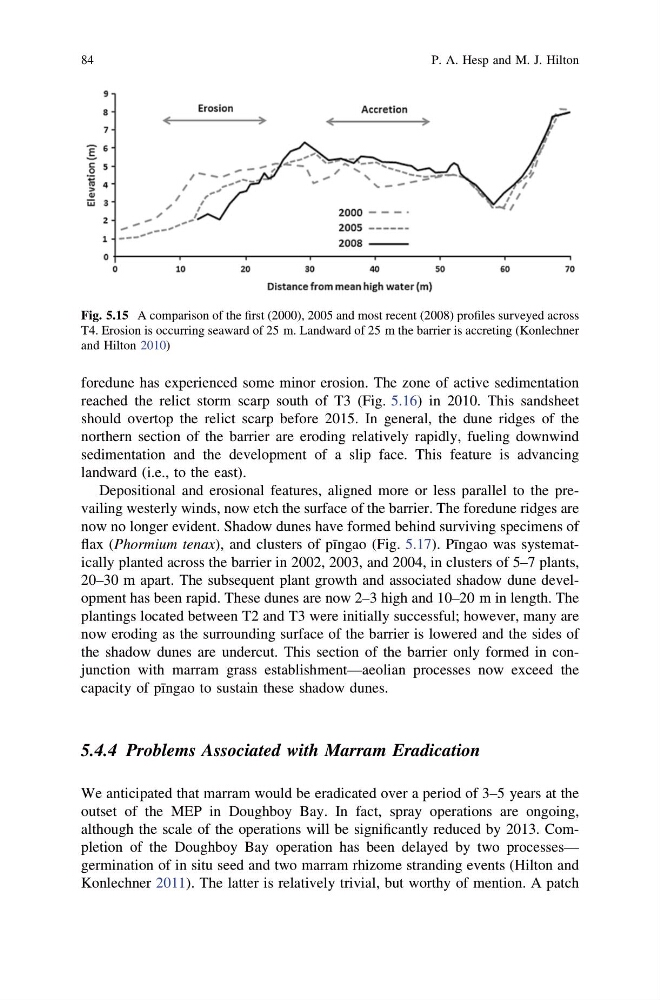
Fig. 5.15 A comparison of the first (2000), 2005 and most recent (2008) profiles surveyed across
T4. Erosion is occurring seaward of 25 m. Landward of 25 m the barrier is accreting (Konlechner
and Hilton 2010)
84
P. A. Hesp and M. J. Hilton
reached the relict storm scarp south of T3 (Fig. 5.16) in 2010. This sandsheet
should overtop the relict scarp before 2015. In general, the dune ridges of the
northern section of the barrier are eroding relatively rapidly, fueling downwind
sedimentation and the development of a slip face. This feature is advancing
landward (i.e., to the east).
Depositional and erosional features, aligned more or less parallel to the prevailing westerly winds, now etch the surface of the barrier. The foredune ridges are
now no longer evident. Shadow dunes have formed behind surviving specimens of
flax (Phormium tenax), and clusters of pı ¯ngao (Fig. 5.17). Pı ¯ngao was systematically planted across the barrier in 2002, 2003, and 2004, in clusters of 5–7 plants,
20–30 m apart. The subsequent plant growth and associated shadow dune development has been rapid. These dunes are now 2–3 high and 10–20 m in length. The
plantings located between T2 and T3 were initially successful; however, many are
now eroding as the surrounding surface of the barrier is lowered and the sides of
the shadow dunes are undercut. This section of the barrier only formed in conjunction with marram grass establishment—aeolian processes now exceed the
capacity of pı ¯ngao to sustain these shadow dunes.
5.4.4 Problems Associated with Marram Eradication
We anticipated that marram would be eradicated over a period of 3–5 years at the
outset of the MEP in Doughboy Bay. In fact, spray operations are ongoing,
although the scale of the operations will be significantly reduced by 2013. Completion of the Doughboy Bay operation has been delayed by two processes—
germination of in situ seed and two marram rhizome stranding events (Hilton and
Konlechner 2011). The latter is relatively trivial, but worthy of mention. A patch
Fig. 5.15 A comparison of the first (2000), 2005 and most recent (2008) profiles surveyed across
T4. Erosion is occurring seaward of 25 m. Landward of 25 m the barrier is accreting (Konlechner
and Hilton 2010)
84
P. A. Hesp and M. J. Hilton