

as total plant cover. In the plot of the youngest dune, ‘‘dune 4,’’ the number of
species also increased, albeit not significantly, owing to the low number of
observations.
4.3.3 Species Composition Dynamics and Functional Traits
Based on the TWINSPAN analysis, six groups of plot-year relevées (‘‘plant
communities’’) could be defined (Tables 4.2, and 4.3). The distribution pattern of
the groups in the dune system could be related to a combination of the factors time
and distance to the sea (Table 4.4).
Group A (8 relevées) represents the species composition of ‘‘dune 1a’’ and
‘‘dune 1b’’ during the first years, as well as the first year of the plot of the most
landward of the new foredunes, ‘‘dune 2.’’ The cover of the planted A. arenaria
was mostly high, but there were also many beach and inland annuals (62 %). Most
species were dispersed by wind (54 %).
Group B1 (14 relevées) represents the first years of development of ‘‘dune 3’’
and ‘‘dune 4’’ and also some years of ‘‘dune 1b.’’ The relevées are characterized by
strong sand movement and sand accretion and by dune-building rhizome
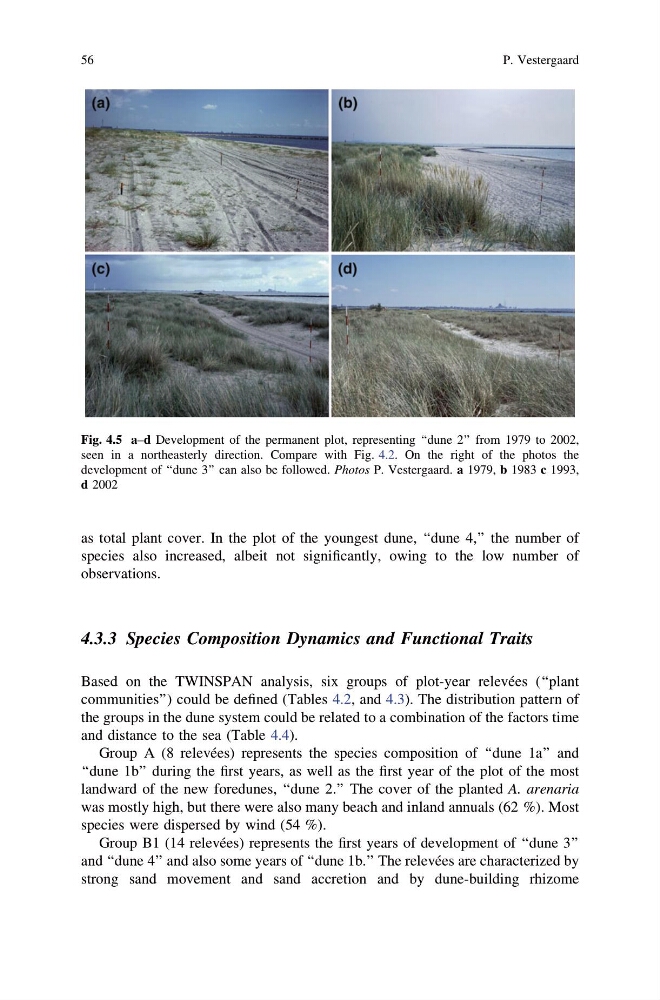
Fig. 4.5 a–d Development of the permanent plot, representing ‘‘dune 2’’ from 1979 to 2002,
seen in a northeasterly direction. Compare with Fig. 4.2. On the right of the photos the
development of ‘‘dune 3’’ can also be followed. Photos P. Vestergaard. a 1979, b 1983 c 1993,
d 2002
56
P. Vestergaard
species also increased, albeit not significantly, owing to the low number of
observations.
4.3.3 Species Composition Dynamics and Functional Traits
Based on the TWINSPAN analysis, six groups of plot-year relevées (‘‘plant
communities’’) could be defined (Tables 4.2, and 4.3). The distribution pattern of
the groups in the dune system could be related to a combination of the factors time
and distance to the sea (Table 4.4).
Group A (8 relevées) represents the species composition of ‘‘dune 1a’’ and
‘‘dune 1b’’ during the first years, as well as the first year of the plot of the most
landward of the new foredunes, ‘‘dune 2.’’ The cover of the planted A. arenaria
was mostly high, but there were also many beach and inland annuals (62 %). Most
species were dispersed by wind (54 %).
Group B1 (14 relevées) represents the first years of development of ‘‘dune 3’’
and ‘‘dune 4’’ and also some years of ‘‘dune 1b.’’ The relevées are characterized by
strong sand movement and sand accretion and by dune-building rhizome
Fig. 4.5 a–d Development of the permanent plot, representing ‘‘dune 2’’ from 1979 to 2002,
seen in a northeasterly direction. Compare with Fig. 4.2. On the right of the photos the
development of ‘‘dune 3’’ can also be followed. Photos P. Vestergaard. a 1979, b 1983 c 1993,
d 2002
56
P. Vestergaard