

with a year of high precipitation values (Fig. 16.3b). The quadrats that were
originally dominated by Dalbergia remained dry for a longer period of time and
show high variation in the water levels, followed by the quadrats dominated by
Echinochloa and Sagittaria. The two control areas as well as the Echinochloa–
Typha-dominated quadrats show prolonged flooding with relatively lower variation over time.
16.3.2 Plant Diversity
Both plant diversity and dominance changed over time. The richness increased
from 14 to 19 plant species in March 2007 and April 2010 respectively.
The Shannon diversity index (in Log 10 ) increased from 0.88 to 0.94. There is 47 %
species similitude in the plant communities comparing time 0 (March 2007) and
time 36 (April 2010).
Plant dominance showed high variation owing to restoration activities during
the first year (Fig. 16.4). Echinochloa and Dalbergia were the dominant species
when the restoration started. The RIV of Echinochloa decreased almost tenfold,
from an average of 0.35 to 0.034, and remained very low until month 28. Sagittaria and Typha, two native wetland species were also abundant and interspersed
in the area, as well as Ipomoea tiliacea, a creeper associated with emergent
(a)
(b)
(c)
(d)
(e)
(f)
(g)
(h)
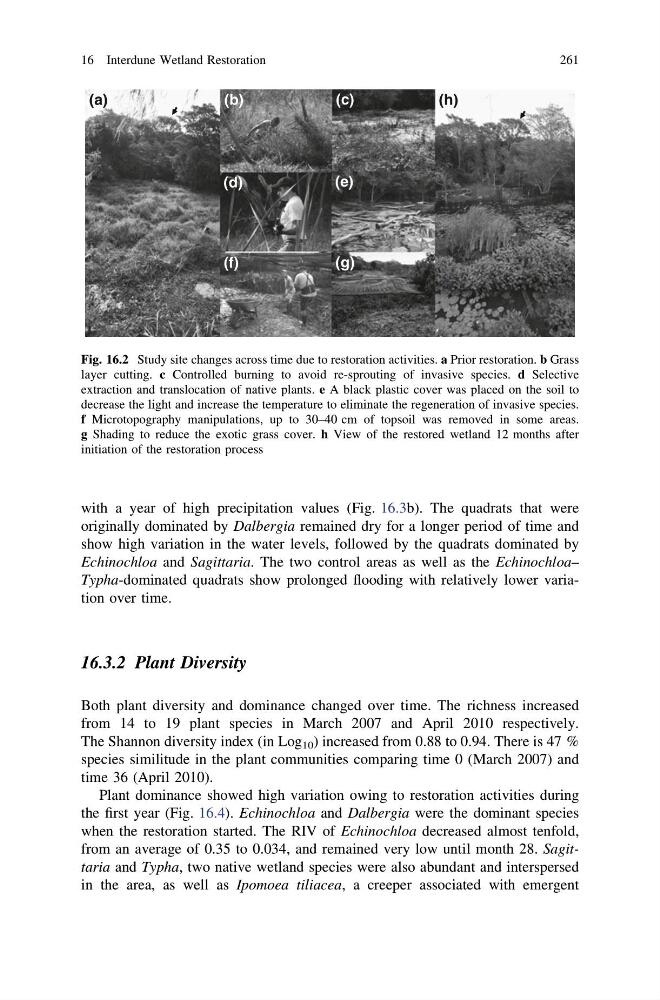
Fig. 16.2 Study site changes across time due to restoration activities. a Prior restoration. b Grass
layer cutting. c Controlled burning to avoid re-sprouting of invasive species. d Selective
extraction and translocation of native plants. e A black plastic cover was placed on the soil to
decrease the light and increase the temperature to eliminate the regeneration of invasive species.
f Microtopography manipulations, up to 30–40 cm of topsoil was removed in some areas.
g Shading to reduce the exotic grass cover. h View of the restored wetland 12 months after
initiation of the restoration process
16 Interdune Wetland Restoration
261
originally dominated by Dalbergia remained dry for a longer period of time and
show high variation in the water levels, followed by the quadrats dominated by
Echinochloa and Sagittaria. The two control areas as well as the Echinochloa–
Typha-dominated quadrats show prolonged flooding with relatively lower variation over time.
16.3.2 Plant Diversity
Both plant diversity and dominance changed over time. The richness increased
from 14 to 19 plant species in March 2007 and April 2010 respectively.
The Shannon diversity index (in Log 10 ) increased from 0.88 to 0.94. There is 47 %
species similitude in the plant communities comparing time 0 (March 2007) and
time 36 (April 2010).
Plant dominance showed high variation owing to restoration activities during
the first year (Fig. 16.4). Echinochloa and Dalbergia were the dominant species
when the restoration started. The RIV of Echinochloa decreased almost tenfold,
from an average of 0.35 to 0.034, and remained very low until month 28. Sagittaria and Typha, two native wetland species were also abundant and interspersed
in the area, as well as Ipomoea tiliacea, a creeper associated with emergent
(a)
(b)
(c)
(d)
(e)
(f)
(g)
(h)
Fig. 16.2 Study site changes across time due to restoration activities. a Prior restoration. b Grass
layer cutting. c Controlled burning to avoid re-sprouting of invasive species. d Selective
extraction and translocation of native plants. e A black plastic cover was placed on the soil to
decrease the light and increase the temperature to eliminate the regeneration of invasive species.
f Microtopography manipulations, up to 30–40 cm of topsoil was removed in some areas.
g Shading to reduce the exotic grass cover. h View of the restored wetland 12 months after
initiation of the restoration process
16 Interdune Wetland Restoration
261