

On the other hand, plant diversity of coastal pine plantations depends on the
management of both the pine trees and the understory. Where pine trees are
managed for wood and pine seed production or conservation proposals, and
maritime juniper is favored over other woody species as understory, plant diversity
is high, as in La Breña and Enebrales de Punta Umbría. However, removal of the
understory or the abandonment of the exploitation often result in communities
poor in plant species and of low diversity, as in the El Portil and Punta Paloma
pine plantations (Muñoz-Reinoso 2004).
9.4 Threats to the Juniperus Woodlands
During the last century, coastal juniper woodlands have almost been destroyed or
deeply disturbed by human activities. Nowadays, urban development and associated tourist pressures are still the main threat to coastal habitats where maritime
junipers survive. Coastal urban development directly destroys the habitat, and
produces fragmentation and isolation of juniper populations, interrupting ecological processes (Fig. 9.4). Thus, fragmentation, loss of connectivity (Muñoz-Reinoso
et al. 2005; Puerto-Marchena et al. 2009), and intense anthropic use in small juniper
stands have reduced the presence of mammals species that disperse juniper seeds.
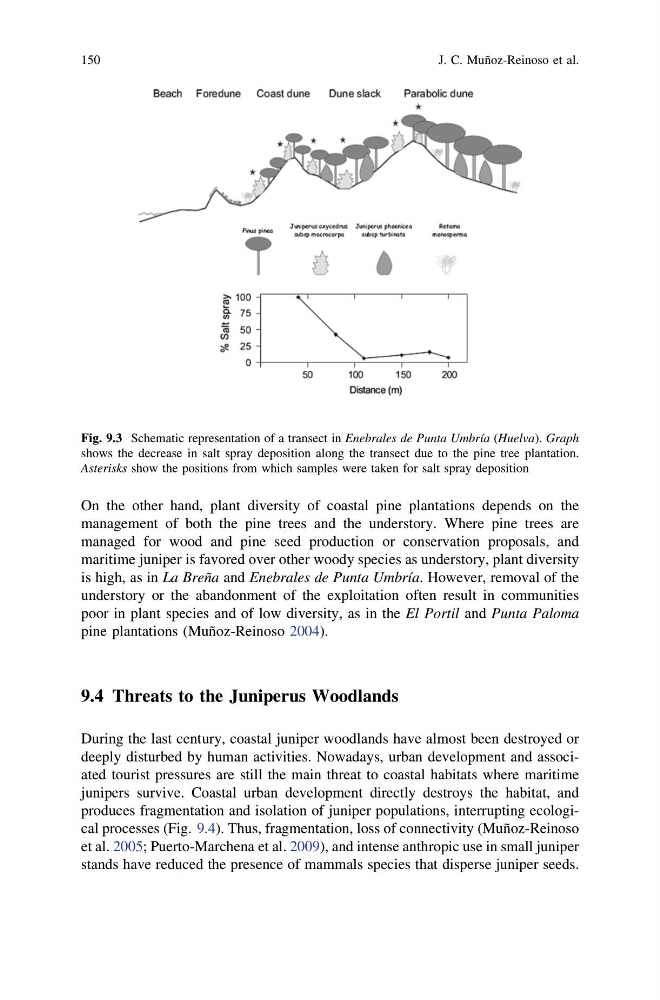
Fig. 9.3 Schematic representation of a transect in Enebrales de Punta Umbría (Huelva). Graph
shows the decrease in salt spray deposition along the transect due to the pine tree plantation.
Asterisks show the positions from which samples were taken for salt spray deposition
150
J. C. Muñoz-Reinoso et al.
management of both the pine trees and the understory. Where pine trees are
managed for wood and pine seed production or conservation proposals, and
maritime juniper is favored over other woody species as understory, plant diversity
is high, as in La Breña and Enebrales de Punta Umbría. However, removal of the
understory or the abandonment of the exploitation often result in communities
poor in plant species and of low diversity, as in the El Portil and Punta Paloma
pine plantations (Muñoz-Reinoso 2004).
9.4 Threats to the Juniperus Woodlands
During the last century, coastal juniper woodlands have almost been destroyed or
deeply disturbed by human activities. Nowadays, urban development and associated tourist pressures are still the main threat to coastal habitats where maritime
junipers survive. Coastal urban development directly destroys the habitat, and
produces fragmentation and isolation of juniper populations, interrupting ecological processes (Fig. 9.4). Thus, fragmentation, loss of connectivity (Muñoz-Reinoso
et al. 2005; Puerto-Marchena et al. 2009), and intense anthropic use in small juniper
stands have reduced the presence of mammals species that disperse juniper seeds.
Fig. 9.3 Schematic representation of a transect in Enebrales de Punta Umbría (Huelva). Graph
shows the decrease in salt spray deposition along the transect due to the pine tree plantation.
Asterisks show the positions from which samples were taken for salt spray deposition
150
J. C. Muñoz-Reinoso et al.