

Romanian seacoast, although the longspine sandbur was noticed in the harbor area
only in small clusters.
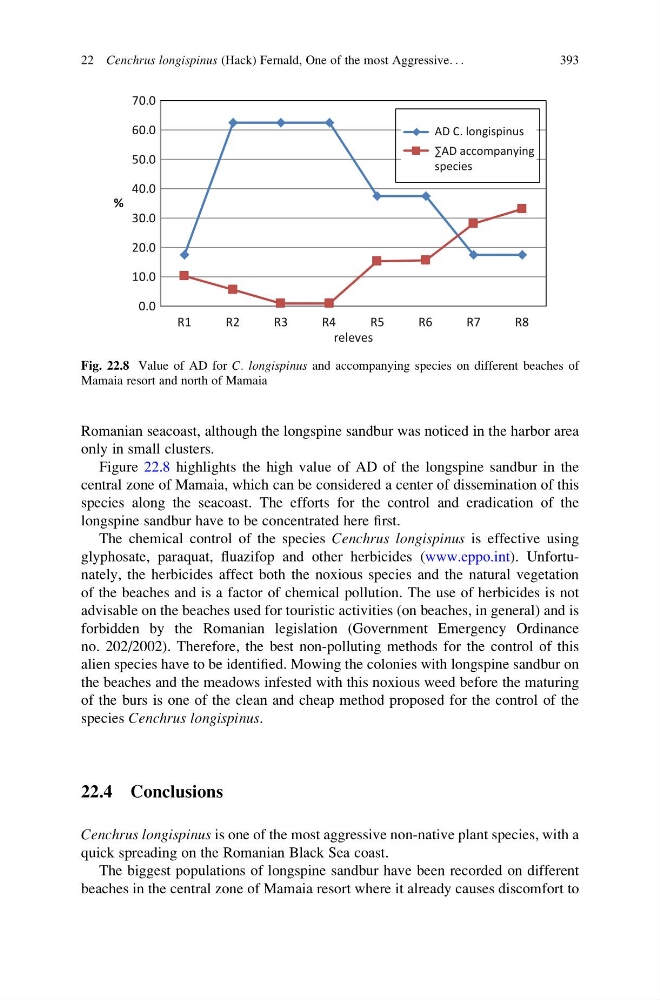
Figure 22.8 highlights the high value of AD of the longspine sandbur in the
central zone of Mamaia, which can be considered a center of dissemination of this
species along the seacoast. The efforts for the control and eradication of the
longspine sandbur have to be concentrated here first.
The chemical control of the species Cenchrus longispinus is effective using
glyphosate, paraquat, fluazifop and other herbicides (www.eppo.int). Unfortunately, the herbicides affect both the noxious species and the natural vegetation
of the beaches and is a factor of chemical pollution. The use of herbicides is not
advisable on the beaches used for touristic activities (on beaches, in general) and is
forbidden by the Romanian legislation (Government Emergency Ordinance
no. 202/2002). Therefore, the best non-polluting methods for the control of this
alien species have to be identified. Mowing the colonies with longspine sandbur on
the beaches and the meadows infested with this noxious weed before the maturing
of the burs is one of the clean and cheap method proposed for the control of the
species Cenchrus longispinus.
22.4 Conclusions
Cenchrus longispinus is one of the most aggressive non-native plant species, with a
quick spreading on the Romanian Black Sea coast.
The biggest populations of longspine sandbur have been recorded on different
beaches in the central zone of Mamaia resort where it already causes discomfort to
0.0
10.0
20.0
30.0
40.0
50.0
60.0
70.0
R1
R2
R3
R4
R5
R6
R7
R8
%
releves
∑AD accompanying
species
AD C. longispinus
Fig. 22.8 Value of AD for C. longispinus and accompanying species on different beaches of
Mamaia resort and north of Mamaia
22 Cenchrus longispinus (Hack) Fernald, One of the most Aggressive. . .
393
only in small clusters.
Figure 22.8 highlights the high value of AD of the longspine sandbur in the
central zone of Mamaia, which can be considered a center of dissemination of this
species along the seacoast. The efforts for the control and eradication of the
longspine sandbur have to be concentrated here first.
The chemical control of the species Cenchrus longispinus is effective using
glyphosate, paraquat, fluazifop and other herbicides (www.eppo.int). Unfortunately, the herbicides affect both the noxious species and the natural vegetation
of the beaches and is a factor of chemical pollution. The use of herbicides is not
advisable on the beaches used for touristic activities (on beaches, in general) and is
forbidden by the Romanian legislation (Government Emergency Ordinance
no. 202/2002). Therefore, the best non-polluting methods for the control of this
alien species have to be identified. Mowing the colonies with longspine sandbur on
the beaches and the meadows infested with this noxious weed before the maturing
of the burs is one of the clean and cheap method proposed for the control of the
species Cenchrus longispinus.
22.4 Conclusions
Cenchrus longispinus is one of the most aggressive non-native plant species, with a
quick spreading on the Romanian Black Sea coast.
The biggest populations of longspine sandbur have been recorded on different
beaches in the central zone of Mamaia resort where it already causes discomfort to
0.0
10.0
20.0
30.0
40.0
50.0
60.0
70.0
R1
R2
R3
R4
R5
R6
R7
R8
%
releves
∑AD accompanying
species
AD C. longispinus
Fig. 22.8 Value of AD for C. longispinus and accompanying species on different beaches of
Mamaia resort and north of Mamaia
22 Cenchrus longispinus (Hack) Fernald, One of the most Aggressive. . .
393