

stratospheric fallout ratios all supported the finding that Chernobyl-derived Pu was
being transported in an episodic fashion into the Black Sea (Table 18.2).
Valuable Pu fingerprinting information can also be ascertained using
240 Pu/
39 Pu
atom ratios. Since Pu is almost exclusively of synthetic origin, its isotope composition reflects the neutron flux conditions present during its production. The main
sources of Pu in the Earth’s surface environment have been releases from Pu
production reactors (i.e., Hanford), power reactor accidents (e.g., Chernobyl), and
fallout from the large-scale atmospheric tests of nuclear weapons that commenced
in the early 1950s.
Compared to stratospheric fallout, Chernobyl debris exhibits much higher
240 Pu/
239 Pu; Muramatsu et al. (2000) studied soils from the 30 km exclusion zone near the
reactor vast majority of Th and U.
Pu fractions were analyzed by sector field ICPMS using a VG Axiom MC system
equipped with a CETAC U-5000AT ultrasonic nebulizer. The ICPMS instrument
was operated in the single collector, electron multiplier mode. The low-resolution
mode (m/Am ~400 at 10% height) was used. A tuning solution containing 0.05 pg/L
U was used to adjust and optimize the experimental conditions before analysis.
Solutions were supplied to the ultrasonic nebulizer by means of a peristaltic pump
operating at an uptake rate of 400–500 pL/min. Ion intensities were collected at a
single point at the summit of each mass spectral peak with a dwell time of 10 ms;
ions monitored were
238 U+,
239 Pu+,
240 Pu+, and
242 Pu+. The E-scan (electrostatic
sector scanning) mode was used to cycle repeatedly between these ions for three to
five sequential 90 s integrations. A
238 U
1 H
+
/
238 U
+ ratio of 0.00003 was measured,
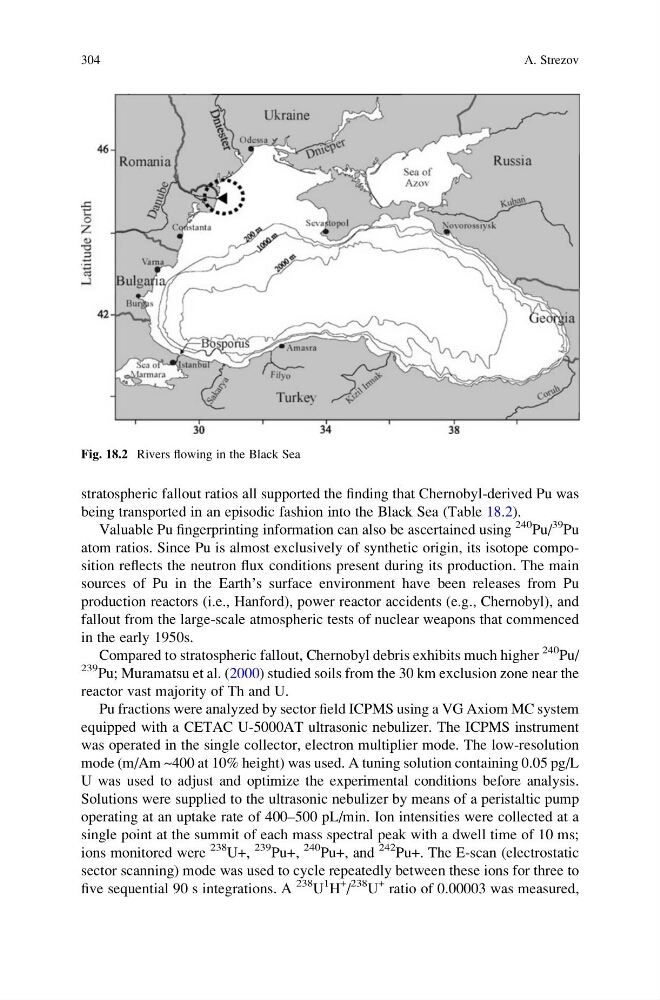
Fig. 18.2 Rivers flowing in the Black Sea
304
A. Strezov
being transported in an episodic fashion into the Black Sea (Table 18.2).
Valuable Pu fingerprinting information can also be ascertained using
240 Pu/
39 Pu
atom ratios. Since Pu is almost exclusively of synthetic origin, its isotope composition reflects the neutron flux conditions present during its production. The main
sources of Pu in the Earth’s surface environment have been releases from Pu
production reactors (i.e., Hanford), power reactor accidents (e.g., Chernobyl), and
fallout from the large-scale atmospheric tests of nuclear weapons that commenced
in the early 1950s.
Compared to stratospheric fallout, Chernobyl debris exhibits much higher
240 Pu/
239 Pu; Muramatsu et al. (2000) studied soils from the 30 km exclusion zone near the
reactor vast majority of Th and U.
Pu fractions were analyzed by sector field ICPMS using a VG Axiom MC system
equipped with a CETAC U-5000AT ultrasonic nebulizer. The ICPMS instrument
was operated in the single collector, electron multiplier mode. The low-resolution
mode (m/Am ~400 at 10% height) was used. A tuning solution containing 0.05 pg/L
U was used to adjust and optimize the experimental conditions before analysis.
Solutions were supplied to the ultrasonic nebulizer by means of a peristaltic pump
operating at an uptake rate of 400–500 pL/min. Ion intensities were collected at a
single point at the summit of each mass spectral peak with a dwell time of 10 ms;
ions monitored were
238 U+,
239 Pu+,
240 Pu+, and
242 Pu+. The E-scan (electrostatic
sector scanning) mode was used to cycle repeatedly between these ions for three to
five sequential 90 s integrations. A
238 U
1 H
+
/
238 U
+ ratio of 0.00003 was measured,
Fig. 18.2 Rivers flowing in the Black Sea
304
A. Strezov