

the radionuclides in the post-Chernobyl period may be linked to the duration of
receipt of Chernobyl contamination.
The degree of cesium sorption by particulate matter can affect the availability of
its chemical analogue – potassium in seawater. However, this factor is present in
Black Sea and in the Mediterranean Sea, where potassium is contained in a
sufficient amount and is about 0.03 and 0.05% by weight, respectively. On the Cs
lower sorption activity indicates also lower the Cs accumulation concerning to
bottom sediments and suspended matter (Table 16.3). The Cs larger T 1/2ef compared to the Pu T 1/2ef in the Black Sea is obviously connected with the physical–
chemical properties of this element. Though it is chemically very active, but it has
one degree of oxidation. So, Cs is not affected by the redox conditions in the Black
Sea, experienced by plutonium. The experimental study results of the cesium
accumulation by bottom sediment in different redox conditions have shown that
the latter have little effect on the cesium sorption by bottom sediment (Polikarpov
and Lazorenko 1992). The difference between physical–chemical properties of
plutonium and cesium and the presence of specific redox conditions in the Black
Sea led to the fact that the difference of the Pu T 1/2ef in surface waters for the
compared seas 3 years exceeds the difference of the Cs T 1/2ef in surface waters in
the Mediterranean and Black Sea (Table.16.3), which amounts to 33%. Perhaps this
is the percentage that gives an estimate the impact of specific physical–chemical
characteristics of the Black Sea waters and plutonium properties on its redistribution processes in the ecosystems of the seas.
The intensity of the plutonium elimination determines the rate of self–purification of the Black Sea surface water by biogeochemical processes of ecosystem
functioning, including some biotic components (in particular, the production processes that serve as an indicator of trophic level of water) and physical–chemical
transformations, which led to the formation of more powerful biogeochemical
sedimentation plutonium fluxes into bottom sediment.
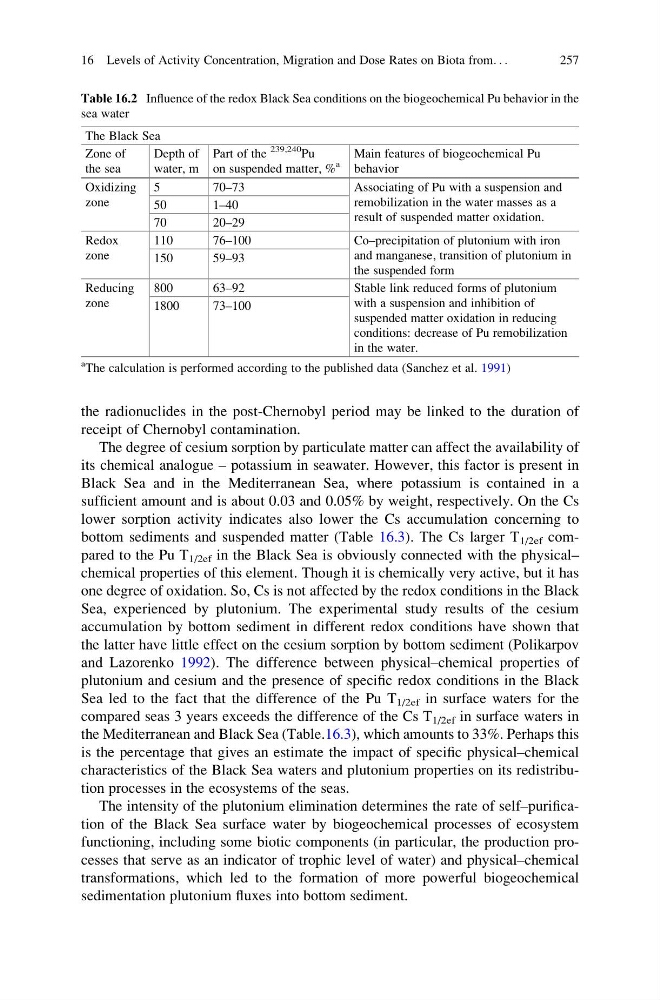
Table 16.2 Influence of the redox Black Sea conditions on the biogeochemical Pu behavior in the
sea water
The Black Sea
Zone of
the sea
Depth of
water, m
Part of the
239,240
Pu
on suspended matter, %
a
Main features of biogeochemical Pu
behavior
Oxidizing
zone
5
70–73
Associating of Pu with a suspension and
remobilization in the water masses as a
result of suspended matter oxidation.
50
1–40
70
20–29
Redox
zone
110
76–100
Co–precipitation of plutonium with iron
and manganese, transition of plutonium in
the suspended form
150
59–93
Reducing
zone
800
63–92
Stable link reduced forms of plutonium
with a suspension and inhibition of
suspended matter oxidation in reducing
conditions: decrease of Pu remobilization
in the water.
1800
73–100
a
The calculation is performed according to the published data (Sanchez et al. 1991)
16 Levels of Activity Concentration, Migration and Dose Rates on Biota from. . .
257
receipt of Chernobyl contamination.
The degree of cesium sorption by particulate matter can affect the availability of
its chemical analogue – potassium in seawater. However, this factor is present in
Black Sea and in the Mediterranean Sea, where potassium is contained in a
sufficient amount and is about 0.03 and 0.05% by weight, respectively. On the Cs
lower sorption activity indicates also lower the Cs accumulation concerning to
bottom sediments and suspended matter (Table 16.3). The Cs larger T 1/2ef compared to the Pu T 1/2ef in the Black Sea is obviously connected with the physical–
chemical properties of this element. Though it is chemically very active, but it has
one degree of oxidation. So, Cs is not affected by the redox conditions in the Black
Sea, experienced by plutonium. The experimental study results of the cesium
accumulation by bottom sediment in different redox conditions have shown that
the latter have little effect on the cesium sorption by bottom sediment (Polikarpov
and Lazorenko 1992). The difference between physical–chemical properties of
plutonium and cesium and the presence of specific redox conditions in the Black
Sea led to the fact that the difference of the Pu T 1/2ef in surface waters for the
compared seas 3 years exceeds the difference of the Cs T 1/2ef in surface waters in
the Mediterranean and Black Sea (Table.16.3), which amounts to 33%. Perhaps this
is the percentage that gives an estimate the impact of specific physical–chemical
characteristics of the Black Sea waters and plutonium properties on its redistribution processes in the ecosystems of the seas.
The intensity of the plutonium elimination determines the rate of self–purification of the Black Sea surface water by biogeochemical processes of ecosystem
functioning, including some biotic components (in particular, the production processes that serve as an indicator of trophic level of water) and physical–chemical
transformations, which led to the formation of more powerful biogeochemical
sedimentation plutonium fluxes into bottom sediment.
Table 16.2 Influence of the redox Black Sea conditions on the biogeochemical Pu behavior in the
sea water
The Black Sea
Zone of
the sea
Depth of
water, m
Part of the
239,240
Pu
on suspended matter, %
a
Main features of biogeochemical Pu
behavior
Oxidizing
zone
5
70–73
Associating of Pu with a suspension and
remobilization in the water masses as a
result of suspended matter oxidation.
50
1–40
70
20–29
Redox
zone
110
76–100
Co–precipitation of plutonium with iron
and manganese, transition of plutonium in
the suspended form
150
59–93
Reducing
zone
800
63–92
Stable link reduced forms of plutonium
with a suspension and inhibition of
suspended matter oxidation in reducing
conditions: decrease of Pu remobilization
in the water.
1800
73–100
a
The calculation is performed according to the published data (Sanchez et al. 1991)
16 Levels of Activity Concentration, Migration and Dose Rates on Biota from. . .
257