

74
5 Challenges: Sectoral Descriptions
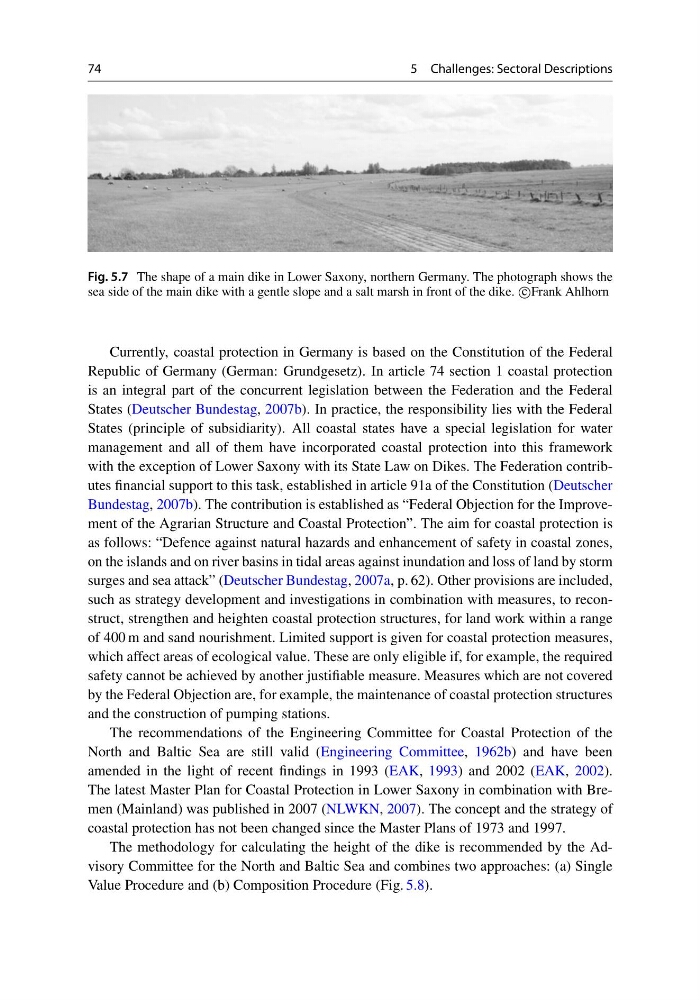
Fig. 5.7 The shape of a main dike in Lower Saxony, northern Germany. The photograph shows the
sea side of the main dike with a gentle slope and a salt marsh in front of the dike. c
Ahlhorn
Currently, coastal protection in Germany is based on the Constitution of the Federal
Republic of Germany (German: Grundgesetz). In article 74 section 1 coastal protection
is an integral part of the concurrent legislation between the Federation and the Federal
States (Deutscher Bundestag, 2007b). In practice, the responsibility lies with the Federal
States (principle of subsidiarity). All coastal states have a special legislation for water
management and all of them have incorporated coastal protection into this framework
with the exception of Lower Saxony with its State Law on Dikes. The Federation contributes financial support to this task, established in article 91a of the Constitution (Deutscher
Bundestag, 2007b). The contribution is established as “Federal Objection for the Improvement of the Agrarian Structure and Coastal Protection”. The aim for coastal protection is
as follows: “Defence against natural hazards and enhancement of safety in coastal zones,
on the islands and on river basins in tidal areas against inundation and loss of land by storm
surges and sea attack” (Deutscher Bundestag, 2007a, p. 62). Other provisions are included,
such as strategy development and investigations in combination with measures, to reconstruct, strengthen and heighten coastal protection structures, for land work within a range
of 400 m and sand nourishment. Limited support is given for coastal protection measures,
which affect areas of ecological value. These are only eligible if, for example, the required
safety cannot be achieved by another justifiable measure. Measures which are not covered
by the Federal Objection are, for example, the maintenance of coastal protection structures
and the construction of pumping stations.
The recommendations of the Engineering Committee for Coastal Protection of the
North and Baltic Sea are still valid (Engineering Committee, 1962b) and have been
amended in the light of recent findings in 1993 (EAK, 1993) and 2002 (EAK, 2002).
The latest Master Plan for Coastal Protection in Lower Saxony in combination with Bremen (Mainland) was published in 2007 (NLWKN, 2007). The concept and the strategy of
coastal protection has not been changed since the Master Plans of 1973 and 1997.
The methodology for calculating the height of the dike is recommended by the Advisory Committee for the North and Baltic Sea and combines two approaches: (a) Single
Value Procedure and (b) Composition Procedure (Fig. 5.8).
5 Challenges: Sectoral Descriptions
Fig. 5.7 The shape of a main dike in Lower Saxony, northern Germany. The photograph shows the
sea side of the main dike with a gentle slope and a salt marsh in front of the dike. c
Ahlhorn
Currently, coastal protection in Germany is based on the Constitution of the Federal
Republic of Germany (German: Grundgesetz). In article 74 section 1 coastal protection
is an integral part of the concurrent legislation between the Federation and the Federal
States (Deutscher Bundestag, 2007b). In practice, the responsibility lies with the Federal
States (principle of subsidiarity). All coastal states have a special legislation for water
management and all of them have incorporated coastal protection into this framework
with the exception of Lower Saxony with its State Law on Dikes. The Federation contributes financial support to this task, established in article 91a of the Constitution (Deutscher
Bundestag, 2007b). The contribution is established as “Federal Objection for the Improvement of the Agrarian Structure and Coastal Protection”. The aim for coastal protection is
as follows: “Defence against natural hazards and enhancement of safety in coastal zones,
on the islands and on river basins in tidal areas against inundation and loss of land by storm
surges and sea attack” (Deutscher Bundestag, 2007a, p. 62). Other provisions are included,
such as strategy development and investigations in combination with measures, to reconstruct, strengthen and heighten coastal protection structures, for land work within a range
of 400 m and sand nourishment. Limited support is given for coastal protection measures,
which affect areas of ecological value. These are only eligible if, for example, the required
safety cannot be achieved by another justifiable measure. Measures which are not covered
by the Federal Objection are, for example, the maintenance of coastal protection structures
and the construction of pumping stations.
The recommendations of the Engineering Committee for Coastal Protection of the
North and Baltic Sea are still valid (Engineering Committee, 1962b) and have been
amended in the light of recent findings in 1993 (EAK, 1993) and 2002 (EAK, 2002).
The latest Master Plan for Coastal Protection in Lower Saxony in combination with Bremen (Mainland) was published in 2007 (NLWKN, 2007). The concept and the strategy of
coastal protection has not been changed since the Master Plans of 1973 and 1997.
The methodology for calculating the height of the dike is recommended by the Advisory Committee for the North and Baltic Sea and combines two approaches: (a) Single
Value Procedure and (b) Composition Procedure (Fig. 5.8).