

164
7 Prospects: Methodologies of Integration
Step 1
Step 2
Step 3
Step 4
1
2
3
4
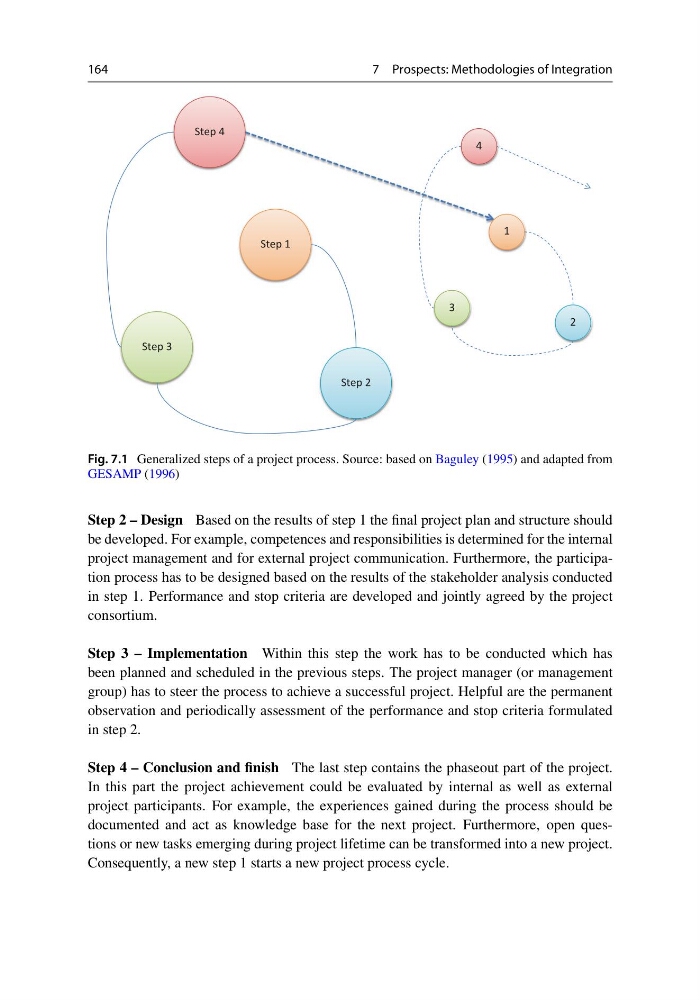
Fig. 7.1 Generalized steps of a project process. Source: based on Baguley (1995) and adapted from
GESAMP (1996)
Step 2 – Design Based on the results of step 1 the final project plan and structure should
be developed. For example, competences and responsibilities is determined for the internal
project management and for external project communication. Furthermore, the participation process has to be designed based on the results of the stakeholder analysis conducted
in step 1. Performance and stop criteria are developed and jointly agreed by the project
consortium.
Step 3 – Implementation Within this step the work has to be conducted which has
been planned and scheduled in the previous steps. The project manager (or management
group) has to steer the process to achieve a successful project. Helpful are the permanent
observation and periodically assessment of the performance and stop criteria formulated
in step 2.
Step 4 – Conclusion and finish The last step contains the phaseout part of the project.
In this part the project achievement could be evaluated by internal as well as external
project participants. For example, the experiences gained during the process should be
documented and act as knowledge base for the next project. Furthermore, open questions or new tasks emerging during project lifetime can be transformed into a new project.
Consequently, a new step 1 starts a new project process cycle.
7 Prospects: Methodologies of Integration
Step 1
Step 2
Step 3
Step 4
1
2
3
4
Fig. 7.1 Generalized steps of a project process. Source: based on Baguley (1995) and adapted from
GESAMP (1996)
Step 2 – Design Based on the results of step 1 the final project plan and structure should
be developed. For example, competences and responsibilities is determined for the internal
project management and for external project communication. Furthermore, the participation process has to be designed based on the results of the stakeholder analysis conducted
in step 1. Performance and stop criteria are developed and jointly agreed by the project
consortium.
Step 3 – Implementation Within this step the work has to be conducted which has
been planned and scheduled in the previous steps. The project manager (or management
group) has to steer the process to achieve a successful project. Helpful are the permanent
observation and periodically assessment of the performance and stop criteria formulated
in step 2.
Step 4 – Conclusion and finish The last step contains the phaseout part of the project.
In this part the project achievement could be evaluated by internal as well as external
project participants. For example, the experiences gained during the process should be
documented and act as knowledge base for the next project. Furthermore, open questions or new tasks emerging during project lifetime can be transformed into a new project.
Consequently, a new step 1 starts a new project process cycle.