

108
5 Challenges: Sectoral Descriptions
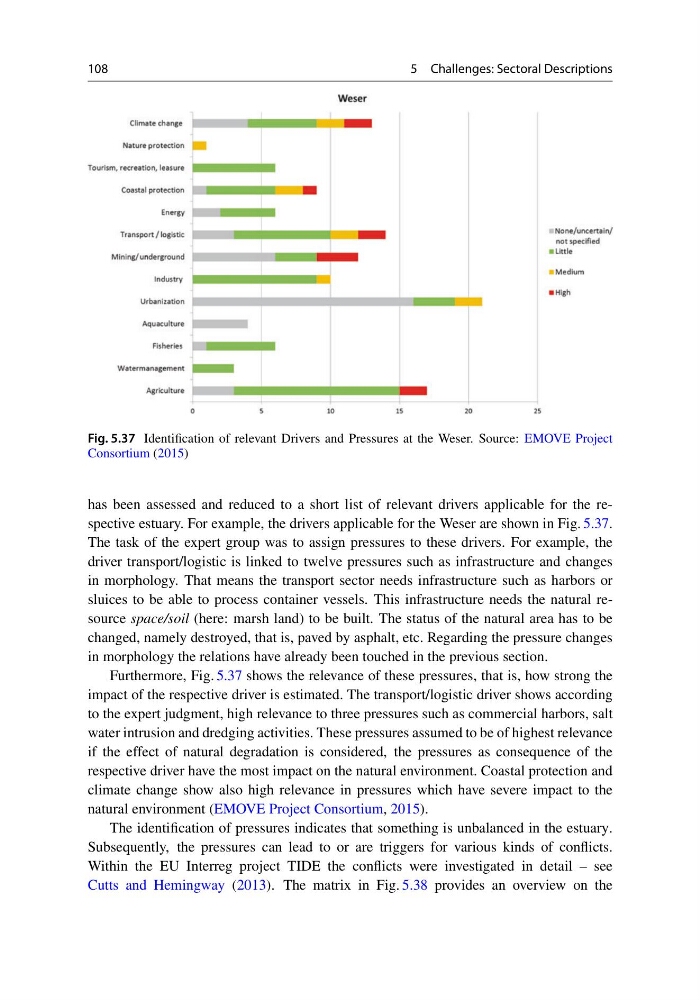
Fig. 5.37 Identification of relevant Drivers and Pressures at the Weser. Source: EMOVE Project
Consortium (2015)
has been assessed and reduced to a short list of relevant drivers applicable for the respective estuary. For example, the drivers applicable for the Weser are shown in Fig. 5.37.
The task of the expert group was to assign pressures to these drivers. For example, the
driver transport/logistic is linked to twelve pressures such as infrastructure and changes
in morphology. That means the transport sector needs infrastructure such as harbors or
sluices to be able to process container vessels. This infrastructure needs the natural resource space/soil (here: marsh land) to be built. The status of the natural area has to be
changed, namely destroyed, that is, paved by asphalt, etc. Regarding the pressure changes
in morphology the relations have already been touched in the previous section.
Furthermore, Fig. 5.37 shows the relevance of these pressures, that is, how strong the
impact of the respective driver is estimated. The transport/logistic driver shows according
to the expert judgment, high relevance to three pressures such as commercial harbors, salt
water intrusion and dredging activities. These pressures assumed to be of highest relevance
if the effect of natural degradation is considered, the pressures as consequence of the
respective driver have the most impact on the natural environment. Coastal protection and
climate change show also high relevance in pressures which have severe impact to the
natural environment (EMOVE Project Consortium, 2015).
The identification of pressures indicates that something is unbalanced in the estuary.
Subsequently, the pressures can lead to or are triggers for various kinds of conflicts.
Within the EU Interreg project TIDE the conflicts were investigated in detail – see
Cutts and Hemingway (2013). The matrix in Fig. 5.38 provides an overview on the
5 Challenges: Sectoral Descriptions
Fig. 5.37 Identification of relevant Drivers and Pressures at the Weser. Source: EMOVE Project
Consortium (2015)
has been assessed and reduced to a short list of relevant drivers applicable for the respective estuary. For example, the drivers applicable for the Weser are shown in Fig. 5.37.
The task of the expert group was to assign pressures to these drivers. For example, the
driver transport/logistic is linked to twelve pressures such as infrastructure and changes
in morphology. That means the transport sector needs infrastructure such as harbors or
sluices to be able to process container vessels. This infrastructure needs the natural resource space/soil (here: marsh land) to be built. The status of the natural area has to be
changed, namely destroyed, that is, paved by asphalt, etc. Regarding the pressure changes
in morphology the relations have already been touched in the previous section.
Furthermore, Fig. 5.37 shows the relevance of these pressures, that is, how strong the
impact of the respective driver is estimated. The transport/logistic driver shows according
to the expert judgment, high relevance to three pressures such as commercial harbors, salt
water intrusion and dredging activities. These pressures assumed to be of highest relevance
if the effect of natural degradation is considered, the pressures as consequence of the
respective driver have the most impact on the natural environment. Coastal protection and
climate change show also high relevance in pressures which have severe impact to the
natural environment (EMOVE Project Consortium, 2015).
The identification of pressures indicates that something is unbalanced in the estuary.
Subsequently, the pressures can lead to or are triggers for various kinds of conflicts.
Within the EU Interreg project TIDE the conflicts were investigated in detail – see
Cutts and Hemingway (2013). The matrix in Fig. 5.38 provides an overview on the