

94
5 Challenges: Sectoral Descriptions
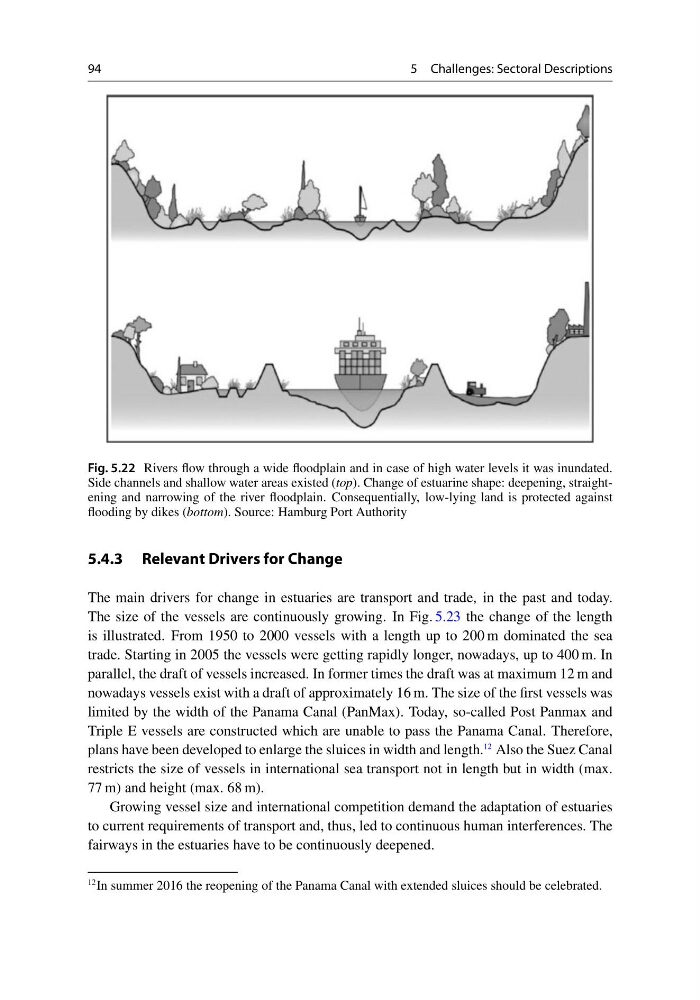
Fig. 5.22 Rivers flow through a wide floodplain and in case of high water levels it was inundated.
Side channels and shallow water areas existed (top). Change of estuarine shape: deepening, straightening and narrowing of the river floodplain. Consequentially, low-lying land is protected against
flooding by dikes (bottom). Source: Hamburg Port Authority
5.4.3 Relevant Drivers for Change
The main drivers for change in estuaries are transport and trade, in the past and today.
The size of the vessels are continuously growing. In Fig. 5.23 the change of the length
is illustrated. From 1950 to 2000 vessels with a length up to 200 m dominated the sea
trade. Starting in 2005 the vessels were getting rapidly longer, nowadays, up to 400 m. In
parallel, the draft of vessels increased. In former times the draft was at maximum 12 m and
nowadays vessels exist with a draft of approximately 16 m. The size of the first vessels was
limited by the width of the Panama Canal (PanMax). Today, so-called Post Panmax and
Triple E vessels are constructed which are unable to pass the Panama Canal. Therefore,
plans have been developed to enlarge the sluices in width and length.
12 Also the Suez Canal
restricts the size of vessels in international sea transport not in length but in width (max.
77 m) and height (max. 68 m).
Growing vessel size and international competition demand the adaptation of estuaries
to current requirements of transport and, thus, led to continuous human interferences. The
fairways in the estuaries have to be continuously deepened.
12 In summer 2016 the reopening of the Panama Canal with extended sluices should be celebrated.
5 Challenges: Sectoral Descriptions
Fig. 5.22 Rivers flow through a wide floodplain and in case of high water levels it was inundated.
Side channels and shallow water areas existed (top). Change of estuarine shape: deepening, straightening and narrowing of the river floodplain. Consequentially, low-lying land is protected against
flooding by dikes (bottom). Source: Hamburg Port Authority
5.4.3 Relevant Drivers for Change
The main drivers for change in estuaries are transport and trade, in the past and today.
The size of the vessels are continuously growing. In Fig. 5.23 the change of the length
is illustrated. From 1950 to 2000 vessels with a length up to 200 m dominated the sea
trade. Starting in 2005 the vessels were getting rapidly longer, nowadays, up to 400 m. In
parallel, the draft of vessels increased. In former times the draft was at maximum 12 m and
nowadays vessels exist with a draft of approximately 16 m. The size of the first vessels was
limited by the width of the Panama Canal (PanMax). Today, so-called Post Panmax and
Triple E vessels are constructed which are unable to pass the Panama Canal. Therefore,
plans have been developed to enlarge the sluices in width and length.
12 Also the Suez Canal
restricts the size of vessels in international sea transport not in length but in width (max.
77 m) and height (max. 68 m).
Growing vessel size and international competition demand the adaptation of estuaries
to current requirements of transport and, thus, led to continuous human interferences. The
fairways in the estuaries have to be continuously deepened.
12 In summer 2016 the reopening of the Panama Canal with extended sluices should be celebrated.