

258
Use of Radioisotopes to Study Biogeochemical Cycling of Elements
1.2
AI
0.9
0.6
0 .3
t,min
0
4
1.5
0.5
0
0
4
6
8
10
12
14
0 ,9
AI
C
0 .6
0 .3
l,hours
0
0
5
10
15
20
25
30
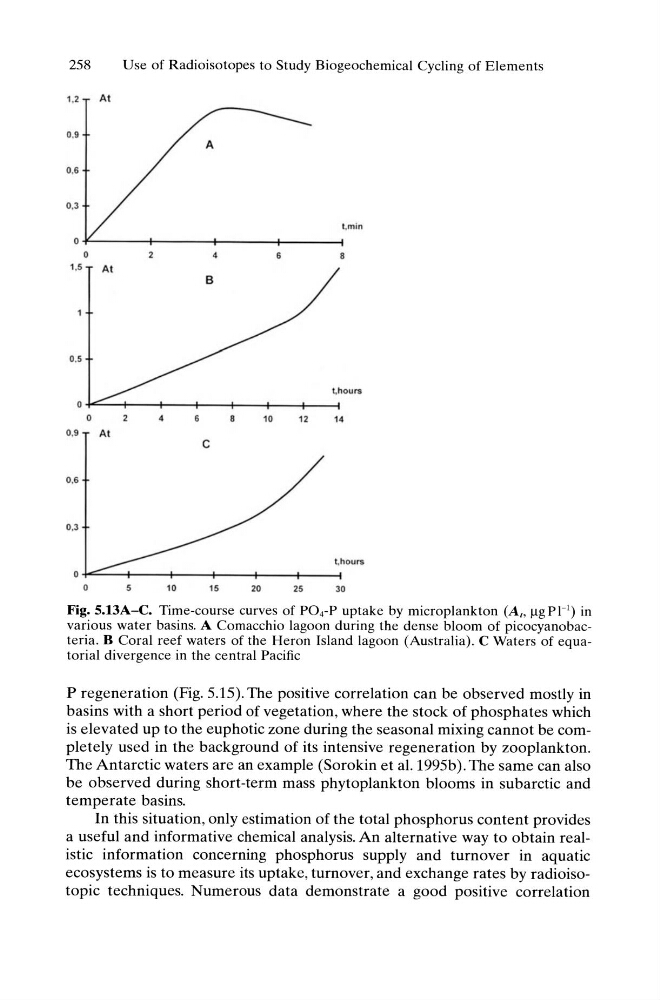
Fig.S.13A-C. Time-course curves of P04-P uptake by microplankton (At. IlgPI-1) in
various water basins. A Cornacchio lagoon during the dense bloom of picocyanobacteria. B Coral reef waters of the Heron Isla nd lagoon (Australia). C Waters of equatorial divergence in the central Pacific
P regeneration (Fig. 5.15). The positive correlation can be observed mostly in
basins with a short period of vegetation, where the stock of phosphates which
is elevated up to the euphotic zone during the seasonal mixing cannot be completely used in the background of its intensive regeneration by zooplankton.
The Antarctic waters are an example (Sorokin et al. 1995b). The same can also
be observed during short-term mass phytoplankton blooms in subarctic and
temperate basins.
In this situation, only estimation of the total phosphorus content provides
a useful and informative chemical analysis. An alternative way to obtain realistic information concerning phosphorus supply and turnover in aquatic
ecosystems is to measure its uptake, turnover, and exchange rates by radioisotopic techniques. Numerous data demonstrate a good positive correlation
Use of Radioisotopes to Study Biogeochemical Cycling of Elements
1.2
AI
0.9
0.6
0 .3
t,min
0
4
1.5
0.5
0
0
4
6
8
10
12
14
0 ,9
AI
C
0 .6
0 .3
l,hours
0
0
5
10
15
20
25
30
Fig.S.13A-C. Time-course curves of P04-P uptake by microplankton (At. IlgPI-1) in
various water basins. A Cornacchio lagoon during the dense bloom of picocyanobacteria. B Coral reef waters of the Heron Isla nd lagoon (Australia). C Waters of equatorial divergence in the central Pacific
P regeneration (Fig. 5.15). The positive correlation can be observed mostly in
basins with a short period of vegetation, where the stock of phosphates which
is elevated up to the euphotic zone during the seasonal mixing cannot be completely used in the background of its intensive regeneration by zooplankton.
The Antarctic waters are an example (Sorokin et al. 1995b). The same can also
be observed during short-term mass phytoplankton blooms in subarctic and
temperate basins.
In this situation, only estimation of the total phosphorus content provides
a useful and informative chemical analysis. An alternative way to obtain realistic information concerning phosphorus supply and turnover in aquatic
ecosystems is to measure its uptake, turnover, and exchange rates by radioisotopic techniques. Numerous data demonstrate a good positive correlation