

164
Use of Radioisotopic Methodology in Aquatic Microbial Ecology
o 100 200
o 30 60 n
o 100 200 300 0 100 200 300 a
H,m O +-~,,~~--nn~------~
250
500
100'~ __________ ~~ ________ ~
2
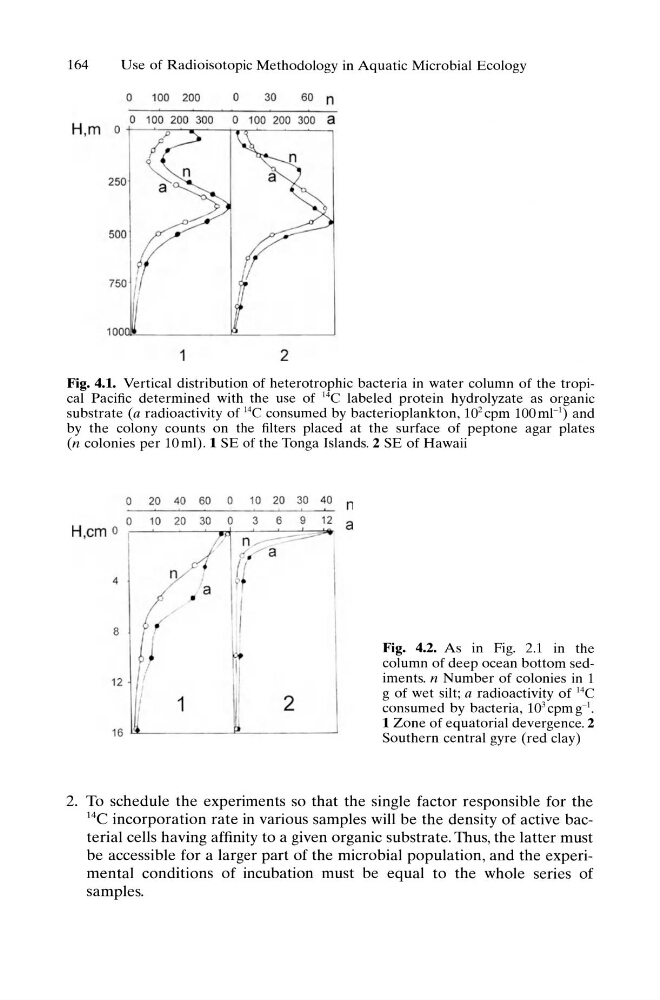
Fig. 4.1. Vertical distribution of heterotrophic bacteria in water column of the tropical Pacific determined with the use of 14C labeled protein hydrolyzate as organic
substrate (a radioactivity of 14C consumed by bacterioplankton, 10 2 cpm lOOml- l ) and
by the colony counts on the filters placed at the surface of peptone agar plates
(n colonies per lOml). 1 SE of the Tonga Islands. 2 SE of Hawaii
0
20 40 60
0
H,cm 0 I
10 20 30
4
8
;;1
r
12
1
16
0 10 20 30 40
0
3
6
9
12
/
n "'---~
/ a
( .
2
n
a
Fig. 4.2. As in Fig. 2.1 in the
column of deep ocean bottom sediments. n Number of colonies in 1
g of wet silt; a radioactivity of 14C
consumed by bacteria, 10 3 cpmg- 1 •
1 Zone of equatorial devergence. 2
Southern central gyre (red clay)
2. To schedule the experiments so that the single factor responsible for the
14C incorporation rate in various samples will be the density of active bacterial cells having affinity to a given organic substrate. Thus, the latter must
be accessible for a larger part of the microbial population, and the experimental conditions of incubation must be equal to the whole series of
samples.
Use of Radioisotopic Methodology in Aquatic Microbial Ecology
o 100 200
o 30 60 n
o 100 200 300 0 100 200 300 a
H,m O +-~,,~~--nn~------~
250
500
100'~ __________ ~~ ________ ~
2
Fig. 4.1. Vertical distribution of heterotrophic bacteria in water column of the tropical Pacific determined with the use of 14C labeled protein hydrolyzate as organic
substrate (a radioactivity of 14C consumed by bacterioplankton, 10 2 cpm lOOml- l ) and
by the colony counts on the filters placed at the surface of peptone agar plates
(n colonies per lOml). 1 SE of the Tonga Islands. 2 SE of Hawaii
0
20 40 60
0
H,cm 0 I
10 20 30
4
8
;;1
r
12
1
16
0 10 20 30 40
0
3
6
9
12
/
n "'---~
/ a
( .
2
n
a
Fig. 4.2. As in Fig. 2.1 in the
column of deep ocean bottom sediments. n Number of colonies in 1
g of wet silt; a radioactivity of 14C
consumed by bacteria, 10 3 cpmg- 1 •
1 Zone of equatorial devergence. 2
Southern central gyre (red clay)
2. To schedule the experiments so that the single factor responsible for the
14C incorporation rate in various samples will be the density of active bacterial cells having affinity to a given organic substrate. Thus, the latter must
be accessible for a larger part of the microbial population, and the experimental conditions of incubation must be equal to the whole series of
samples.