

126
Radioisotopic Methods for the Study of Nutrition in Aquatic Animals
Table 3.2. Index of assimilation estimated for different
species of animals
Consumer
Daphnia longispina
Diaptomus gracilis
Acanthocyclops viridis
Cricotopus silvestris
Bream, larvae, stage F
Valvata pulchella
Pocillopora damicornis
Food
Scenedesmus
Hydrogen bacteria
Scenedesmus
Ceriodaphnia
Aphanizomenon
Bosmina
Detritus
Bacterioplankton
Veligers
16.4
26.0
7.4
27.5
19.6
6.7
6.15
6.4
21.0
~ 1I0@b0
"",---~~~~~::~ _ _ """""'==~~=-"'--Artemla nauplii
Planktonic aglae
to
a.
o
'" o c
:E u
w
Bacterioplankton
125
100
75
50
25
NM
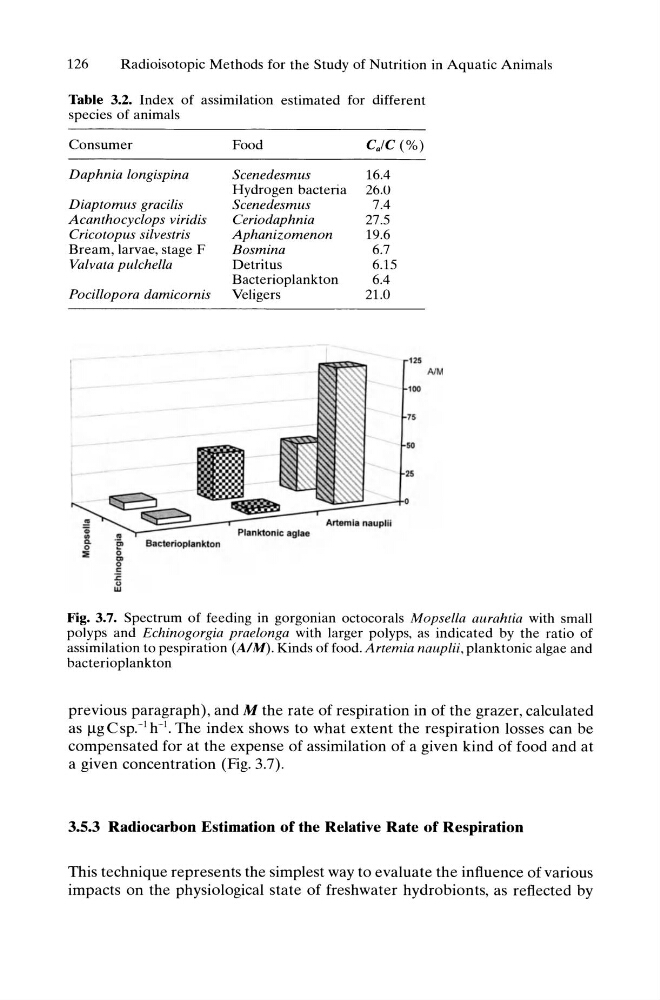
Fig. 3.7. Spectrum of feeding in gorgonian octocorals Mopsella aurahtia with sm all
polyps and Echinogorgia praelonga with larger polyps, as indicated by the ratio of
assimilation to pespiration (AIM). Kinds of food. Artemia nauplii, planktonic algae and
bacterioplankton
previous paragraph) , and M the rate of respiration in of the grazer, calculated
as )lg CSp.-l h- 1 . The index shows to what extent the respiration losses can be
compensated for at the expense of assimilation of a given kind of food and at
a given concentration (Fig. 3.7).
3.5.3 Radiocarbon Estimation of the Relative Rate of Respiration
This technique represents the simplest way to evaluate the influence of various
impacts on the physiological state of freshwater hydrobionts, as reflected by
Radioisotopic Methods for the Study of Nutrition in Aquatic Animals
Table 3.2. Index of assimilation estimated for different
species of animals
Consumer
Daphnia longispina
Diaptomus gracilis
Acanthocyclops viridis
Cricotopus silvestris
Bream, larvae, stage F
Valvata pulchella
Pocillopora damicornis
Food
Scenedesmus
Hydrogen bacteria
Scenedesmus
Ceriodaphnia
Aphanizomenon
Bosmina
Detritus
Bacterioplankton
Veligers
16.4
26.0
7.4
27.5
19.6
6.7
6.15
6.4
21.0
~ 1I0@b0
"",---~~~~~::~ _ _ """""'==~~=-"'--Artemla nauplii
Planktonic aglae
to
a.
o
'" o c
:E u
w
Bacterioplankton
125
100
75
50
25
NM
Fig. 3.7. Spectrum of feeding in gorgonian octocorals Mopsella aurahtia with sm all
polyps and Echinogorgia praelonga with larger polyps, as indicated by the ratio of
assimilation to pespiration (AIM). Kinds of food. Artemia nauplii, planktonic algae and
bacterioplankton
previous paragraph) , and M the rate of respiration in of the grazer, calculated
as )lg CSp.-l h- 1 . The index shows to what extent the respiration losses can be
compensated for at the expense of assimilation of a given kind of food and at
a given concentration (Fig. 3.7).
3.5.3 Radiocarbon Estimation of the Relative Rate of Respiration
This technique represents the simplest way to evaluate the influence of various
impacts on the physiological state of freshwater hydrobionts, as reflected by