

Chapter 2: SEA SURFACE MICROLAYER
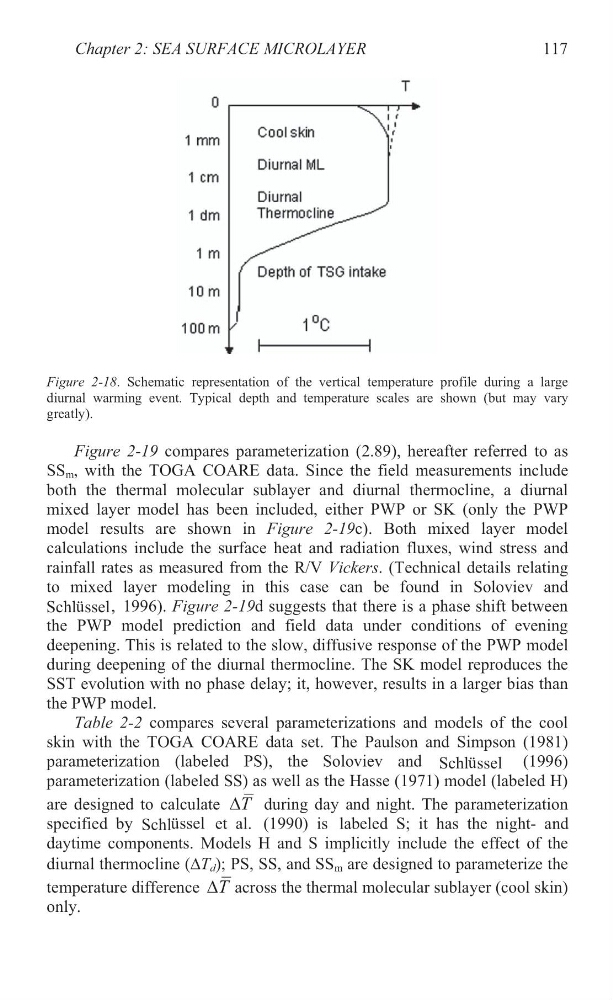
Figure 2-18. Schematic representation of the vertical temperature profile during a large
diurnal warming event. Typical depth and temperature scales are shown (but may vary
greatly).
Figure 2-19 compares parameterization (2.89), hereafter referred to as
SS m , with the TOGA COARE data. Since the field measurements include
both the thermal molecular sublayer and diurnal thermocline, a diurnal
mixed layer model has been included, either PWP or SK (only the PWP
model results are shown in Figure 2-19c). Both mixed layer model
calculations include the surface heat and radiation fluxes, wind stress and
rainfall rates as measured from the R/V Vickers. (Technical details relating
to mixed layer modeling in this case can be found in Soloviev and
, 1996). Figure 2-19d suggests that there is a phase shift between
the PWP model prediction and field data under conditions of evening
deepening. This is related to the slow, diffusive response of the PWP model
during deepening of the diurnal thermocline. The SK model reproduces the
SST evolution with no phase delay; it, however, results in a larger bias than
the PWP model.
Table 2-2 compares several parameterizations and models of the cool
skin with the TOGA COARE data set. The Paulson and Simpson (1981)
parameterization (labeled PS), the Soloviev and
(1996)
parameterization (labeled SS) as well as the Hasse (1971) model (labeled H)
are designed to calculate T
' during day and night. The parameterization
specified by
et al. (1990) is labeled S; it has the night- and
daytime components. Models H and S implicitly include the effect of the
diurnal thermocline ('T d ); PS, SS, and SS m are designed to parameterize the
temperature difference T
' across the thermal molecular sublayer (cool skin)
only.
117
Schl ssel
ü
Schl ssel
ü
Schl ssel
ü
Figure 2-18. Schematic representation of the vertical temperature profile during a large
diurnal warming event. Typical depth and temperature scales are shown (but may vary
greatly).
Figure 2-19 compares parameterization (2.89), hereafter referred to as
SS m , with the TOGA COARE data. Since the field measurements include
both the thermal molecular sublayer and diurnal thermocline, a diurnal
mixed layer model has been included, either PWP or SK (only the PWP
model results are shown in Figure 2-19c). Both mixed layer model
calculations include the surface heat and radiation fluxes, wind stress and
rainfall rates as measured from the R/V Vickers. (Technical details relating
to mixed layer modeling in this case can be found in Soloviev and
, 1996). Figure 2-19d suggests that there is a phase shift between
the PWP model prediction and field data under conditions of evening
deepening. This is related to the slow, diffusive response of the PWP model
during deepening of the diurnal thermocline. The SK model reproduces the
SST evolution with no phase delay; it, however, results in a larger bias than
the PWP model.
Table 2-2 compares several parameterizations and models of the cool
skin with the TOGA COARE data set. The Paulson and Simpson (1981)
parameterization (labeled PS), the Soloviev and
(1996)
parameterization (labeled SS) as well as the Hasse (1971) model (labeled H)
are designed to calculate T
' during day and night. The parameterization
specified by
et al. (1990) is labeled S; it has the night- and
daytime components. Models H and S implicitly include the effect of the
diurnal thermocline ('T d ); PS, SS, and SS m are designed to parameterize the
temperature difference T
' across the thermal molecular sublayer (cool skin)
only.
117
Schl ssel
ü
Schl ssel
ü
Schl ssel
ü