

Thermohaline circulation
379
-1.5 10
4
-1.4 10
4
-1.3 10
4
-1.2 10
4
-1.1 10
4
-1 10
4
-45
-40
-35
-30
Time (yr)
δ δ
δ
δ
18 O
cold
warm
Younger Dryas
Allerod
Bolling
Transition
to Holocene
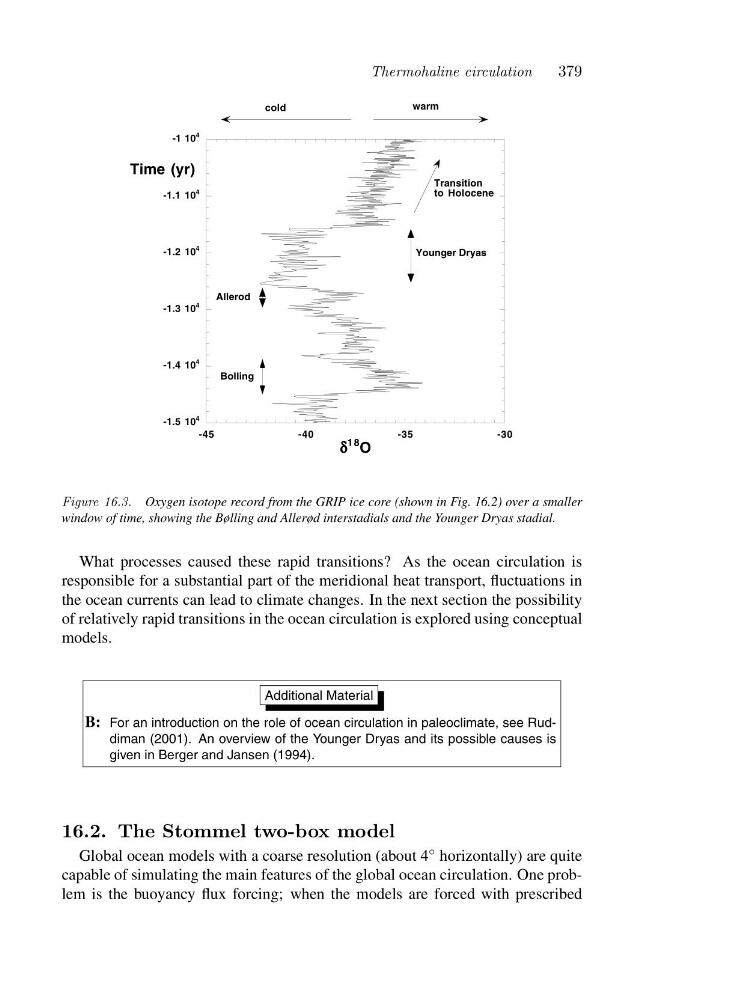
Figure 16.3. Oxygen isotope record from the GRIP ice core (shown in Fig. 16.2) over a smaller
window of time, showing the Bølling and Allerød interstadials and the Younger Dryas stadial.
What processes caused these rapid transitions? As the ocean circulation is
responsible for a substantial part of the meridional heat transport, fluctuations in
the ocean currents can lead to climate changes. In the next section the possibility
of relatively rapid transitions in the ocean circulation is explored using conceptual
models.
Additional Material
B: For an introduction on the role of ocean circulation in paleoclimate, see Ruddiman (2001). An overview of the Younger Dryas and its possible causes is
given in Berger and Jansen (1994).
16.2. The Stommel two-box model
Global ocean models with a coarse resolution (about 4 ◦ horizontally) are quite
capable of simulating the main features of the global ocean circulation. One problem is the buoyancy flux forcing; when the models are forced with prescribed
379
-1.5 10
4
-1.4 10
4
-1.3 10
4
-1.2 10
4
-1.1 10
4
-1 10
4
-45
-40
-35
-30
Time (yr)
δ δ
δ
δ
18 O
cold
warm
Younger Dryas
Allerod
Bolling
Transition
to Holocene
Figure 16.3. Oxygen isotope record from the GRIP ice core (shown in Fig. 16.2) over a smaller
window of time, showing the Bølling and Allerød interstadials and the Younger Dryas stadial.
What processes caused these rapid transitions? As the ocean circulation is
responsible for a substantial part of the meridional heat transport, fluctuations in
the ocean currents can lead to climate changes. In the next section the possibility
of relatively rapid transitions in the ocean circulation is explored using conceptual
models.
Additional Material
B: For an introduction on the role of ocean circulation in paleoclimate, see Ruddiman (2001). An overview of the Younger Dryas and its possible causes is
given in Berger and Jansen (1994).
16.2. The Stommel two-box model
Global ocean models with a coarse resolution (about 4 ◦ horizontally) are quite
capable of simulating the main features of the global ocean circulation. One problem is the buoyancy flux forcing; when the models are forced with prescribed