

The initial salinity of sea water also has a significant effect on the growth of
permafrost at the depths exceeding the thickness of fast ice. According to simulations performed for a water depth of 3 m, a salinity increase from 5 to 20 psu
results in the decrease of the maximum ice thickness from 2.07 m to 1.98 m, and
corresponding changes in the permafrost layer from 0.37 to 0.7 m. We argue that
these changes result from a substantial reduction in water temperatures beneath the
fast ice layer due to salinization, creating favorable conditions for deeper freezing of
the sediment layer. At the same time, the effect of the salt flux at the interface
between water and soil layers for the growth of permafrost is almost negligible, due
to weak salt diffusion.
Discussion and Conclusions
Numerical simulations performed with the 1D thermodynamic model plausibly
reproduce seasonal evolution in the “ice-brine-ground” system as follows, for
example, from the good agreement between simulated and measured fast ice
thicknesses in 2014–2015. Fast ice growth in the winter of 2014–2015 is also well
represented by the empirical equation h 1 = a N
b by Vieze [26] proposed for the
Laptev Sea, where N is the sum of freezing-degree-days (the sum of daily
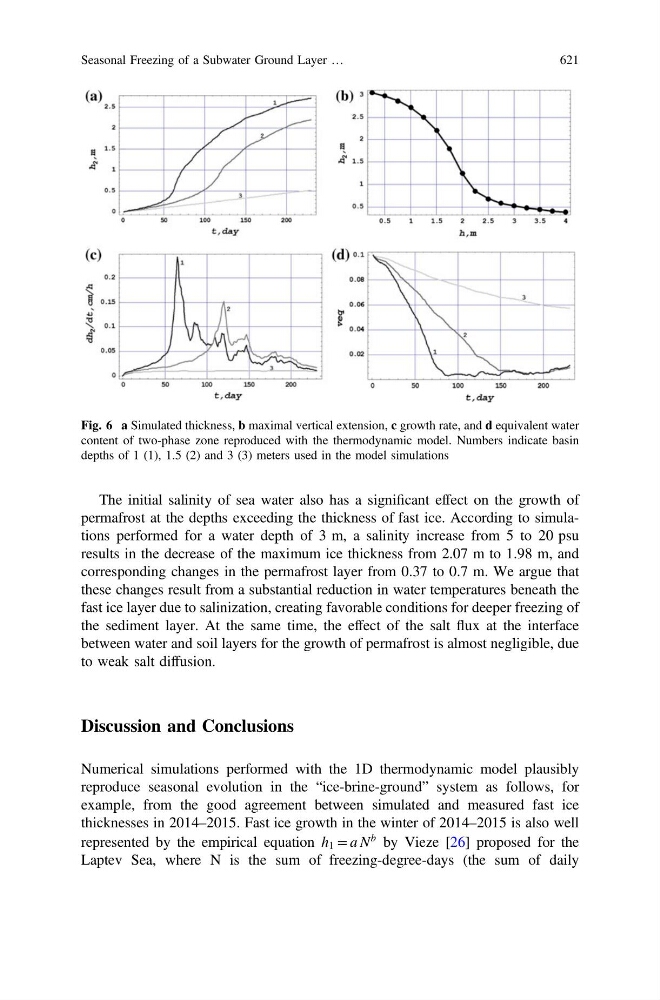
Fig. 6 a Simulated thickness, b maximal vertical extension, c growth rate, and d equivalent water
content of two-phase zone reproduced with the thermodynamic model. Numbers indicate basin
depths of 1 (1), 1.5 (2) and 3 (3) meters used in the model simulations
Seasonal Freezing of a Subwater Ground Layer …
621