

−0.11 to −0.13 °C (Fig. 1a). The increase of the temperature in this part of the
channel is approximately 0.01 °C/100 km. Due to the bottom friction, the core of
cold water displaces to the east (in this channel) or to the right relative to the flow
direction [9]. The observed difference in the bottom temperatures between the
eastern and western walls of the channel is 0.02 °C both over the sections at 32° 17′
and 31° 12′ S.
Two branches of the current are observed in the middle part of the channel
(Fig. 3a). The northern jet is located in the deepest part of the channel with depths of
approximately 4700 m; it is the main passage for the coldest waters. The additional
southern jet with velocities up to 20–25 cm/s is observed at depths of 4300–4400 on
the southern slope of the channel. The lengths of the jets are 200 km and the
maximum distance between them is 50 km. The existence of the southern jet was
confirmed by the direct measurements at one station (2535) at 28° 55.3′ S, 38° 00.5′
W. The depth of the ocean at the place of measurements was 4384 m, the minimum
potential temperature was −0.09 °C, the current with a velocity of 15 cm/s was
directed to the southeast.
Calculated velocities near the exit from the Vema Channel to the Brazil Basin are
shown in Fig. 3b. The mean velocities in the center of the flow are up to 30 cm/s,
which is close to the velocities measured at stations 2436–2438 (25 cm/s directed to
the east and northeast). After the outflow from the Vema Channel, the bottom current
turns to the north and propagates along the western boundary of the Brazil Basin
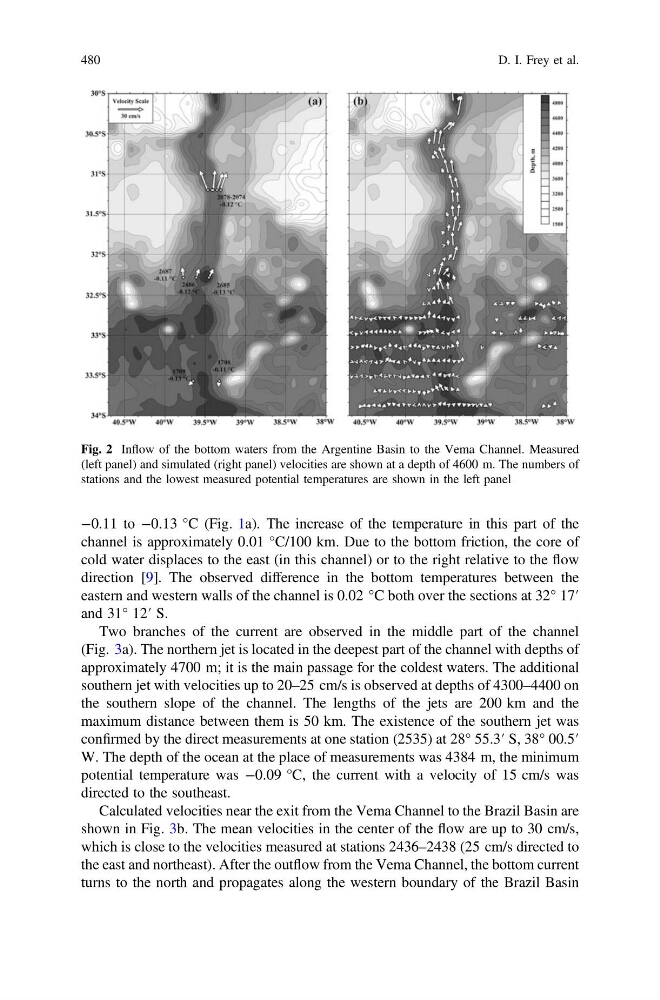
Fig. 2 Inflow of the bottom waters from the Argentine Basin to the Vema Channel. Measured
(left panel) and simulated (right panel) velocities are shown at a depth of 4600 m. The numbers of
stations and the lowest measured potential temperatures are shown in the left panel
480
D. I. Frey et al.
channel is approximately 0.01 °C/100 km. Due to the bottom friction, the core of
cold water displaces to the east (in this channel) or to the right relative to the flow
direction [9]. The observed difference in the bottom temperatures between the
eastern and western walls of the channel is 0.02 °C both over the sections at 32° 17′
and 31° 12′ S.
Two branches of the current are observed in the middle part of the channel
(Fig. 3a). The northern jet is located in the deepest part of the channel with depths of
approximately 4700 m; it is the main passage for the coldest waters. The additional
southern jet with velocities up to 20–25 cm/s is observed at depths of 4300–4400 on
the southern slope of the channel. The lengths of the jets are 200 km and the
maximum distance between them is 50 km. The existence of the southern jet was
confirmed by the direct measurements at one station (2535) at 28° 55.3′ S, 38° 00.5′
W. The depth of the ocean at the place of measurements was 4384 m, the minimum
potential temperature was −0.09 °C, the current with a velocity of 15 cm/s was
directed to the southeast.
Calculated velocities near the exit from the Vema Channel to the Brazil Basin are
shown in Fig. 3b. The mean velocities in the center of the flow are up to 30 cm/s,
which is close to the velocities measured at stations 2436–2438 (25 cm/s directed to
the east and northeast). After the outflow from the Vema Channel, the bottom current
turns to the north and propagates along the western boundary of the Brazil Basin
Fig. 2 Inflow of the bottom waters from the Argentine Basin to the Vema Channel. Measured
(left panel) and simulated (right panel) velocities are shown at a depth of 4600 m. The numbers of
stations and the lowest measured potential temperatures are shown in the left panel
480
D. I. Frey et al.