

Wind speed and direction were recorded for most of the observation period as
3 h averages at a meteorological station in the city of Kerch at the western bank of
the strait (Fig. 4, top panel). The wind record shows moderate westerly winds on
May 17–19. During this period, the cross-shore component of the wind exhibited
significant diurnal variability, changing from onshore during the first half of the day
to offshore afterwards. On May 20, the wind regime changed, and more constant
northeasterly winds prevailed since then. We will see from what follows that this
variability generated certain response in sea currents.
The data from the mooring station are presented in Fig. 4. In the central panel,
the blue and red curves represent water temperature at 5 m and 21.5 m, respectively. The difference between them is a good proxy for stratification. It can be seen
that during much of the observation period, the stratification was well manifested,
with the temperature difference attaining values up to 4 °C. This stratification,
however, relaxed fully on the last two days of the measurements. This relaxation
occurred because the warm Sea of Azov plume occupied the entire water column,
and the temperature at the bottom increased and matched the temperature at the
surface.
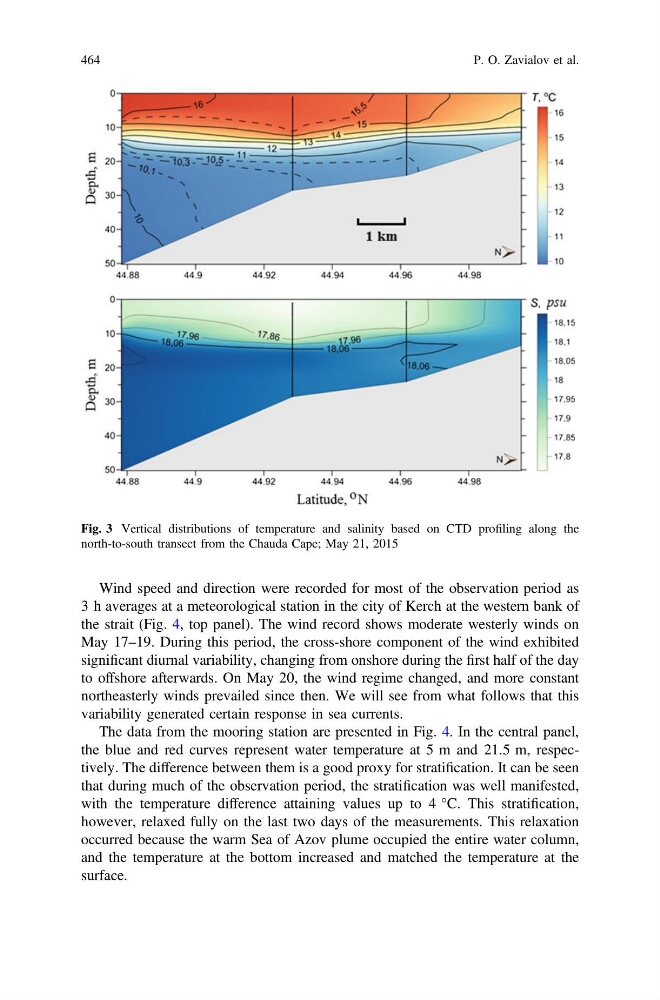
Fig. 3 Vertical distributions of temperature and salinity based on CTD profiling along the
north-to-south transect from the Chauda Cape; May 21, 2015
464
P. O. Zavialov et al.
3 h averages at a meteorological station in the city of Kerch at the western bank of
the strait (Fig. 4, top panel). The wind record shows moderate westerly winds on
May 17–19. During this period, the cross-shore component of the wind exhibited
significant diurnal variability, changing from onshore during the first half of the day
to offshore afterwards. On May 20, the wind regime changed, and more constant
northeasterly winds prevailed since then. We will see from what follows that this
variability generated certain response in sea currents.
The data from the mooring station are presented in Fig. 4. In the central panel,
the blue and red curves represent water temperature at 5 m and 21.5 m, respectively. The difference between them is a good proxy for stratification. It can be seen
that during much of the observation period, the stratification was well manifested,
with the temperature difference attaining values up to 4 °C. This stratification,
however, relaxed fully on the last two days of the measurements. This relaxation
occurred because the warm Sea of Azov plume occupied the entire water column,
and the temperature at the bottom increased and matched the temperature at the
surface.
Fig. 3 Vertical distributions of temperature and salinity based on CTD profiling along the
north-to-south transect from the Chauda Cape; May 21, 2015
464
P. O. Zavialov et al.