

Deep-Ocean Tides in the South-West Indian Ocean . . .
153
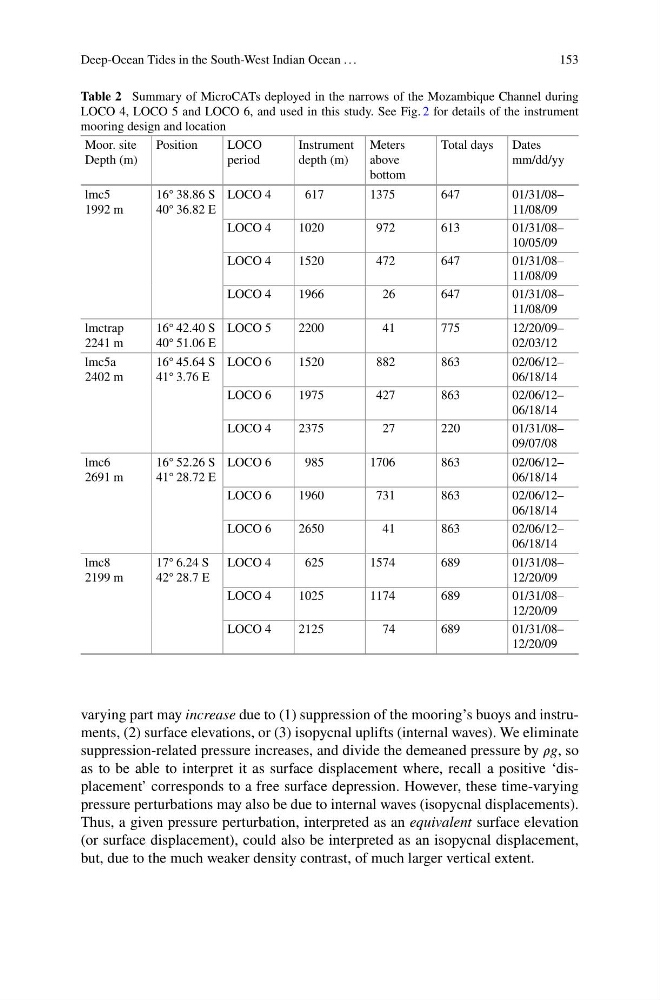
Table 2 Summary of MicroCATs deployed in the narrows of the Mozambique Channel during
LOCO 4, LOCO 5 and LOCO 6, and used in this study. See Fig. 2 for details of the instrument
mooring design and location
Moor. site
Depth (m)
Position
LOCO
period
Instrument
depth (m)
Meters
above
bottom
Total days Dates
mm/dd/yy
lmc5
1992 m
16 ◦ 38.86 S
40 ◦ 36.82 E
LOCO 4
617
1375
647
01/31/08–
11/08/09
LOCO 4
1020
972
613
01/31/08–
10/05/09
LOCO 4
1520
472
647
01/31/08–
11/08/09
LOCO 4
1966
26
647
01/31/08–
11/08/09
lmctrap
2241 m
16 ◦ 42.40 S
40 ◦ 51.06 E
LOCO 5
2200
41
775
12/20/09–
02/03/12
lmc5a
2402 m
16 ◦ 45.64 S
41 ◦ 3.76 E
LOCO 6
1520
882
863
02/06/12–
06/18/14
LOCO 6
1975
427
863
02/06/12–
06/18/14
LOCO 4
2375
27
220
01/31/08–
09/07/08
lmc6
2691 m
16
◦
52.26 S
41
◦
28.72 E
LOCO 6
985
1706
863
02/06/12–
06/18/14
LOCO 6
1960
731
863
02/06/12–
06/18/14
LOCO 6
2650
41
863
02/06/12–
06/18/14
lmc8
2199 m
17 ◦ 6.24 S
42 ◦ 28.7 E
LOCO 4
625
1574
689
01/31/08–
12/20/09
LOCO 4
1025
1174
689
01/31/08–
12/20/09
LOCO 4
2125
74
689
01/31/08–
12/20/09
varying part may increase due to (1) suppression of the mooring’s buoys and instruments, (2) surface elevations, or (3) isopycnal uplifts (internal waves). We eliminate
suppression-related pressure increases, and divide the demeaned pressure by í µí¼g, so
as to be able to interpret it as surface displacement where, recall a positive ‘displacement’ corresponds to a free surface depression. However, these time-varying
pressure perturbations may also be due to internal waves (isopycnal displacements).
Thus, a given pressure perturbation, interpreted as an equivalent surface elevation
(or surface displacement), could also be interpreted as an isopycnal displacement,
but, due to the much weaker density contrast, of much larger vertical extent.
153
Table 2 Summary of MicroCATs deployed in the narrows of the Mozambique Channel during
LOCO 4, LOCO 5 and LOCO 6, and used in this study. See Fig. 2 for details of the instrument
mooring design and location
Moor. site
Depth (m)
Position
LOCO
period
Instrument
depth (m)
Meters
above
bottom
Total days Dates
mm/dd/yy
lmc5
1992 m
16 ◦ 38.86 S
40 ◦ 36.82 E
LOCO 4
617
1375
647
01/31/08–
11/08/09
LOCO 4
1020
972
613
01/31/08–
10/05/09
LOCO 4
1520
472
647
01/31/08–
11/08/09
LOCO 4
1966
26
647
01/31/08–
11/08/09
lmctrap
2241 m
16 ◦ 42.40 S
40 ◦ 51.06 E
LOCO 5
2200
41
775
12/20/09–
02/03/12
lmc5a
2402 m
16 ◦ 45.64 S
41 ◦ 3.76 E
LOCO 6
1520
882
863
02/06/12–
06/18/14
LOCO 6
1975
427
863
02/06/12–
06/18/14
LOCO 4
2375
27
220
01/31/08–
09/07/08
lmc6
2691 m
16
◦
52.26 S
41
◦
28.72 E
LOCO 6
985
1706
863
02/06/12–
06/18/14
LOCO 6
1960
731
863
02/06/12–
06/18/14
LOCO 6
2650
41
863
02/06/12–
06/18/14
lmc8
2199 m
17 ◦ 6.24 S
42 ◦ 28.7 E
LOCO 4
625
1574
689
01/31/08–
12/20/09
LOCO 4
1025
1174
689
01/31/08–
12/20/09
LOCO 4
2125
74
689
01/31/08–
12/20/09
varying part may increase due to (1) suppression of the mooring’s buoys and instruments, (2) surface elevations, or (3) isopycnal uplifts (internal waves). We eliminate
suppression-related pressure increases, and divide the demeaned pressure by í µí¼g, so
as to be able to interpret it as surface displacement where, recall a positive ‘displacement’ corresponds to a free surface depression. However, these time-varying
pressure perturbations may also be due to internal waves (isopycnal displacements).
Thus, a given pressure perturbation, interpreted as an equivalent surface elevation
(or surface displacement), could also be interpreted as an isopycnal displacement,
but, due to the much weaker density contrast, of much larger vertical extent.