

THE NEAR-SURFACE LAYER OF THE OCEAN
Kudryavtsev and Soloviev (1985) explained this dependence of S
O on wind
speed by the transition from convection to a wind-wave regime.
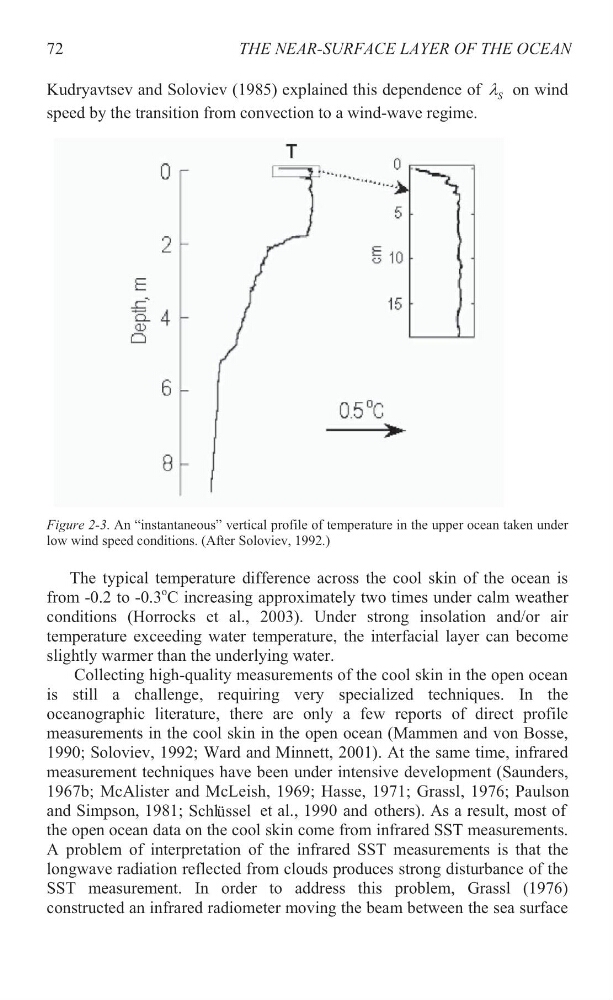
Figure 2-3. An “instantaneous” vertical profile of temperature in the upper ocean taken under
low wind speed conditions. (After Soloviev, 1992.)
The typical temperature difference across the cool skin of the ocean is
from -0.2 to -0.3
o C increasing approximately two times under calm weather
conditions (Horrocks et al., 2003). Under strong insolation and/or air
temperature exceeding water temperature, the interfacial layer can become
slightly warmer than the underlying water.
Collecting high-quality measurements of the cool skin in the open ocean
is still a challenge, requiring very specialized techniques. In the
oceanographic literature, there are only a few reports of direct profile
measurements in the cool skin in the open ocean (Mammen and von Bosse,
1990; Soloviev, 1992; Ward and Minnett, 2001). At the same time, infrared
measurement techniques have been under intensive development (Saunders,
and Simpson, 1981;
et al., 1990 and others). As a result, most of
the open ocean data on the cool skin come from infrared SST measurements.
A problem of interpretation of the infrared SST measurements is that the
longwave radiation reflected from clouds produces strong disturbance of the
SST measurement. In order to address this problem, Grassl (1976)
constructed an infrared radiometer moving the beam between the sea surface
72
1967b; McAlister and McLeish, 1969; Hasse, 1971; Grassl, 1976; Paulson
ü
Schl ssel
Kudryavtsev and Soloviev (1985) explained this dependence of S
O on wind
speed by the transition from convection to a wind-wave regime.
Figure 2-3. An “instantaneous” vertical profile of temperature in the upper ocean taken under
low wind speed conditions. (After Soloviev, 1992.)
The typical temperature difference across the cool skin of the ocean is
from -0.2 to -0.3
o C increasing approximately two times under calm weather
conditions (Horrocks et al., 2003). Under strong insolation and/or air
temperature exceeding water temperature, the interfacial layer can become
slightly warmer than the underlying water.
Collecting high-quality measurements of the cool skin in the open ocean
is still a challenge, requiring very specialized techniques. In the
oceanographic literature, there are only a few reports of direct profile
measurements in the cool skin in the open ocean (Mammen and von Bosse,
1990; Soloviev, 1992; Ward and Minnett, 2001). At the same time, infrared
measurement techniques have been under intensive development (Saunders,
and Simpson, 1981;
et al., 1990 and others). As a result, most of
the open ocean data on the cool skin come from infrared SST measurements.
A problem of interpretation of the infrared SST measurements is that the
longwave radiation reflected from clouds produces strong disturbance of the
SST measurement. In order to address this problem, Grassl (1976)
constructed an infrared radiometer moving the beam between the sea surface
72
1967b; McAlister and McLeish, 1969; Hasse, 1971; Grassl, 1976; Paulson
ü
Schl ssel