

THE NEAR-SURFACE LAYER OF THE OCEAN
liquid content of rainfall; accurate estimates of their populations are very
important. In order to address this problem, Nystuen’s (2001) algorithm
assumes that if very large raindrops are detected within the rain, then the
medium drops that might be present cannot be heard. In the case of very
large drops present, the algorithm therefore makes no attempt to acoustically
invert for the medium drop population; instead, the medium drop population
is set based on the small drop population count. If during the initial iteration
very large raindrops are not detected, then the next iteration acoustic
inversion estimate of the medium drop population is obtained from the
singular value decomposition with the very large drop population set to zero.
The resulting drop size distribution is also additionally constrained to be
monotonically decreasing with drop size above the medium drop size
category. In addition, the medium drop count is not allowed to be greater
than twice the small drop population. Though the last two constraints are
artificial, they are nevertheless consistent with most of the observed drop
size distributions recorded by a conventional disdrometer.
Figure 7-16 demonstrates the performance of the inversion to obtain
rainfall rate with a limited data set obtained in a mangrove-lined pond near
Miami. For this data set, the acoustic rain accumulation total is 900 mm,
478
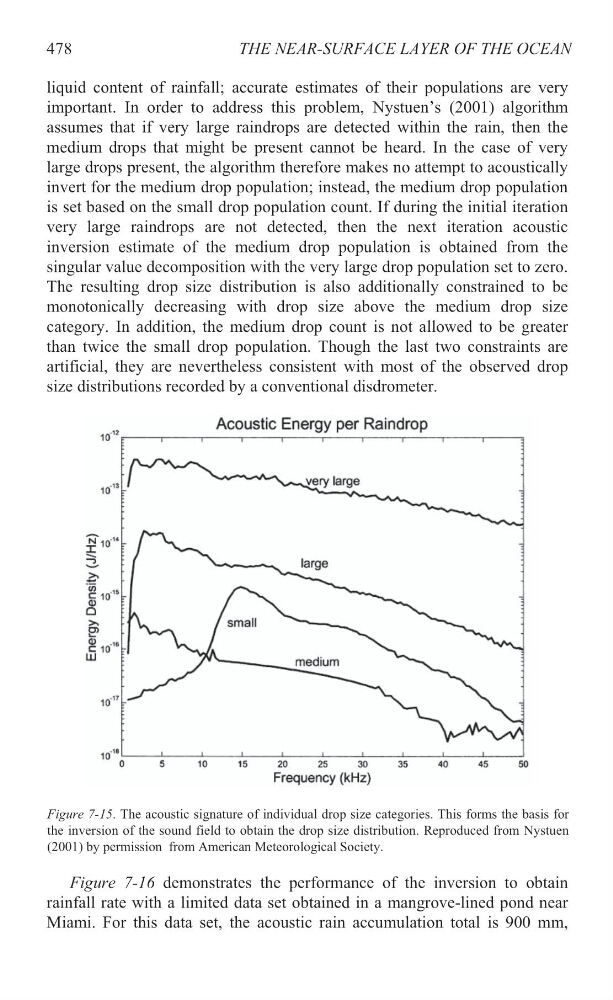
Figure 7-15. The acoustic signature of individual drop size categories. This forms the basis for
the inversion of the sound field to obtain the drop size distribution. Reproduced from Nystuen
(2001) by permission from American Meteorological Society.
liquid content of rainfall; accurate estimates of their populations are very
important. In order to address this problem, Nystuen’s (2001) algorithm
assumes that if very large raindrops are detected within the rain, then the
medium drops that might be present cannot be heard. In the case of very
large drops present, the algorithm therefore makes no attempt to acoustically
invert for the medium drop population; instead, the medium drop population
is set based on the small drop population count. If during the initial iteration
very large raindrops are not detected, then the next iteration acoustic
inversion estimate of the medium drop population is obtained from the
singular value decomposition with the very large drop population set to zero.
The resulting drop size distribution is also additionally constrained to be
monotonically decreasing with drop size above the medium drop size
category. In addition, the medium drop count is not allowed to be greater
than twice the small drop population. Though the last two constraints are
artificial, they are nevertheless consistent with most of the observed drop
size distributions recorded by a conventional disdrometer.
Figure 7-16 demonstrates the performance of the inversion to obtain
rainfall rate with a limited data set obtained in a mangrove-lined pond near
Miami. For this data set, the acoustic rain accumulation total is 900 mm,
478
Figure 7-15. The acoustic signature of individual drop size categories. This forms the basis for
the inversion of the sound field to obtain the drop size distribution. Reproduced from Nystuen
(2001) by permission from American Meteorological Society.