

THE NEAR-SURFACE LAYER OF THE OCEAN
Tropical Convergence Zone (ITCZ) where the hydrologic cycle is a crucial
factor in upper ocean dynamics. Near-surface layers with distinctly lower
salinity are formed, which suppress the turbulent exchange with the deeper
water. Intense solar heating often alternates with heavy rains. A fraction of
the solar energy is effectively trapped in the near-surface layer of the ocean,
which in combination with the rain forcing results in complicated vertical
stratification.
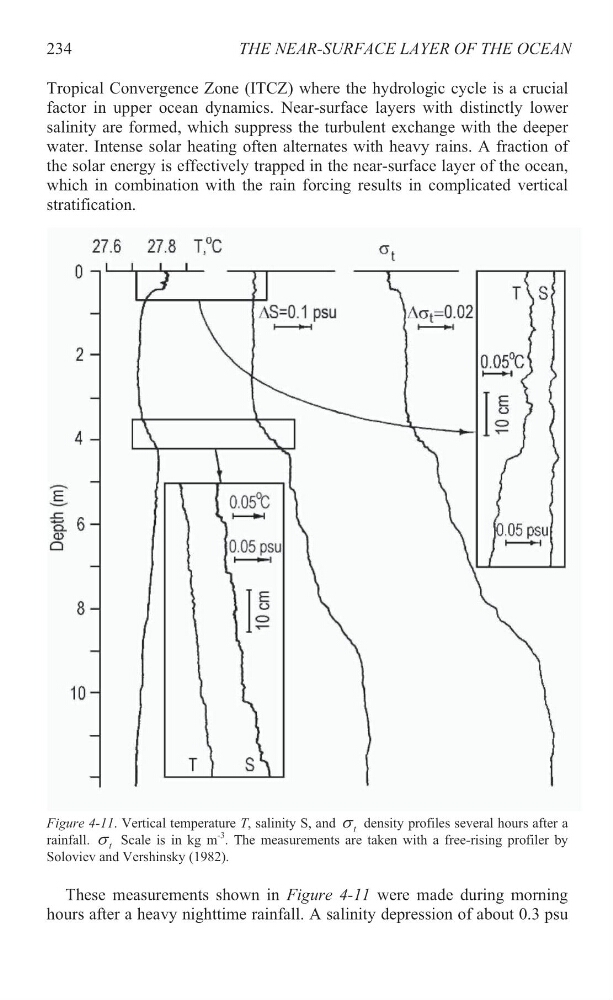
Figure 4-11. Vertical temperature T, salinity S, and t
V density profiles several hours after a
rainfall. t
V Scale is in kg mP
-3
P.
The measurements are taken with a free-rising profiler by
Soloviev and Vershinsky (1982).
These measurements shown in X Figure 4-11X were made during morning
hours after a heavy nighttime rainfall. A salinity depression of about 0.3 psu
234
Tropical Convergence Zone (ITCZ) where the hydrologic cycle is a crucial
factor in upper ocean dynamics. Near-surface layers with distinctly lower
salinity are formed, which suppress the turbulent exchange with the deeper
water. Intense solar heating often alternates with heavy rains. A fraction of
the solar energy is effectively trapped in the near-surface layer of the ocean,
which in combination with the rain forcing results in complicated vertical
stratification.
Figure 4-11. Vertical temperature T, salinity S, and t
V density profiles several hours after a
rainfall. t
V Scale is in kg mP
-3
P.
The measurements are taken with a free-rising profiler by
Soloviev and Vershinsky (1982).
These measurements shown in X Figure 4-11X were made during morning
hours after a heavy nighttime rainfall. A salinity depression of about 0.3 psu
234