

give here the corresponding analytical expressions, I m (Ri), I U (Ri,), and
I H (Ri) because of their bulkiness. They can be easily derived from (1.155),
(1.156), and (1.157) by substituting ] with Ri according to relationship
(3.87).
The coefficients of turbulent exchange for momentum and scalar
properties in the boundary layer are defined as
' / /
M
K
wu u z
c w w and
/ /
s
K
w
z
U U
c c w w, respectively. Using the definition of the universal
functions in the Monin-Oboukhov theory (see formulas (1.151)-(1.153) in
Chapter 1), the mixing coefficients can be expressed as follows:
/
M
m
K
u z
N
I
(3.88)
/
K
z
U
U
N U
I
(3.89)
where
2
0
| z
u
w u
c c
and
0
/
z
w
u
U
U
N
c c
.
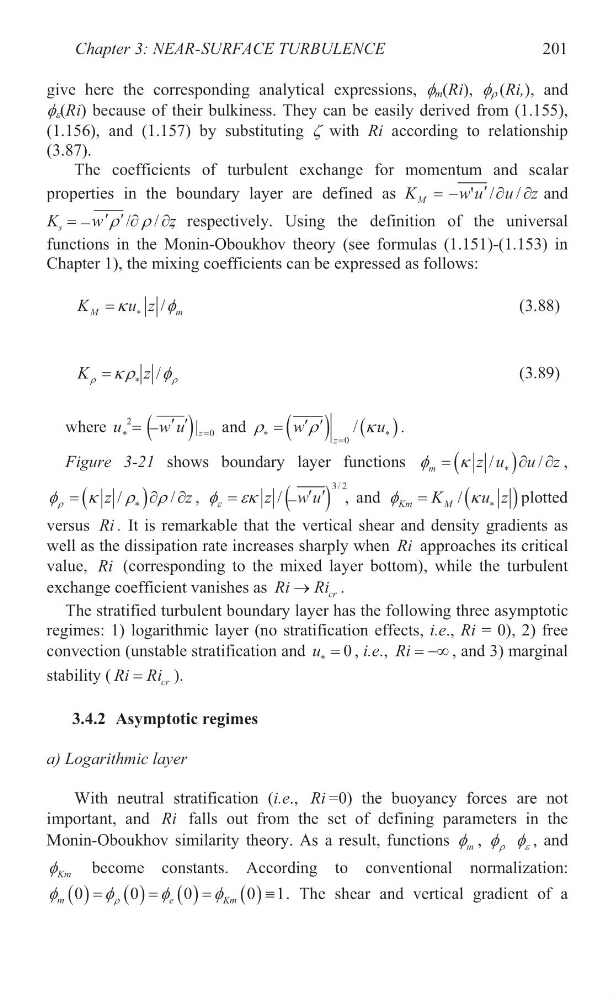
Figure 3-21 shows boundary layer functions
/
/
m
z u u z
I
N
w w ,
/
/
z
z
U
I
N
U U
w w ,
3/ 2
u
H
I H
c c , and
/
Km
M
K
u z
I
N
plotted
versus Ri . It is remarkable that the vertical shear and density gradients as
well as the dissipation rate increases sharply when Ri approaches its critical
value, Ri (corresponding to the mixed layer bottom), while the turbulent
exchange coefficient vanishes as
cr
Ri Ri
o
.
The stratified turbulent boundary layer has the following three asymptotic
regimes: 1) logarithmic layer (no stratification effects, i.e., Ri = 0), 2) free
convection (unstable stratification and
0
u
, i.e., Ri f , and 3) marginal
stability (
cr
Ri Ri ).
3.4.2 Asymptotic regimes
a) Logarithmic layer
With neutral stratification (i.e., Ri =0) the buoyancy forces are not
important, and Ri falls out from the set of defining parameters in the
Monin-Oboukhov similarity theory. As a result, functions m
I , U
I H
I , and
Km
I
become constants. According to conventional normalization:
0
0
0
0 1
m
e
K m
U
I
I
I
I
{ . The shear and vertical gradient of a
Chapter 3: NEAR-SURFACE TURBULENCE
201
N z w
/
I H (Ri) because of their bulkiness. They can be easily derived from (1.155),
(1.156), and (1.157) by substituting ] with Ri according to relationship
(3.87).
The coefficients of turbulent exchange for momentum and scalar
properties in the boundary layer are defined as
' / /
M
K
wu u z
c w w and
/ /
s
K
w
z
U U
c c w w, respectively. Using the definition of the universal
functions in the Monin-Oboukhov theory (see formulas (1.151)-(1.153) in
Chapter 1), the mixing coefficients can be expressed as follows:
/
M
m
K
u z
N
I
(3.88)
/
K
z
U
U
N U
I
(3.89)
where
2
0
| z
u
w u
c c
and
0
/
z
w
u
U
U
N
c c
.
Figure 3-21 shows boundary layer functions
/
/
m
z u u z
I
N
w w ,
/
/
z
z
U
I
N
U U
w w ,
3/ 2
u
H
I H
c c , and
/
Km
M
K
u z
I
N
plotted
versus Ri . It is remarkable that the vertical shear and density gradients as
well as the dissipation rate increases sharply when Ri approaches its critical
value, Ri (corresponding to the mixed layer bottom), while the turbulent
exchange coefficient vanishes as
cr
Ri Ri
o
.
The stratified turbulent boundary layer has the following three asymptotic
regimes: 1) logarithmic layer (no stratification effects, i.e., Ri = 0), 2) free
convection (unstable stratification and
0
u
, i.e., Ri f , and 3) marginal
stability (
cr
Ri Ri ).
3.4.2 Asymptotic regimes
a) Logarithmic layer
With neutral stratification (i.e., Ri =0) the buoyancy forces are not
important, and Ri falls out from the set of defining parameters in the
Monin-Oboukhov similarity theory. As a result, functions m
I , U
I H
I , and
Km
I
become constants. According to conventional normalization:
0
0
0
0 1
m
e
K m
U
I
I
I
I
{ . The shear and vertical gradient of a
Chapter 3: NEAR-SURFACE TURBULENCE
201
N z w
/