

Toward Marine Environrnental Predictions in the Mediterranean Sea Coastal Areas
357
~-----------------------~
1- '
I " ...
*
. ,
0..
I
1 ••
I
1 • •
I
1"
I
,
•
•
•
TRiESU I
,
"
,
,
I
,
"
,
,
,
,
,
,
,
, ,
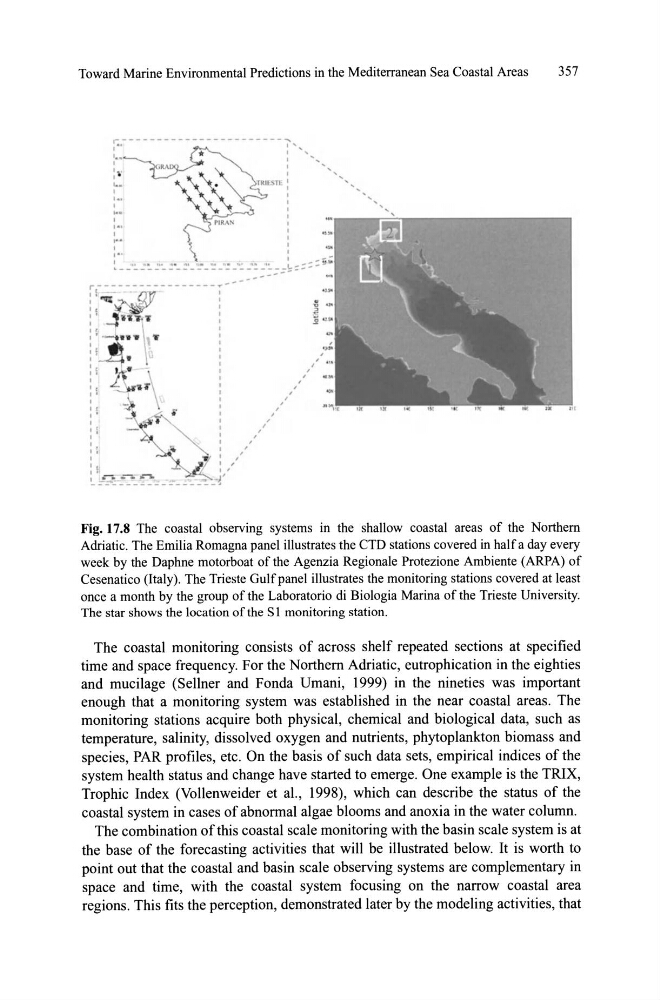
Fig. 17.8 The coastal observing systems in the shallow coastal areas of the Northem
Adriatic. The Emilia Romagna panel illustrates the CTD stations covered in half a day every
week by the Daphne motorboat of the Agenzia Regionale Protezione Ambiente (ARPA) of
Cesenatico (ltaly). The Trieste Gulfpanel illustrates the monitoring stations covered at least
once a month by the group of the Laboratorio di Biologia Marina of the Trieste University.
The star shows the location of the SI monitoring station.
The coastal monitoring consists of across shelf repeated sections at specified
time and space frequency. For the Northem Adriatic, eutrophication in the eighties
and mucilage (Sellner and Fonda Umani, 1999) in the nineties was important
enough that a monitoring system was established in the near coastal areas. The
monitoring stations acquire both physical, chemical and biological data, such as
temperature, salinity, dissolved oxygen and nutrients, phytoplankton biomass and
species, PAR profiles, etc. On the basis of such data sets, empirical indices of the
system health status and change have started to emerge. One example is the TRIX,
Trophic Index (Vollenweider et al., 1998), which can describe the status of the
coastal system in cases of abnormal algae blooms and anoxia in the water column.
The combination ofthis coastal scale monitoring with the basin scale system is at
the base of the forecasting activities that wiU be illustrated below. It is worth to
point out that the coastal and basin scale observing systems are complementary in
space and time, with the coastal system focusing on the narrow coastal area
regions. This fits the perception, demonstrated later by the mode ling activities, that
357
~-----------------------~
1- '
I " ...
*
. ,
0..
I
1 ••
I
1 • •
I
1"
I
,
•
•
•
TRiESU I
,
"
,
,
I
,
"
,
,
,
,
,
,
,
, ,
Fig. 17.8 The coastal observing systems in the shallow coastal areas of the Northem
Adriatic. The Emilia Romagna panel illustrates the CTD stations covered in half a day every
week by the Daphne motorboat of the Agenzia Regionale Protezione Ambiente (ARPA) of
Cesenatico (ltaly). The Trieste Gulfpanel illustrates the monitoring stations covered at least
once a month by the group of the Laboratorio di Biologia Marina of the Trieste University.
The star shows the location of the SI monitoring station.
The coastal monitoring consists of across shelf repeated sections at specified
time and space frequency. For the Northem Adriatic, eutrophication in the eighties
and mucilage (Sellner and Fonda Umani, 1999) in the nineties was important
enough that a monitoring system was established in the near coastal areas. The
monitoring stations acquire both physical, chemical and biological data, such as
temperature, salinity, dissolved oxygen and nutrients, phytoplankton biomass and
species, PAR profiles, etc. On the basis of such data sets, empirical indices of the
system health status and change have started to emerge. One example is the TRIX,
Trophic Index (Vollenweider et al., 1998), which can describe the status of the
coastal system in cases of abnormal algae blooms and anoxia in the water column.
The combination ofthis coastal scale monitoring with the basin scale system is at
the base of the forecasting activities that wiU be illustrated below. It is worth to
point out that the coastal and basin scale observing systems are complementary in
space and time, with the coastal system focusing on the narrow coastal area
regions. This fits the perception, demonstrated later by the mode ling activities, that