

334 Martin Fischer
relative to observations. A simple correction could be, to compare the observed
SST variability in NINO-3 with predicted SST anomalies averaged over the central
equatorial Pacific.
The coupled forecast system at the ECMWF encounters a very strong drift of up
to 1 aC in terms of NINO-3 SST within the first three months. However, this drift
seems to be systematic, since skilIful forecasts are obtained with this system if the
mean forecast drift, as determined from a large number of forecast experiments, is
subtracted.
A more sophisticated correction method is the canonic al correlation analysis.
This method looks for pattems in different data sets, here the forecasts and the
observations, that show maximum correlation to each other in time. Then the forecast skill can be computed as the correlation between the time series ofthe pattems.
The singular value decomposition is another possible method. This maximizes the
covariance instead of the correlation. With a multidimensional regression analysis,
similar to the approach used for the statistical atmosphere model in the hybrid coupled model, predicted SST pattems can be projected onto observed SST pattems.
Thus, more than just one pair of corresponding pattems can be taken into account.
AII these methods do not give further scientific insight into the problem ofENSO
prediction but they may improve the quality of the forecasts substantialIy, and
make it much easier for customers who are not familiar with the scientific issues of
ENSO, to understand and use these forecasts.
-Im
\ t=T
Re
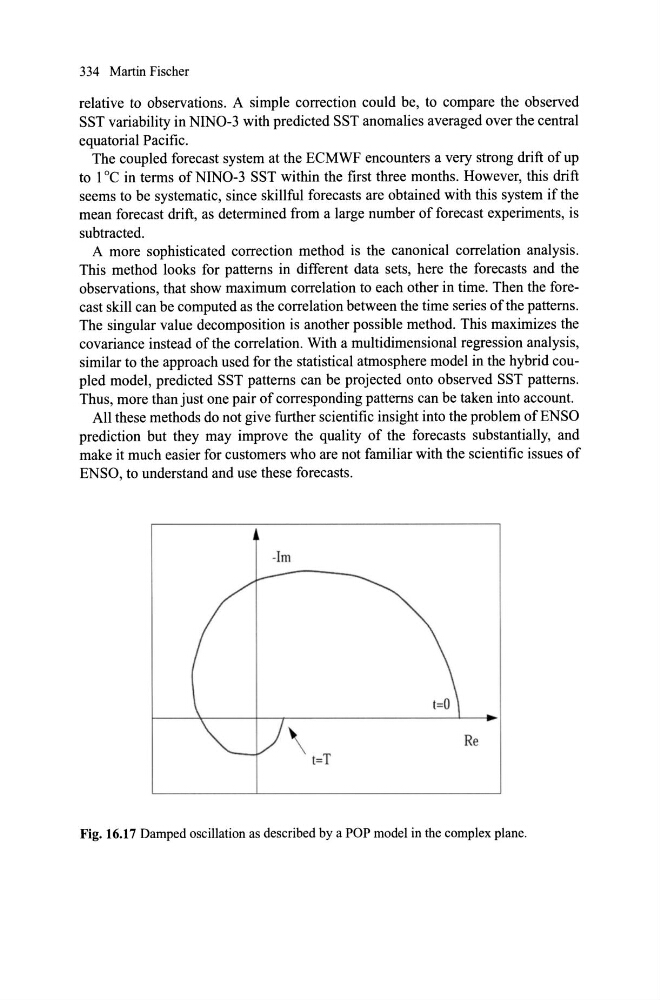
Fig. 16.17 Damped oscillation as described by a POP model in the complex plane.
relative to observations. A simple correction could be, to compare the observed
SST variability in NINO-3 with predicted SST anomalies averaged over the central
equatorial Pacific.
The coupled forecast system at the ECMWF encounters a very strong drift of up
to 1 aC in terms of NINO-3 SST within the first three months. However, this drift
seems to be systematic, since skilIful forecasts are obtained with this system if the
mean forecast drift, as determined from a large number of forecast experiments, is
subtracted.
A more sophisticated correction method is the canonic al correlation analysis.
This method looks for pattems in different data sets, here the forecasts and the
observations, that show maximum correlation to each other in time. Then the forecast skill can be computed as the correlation between the time series ofthe pattems.
The singular value decomposition is another possible method. This maximizes the
covariance instead of the correlation. With a multidimensional regression analysis,
similar to the approach used for the statistical atmosphere model in the hybrid coupled model, predicted SST pattems can be projected onto observed SST pattems.
Thus, more than just one pair of corresponding pattems can be taken into account.
AII these methods do not give further scientific insight into the problem ofENSO
prediction but they may improve the quality of the forecasts substantialIy, and
make it much easier for customers who are not familiar with the scientific issues of
ENSO, to understand and use these forecasts.
-Im
\ t=T
Re
Fig. 16.17 Damped oscillation as described by a POP model in the complex plane.