

Predictions in the North Sea
20
10 4
10
~,-..
5
1.5
--. 10- 2
::.::
1~L---~--~---L--~--~
64
192
320
D/m
10-'
.("'
--. 10- 2
::.::
45°
22.5°
5°
192
D/m
265
320
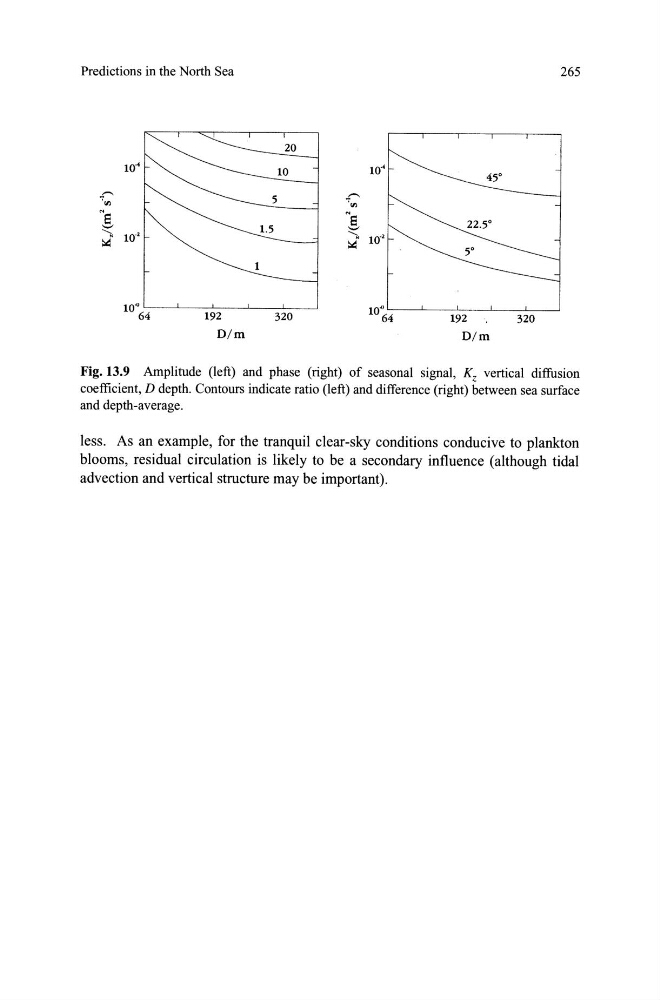
Fig. 13.9 Amplitude (left) and phase (right) of seasonal signal, Kz vertical diffusion
coefficient, D depth. Contours indicate ratio (left) and difference (right) between sea surface
and depth-average.
less. As an example, for the tranquil clear-sky conditions conducive to plankton
blooms, residual circulation is likely to be a secondary influence (although tidal
advection and vertical structure may be important).
20
10 4
10
~,-..
5
1.5
--. 10- 2
::.::
1~L---~--~---L--~--~
64
192
320
D/m
10-'
.("'
--. 10- 2
::.::
45°
22.5°
5°
192
D/m
265
320
Fig. 13.9 Amplitude (left) and phase (right) of seasonal signal, Kz vertical diffusion
coefficient, D depth. Contours indicate ratio (left) and difference (right) between sea surface
and depth-average.
less. As an example, for the tranquil clear-sky conditions conducive to plankton
blooms, residual circulation is likely to be a secondary influence (although tidal
advection and vertical structure may be important).