

74
Homogeneous Models of the Ocean Circulation
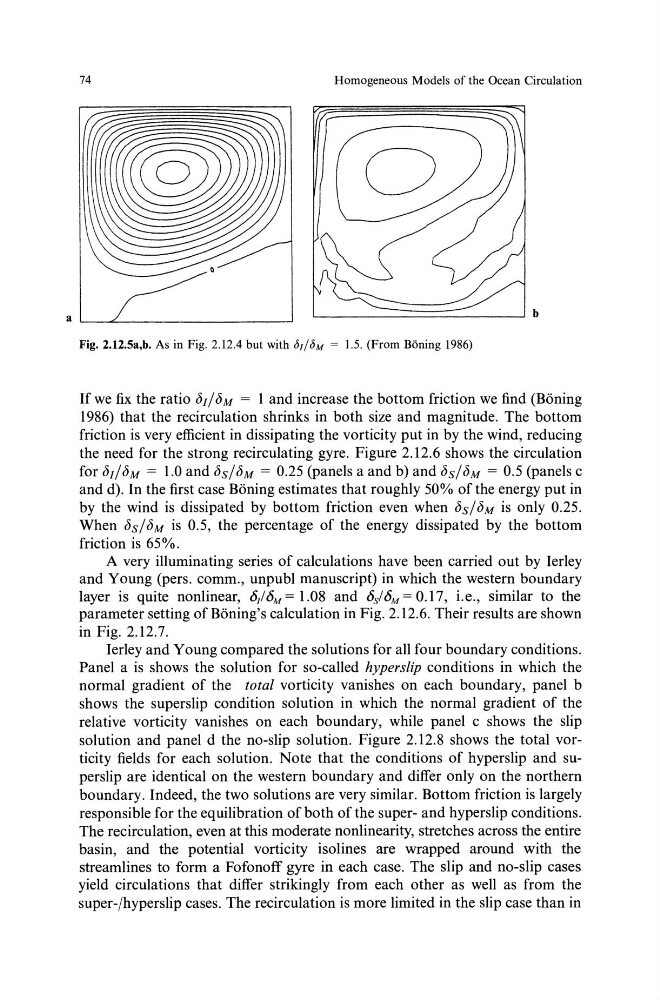
Fig. 2.12.5a,b. As in Fig. 2.12.4 but with lh/{JM = 1.5. (From Boning 1986)
If we fix the ratio th / (J M = 1 and increase the bottom friction we find (Boning
1986) that the recirculation shrinks in both size and magnitude. The bottom
friction is very efficient in dissipating the vorticity put in by the wind, reducing
the need for the strong recirculating gyre. Figure 2.12.6 shows the circulation
for {}J/{JM = 1.0 and bs/bM = 0.25 (panels a and b) and bs/bM = 0.5 (panels c
and d). In the first case Boning estimates that roughly 50% of the energy put in
by the wind is dissipated by bottom friction even when (J 8 j(JM is only 0.25.
When (J8 j(JM is 0.5, the percentage of the energy dissipated by the bottom
friction is 65%.
A very illuminating series of calculations have been carried out by Ierley
and Young (pers. comm., unpubl manuscript) in which the western boundary
layer is quite nonlinear, 6/6M= 1.08 and 68/6M= 0.17, i.e., similar to the
parameter setting of Boning's calculation in Fig. 2.12.6. Their results are shown
in Fig. 2.12.7.
Ierley andY oung compared the solutions for all four boundary conditions.
Panel a is shows the solution for so-called hyperslip conditions in which the
normal gradient of the total vorticity vanishes on each boundary, panel b
shows the superslip condition solution in which the normal gradient of the
relative vorticity vanishes on each boundary, while panel c shows the slip
solution and panel d the no-slip solution. Figure 2.12.8 shows the total vorticity fields for each solution. Note that the conditions of hyperslip and superslip are identical on the western boundary and differ only on the northern
boundary. Indeed, the two solutions are very similar. Bottom friction is largely
responsible for the equilibration of both of the super- and hyperslip conditions.
The recirculation, even at this moderate nonlinearity, stretches across the entire
basin, and the potential vorticity isolines are wrapped around with the
streamlines to form a Fofonoff gyre in each case. The slip and no-slip cases
yield circulations that differ strikingly from each other as well as from the
super-/hyperslip cases. The recirculation is more limited in the slip case than in
Homogeneous Models of the Ocean Circulation
Fig. 2.12.5a,b. As in Fig. 2.12.4 but with lh/{JM = 1.5. (From Boning 1986)
If we fix the ratio th / (J M = 1 and increase the bottom friction we find (Boning
1986) that the recirculation shrinks in both size and magnitude. The bottom
friction is very efficient in dissipating the vorticity put in by the wind, reducing
the need for the strong recirculating gyre. Figure 2.12.6 shows the circulation
for {}J/{JM = 1.0 and bs/bM = 0.25 (panels a and b) and bs/bM = 0.5 (panels c
and d). In the first case Boning estimates that roughly 50% of the energy put in
by the wind is dissipated by bottom friction even when (J 8 j(JM is only 0.25.
When (J8 j(JM is 0.5, the percentage of the energy dissipated by the bottom
friction is 65%.
A very illuminating series of calculations have been carried out by Ierley
and Young (pers. comm., unpubl manuscript) in which the western boundary
layer is quite nonlinear, 6/6M= 1.08 and 68/6M= 0.17, i.e., similar to the
parameter setting of Boning's calculation in Fig. 2.12.6. Their results are shown
in Fig. 2.12.7.
Ierley andY oung compared the solutions for all four boundary conditions.
Panel a is shows the solution for so-called hyperslip conditions in which the
normal gradient of the total vorticity vanishes on each boundary, panel b
shows the superslip condition solution in which the normal gradient of the
relative vorticity vanishes on each boundary, while panel c shows the slip
solution and panel d the no-slip solution. Figure 2.12.8 shows the total vorticity fields for each solution. Note that the conditions of hyperslip and superslip are identical on the western boundary and differ only on the northern
boundary. Indeed, the two solutions are very similar. Bottom friction is largely
responsible for the equilibration of both of the super- and hyperslip conditions.
The recirculation, even at this moderate nonlinearity, stretches across the entire
basin, and the potential vorticity isolines are wrapped around with the
streamlines to form a Fofonoff gyre in each case. The slip and no-slip cases
yield circulations that differ strikingly from each other as well as from the
super-/hyperslip cases. The recirculation is more limited in the slip case than in