

54
0
~--------.. ----------------,
~ ci +----=====t:="'2===1=1======1
0
~
I
0
Ill
ci
71--------+~------r-------~
-0.5
0.0
0.5
1.0
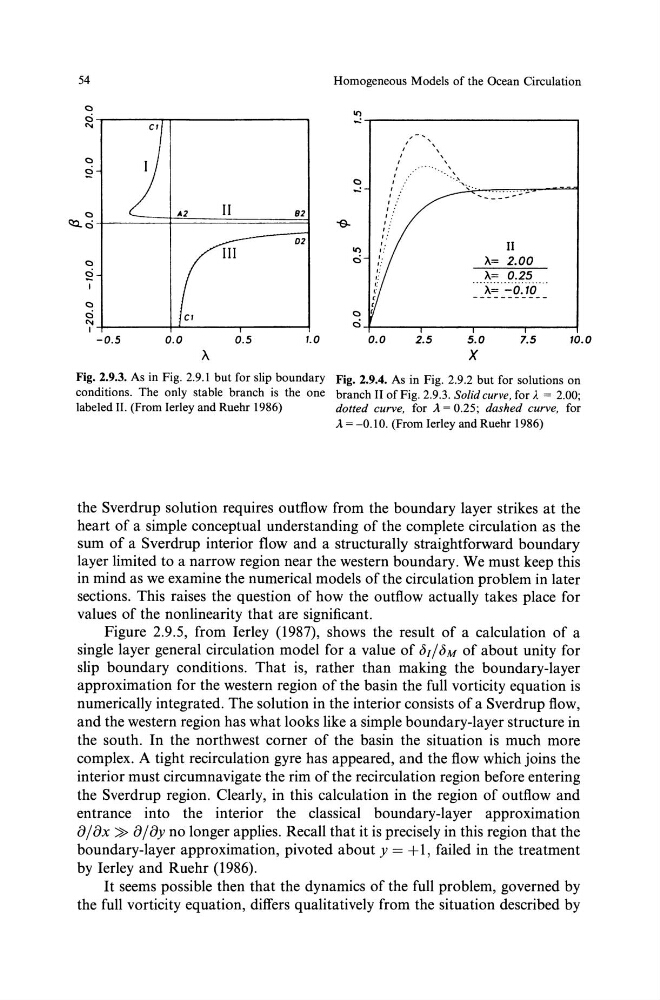
Fig. 2.9.3. As in Fig. 2.9.1 but for slip boundary
conditions. The only stable branch is the one
labeled II. (From Ierley and Ruehr 1986)
Homogeneous Models of the Ocean Circulation
~--------------------------,
I
I
... - .....
'
'
I
'
··. '
-. __ ,
--~\ ..
..:·- ... _ -_-:._·~·: •. ::..·II
A.= 2.00
A.= 0.25
A.= -0.10
0
0~-----,-----,r-----~----~
0.0
2.5
5.0
X
7.5
10.0
Fig. 2.9.4. As in Fig. 2.9.2 but for solutions on
branch II of Fig. 2.9.3. Solid curve, for}. = 2.00;
dotted curve, for A= 0.25; dashed curve, for
A= -0.1 0. (From Ierley and Ruehr 1986)
the Sverdrup solution requires outflow from the boundary layer strikes at the
heart of a simple conceptual understanding of the complete circulation as the
sum of a Sverdrup interior flow and a structurally straightforward boundary
layer limited to a narrow region near the western boundary. We must keep this
in mind as we examine the numerical models of the circulation problem in later
sections. This raises the question of how the outflow actually takes place for
values of the nonlinearity that are significant.
Figure 2.9.5, from Ierley (1987), shows the result of a calculation of a
single layer general circulation model for a value of lhi(JM of about unity for
slip boundary conditions. That is, rather than making the boundary-layer
approximation for the western region of the basin the full vorticity equation is
numerically integrated. The solution in the interior consists of a Sverdrup flow,
and the western region has what looks like a simple boundary-layer structure in
the south. In the northwest corner of the basin the situation is much more
complex. A tight recirculation gyre has appeared, and the flow which joins the
interior must circumnavigate the rim of the recirculation region before entering
the Sverdrup region. Clearly, in this calculation in the region of outflow and
entrance into the interior the classical boundary-layer approximation
a I ax » a I ay no longer applies. Recall that it is precisely in this region that the
boundary-layer approximation, pivoted about y = + 1, failed in the treatment
by Ierley and Ruehr (1986).
It seems possible then that the dynamics of the full problem, governed by
the full vorticity equation, differs qualitatively from the situation described by
0
~--------.. ----------------,
~ ci +----=====t:="'2===1=1======1
0
~
I
0
Ill
ci
71--------+~------r-------~
-0.5
0.0
0.5
1.0
Fig. 2.9.3. As in Fig. 2.9.1 but for slip boundary
conditions. The only stable branch is the one
labeled II. (From Ierley and Ruehr 1986)
Homogeneous Models of the Ocean Circulation
~--------------------------,
I
I
... - .....
'
'
I
'
··. '
-. __ ,
--~\ ..
..:·- ... _ -_-:._·~·: •. ::..·II
A.= 2.00
A.= 0.25
A.= -0.10
0
0~-----,-----,r-----~----~
0.0
2.5
5.0
X
7.5
10.0
Fig. 2.9.4. As in Fig. 2.9.2 but for solutions on
branch II of Fig. 2.9.3. Solid curve, for}. = 2.00;
dotted curve, for A= 0.25; dashed curve, for
A= -0.1 0. (From Ierley and Ruehr 1986)
the Sverdrup solution requires outflow from the boundary layer strikes at the
heart of a simple conceptual understanding of the complete circulation as the
sum of a Sverdrup interior flow and a structurally straightforward boundary
layer limited to a narrow region near the western boundary. We must keep this
in mind as we examine the numerical models of the circulation problem in later
sections. This raises the question of how the outflow actually takes place for
values of the nonlinearity that are significant.
Figure 2.9.5, from Ierley (1987), shows the result of a calculation of a
single layer general circulation model for a value of lhi(JM of about unity for
slip boundary conditions. That is, rather than making the boundary-layer
approximation for the western region of the basin the full vorticity equation is
numerically integrated. The solution in the interior consists of a Sverdrup flow,
and the western region has what looks like a simple boundary-layer structure in
the south. In the northwest corner of the basin the situation is much more
complex. A tight recirculation gyre has appeared, and the flow which joins the
interior must circumnavigate the rim of the recirculation region before entering
the Sverdrup region. Clearly, in this calculation in the region of outflow and
entrance into the interior the classical boundary-layer approximation
a I ax » a I ay no longer applies. Recall that it is precisely in this region that the
boundary-layer approximation, pivoted about y = + 1, failed in the treatment
by Ierley and Ruehr (1986).
It seems possible then that the dynamics of the full problem, governed by
the full vorticity equation, differs qualitatively from the situation described by