

46
- - - u
u~
Homogeneous Models of the Ocean Circulation
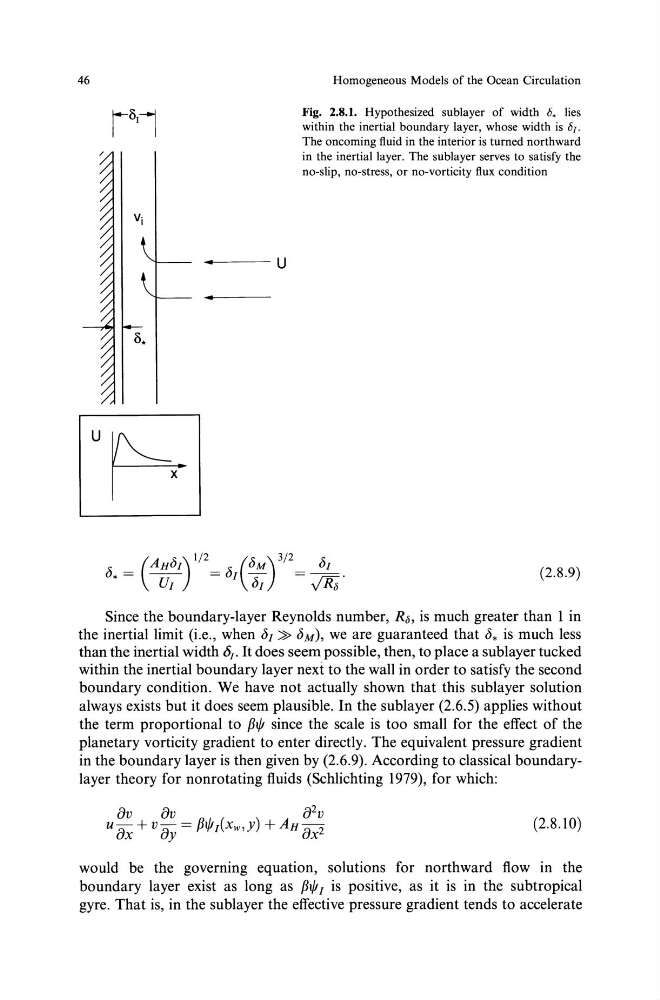
Fig. 2.8.1. Hypothesized sublayer of width 8. lies
within the inertial boundary layer, whose width is 81 .
The oncoming fluid in the interior is turned northward
in the inertial layer. The sublayer serves to satisfy the
no-slip, no-stress, or no-vorticity flux condition
(2.8.9)
Since the boundary-layer Reynolds number, R0, is much greater than 1 in
the inertial limit (i.e., when (J1 » (JM), we are guaranteed that (J* is much less
than the inertial width 6 1 . It does seem possible, then, to place a sub layer tucked
within the inertial boundary layer next to the wall in order to satisfy the second
boundary condition. We have not actually shown that this sublayer solution
always exists but it does seem plausible. In the sublayer (2.6.5) applies without
the term proportional to Pt/1 since the scale is too small for the effect of the
planetary vorticity gradient to enter directly. The equivalent pressure gradient
in the boundary layer is then given by (2.6.9). According to classical boundarylayer theory for nonrotating fluids (Schlichting 1979), for which:
(2.8.10)
would be the governing equation, solutions for northward flow in the
boundary layer exist as long as Pt/1 1 is positive, as it is in the subtropical
gyre. That is, in the sublayer the effective pressure gradient tends to accelerate
- - - u
u~
Homogeneous Models of the Ocean Circulation
Fig. 2.8.1. Hypothesized sublayer of width 8. lies
within the inertial boundary layer, whose width is 81 .
The oncoming fluid in the interior is turned northward
in the inertial layer. The sublayer serves to satisfy the
no-slip, no-stress, or no-vorticity flux condition
(2.8.9)
Since the boundary-layer Reynolds number, R0, is much greater than 1 in
the inertial limit (i.e., when (J1 » (JM), we are guaranteed that (J* is much less
than the inertial width 6 1 . It does seem possible, then, to place a sub layer tucked
within the inertial boundary layer next to the wall in order to satisfy the second
boundary condition. We have not actually shown that this sublayer solution
always exists but it does seem plausible. In the sublayer (2.6.5) applies without
the term proportional to Pt/1 since the scale is too small for the effect of the
planetary vorticity gradient to enter directly. The equivalent pressure gradient
in the boundary layer is then given by (2.6.9). According to classical boundarylayer theory for nonrotating fluids (Schlichting 1979), for which:
(2.8.10)
would be the governing equation, solutions for northward flow in the
boundary layer exist as long as Pt/1 1 is positive, as it is in the subtropical
gyre. That is, in the sublayer the effective pressure gradient tends to accelerate