

The Stommel, Arons, and Faller Experiment
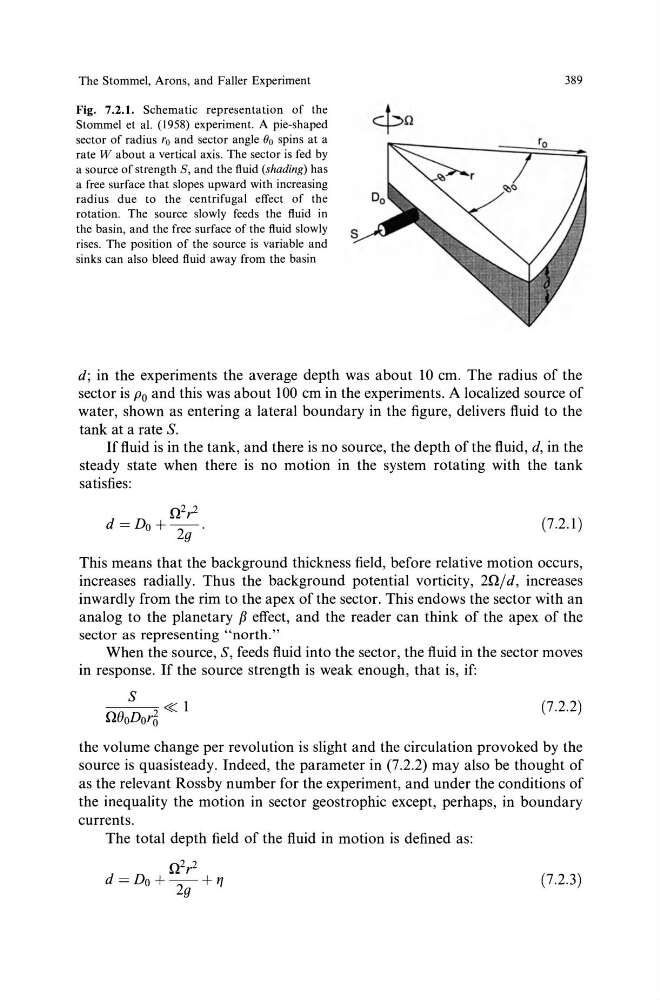
Fig. 7.2.1. Schematic representation of the
Stommel eta!. (1958) experiment. A pie-shaped
sector of radius r0 and sector angle Bo spins at a
rate W about a vertical axis. The sector is fed by
a source of strength S, and the fluid (shading) has
a free surface that slopes upward with increasing
radius due to the centrifugal effect of the
rotation. The source slowly feeds the fluid in
the basin, and the free surface of the fluid slowly
rises. The position of the source is variable and
sinks can also bleed fluid away from the basin
389
d; in the experiments the average depth was about 10 em. The radius of the
sector is p 0 and this was about I 00 em in the experiments. A localized source of
water, shown as entering a lateral boundary in the figure , delivers fluid to the
tank at a rate S.
If fluid is in the tank, and there is no source, the depth of the fluid, d, in the
steady state when there is no motion in the system rotating with the tank
satisfies:
(7.2.1)
This means that the background thickness field, before relative motion occurs,
increases radially. Thus the background potential vorticity, 20./d, increases
inwardly from the rim to the apex of the sector. This endows the sector with an
analog to the planetary {3 effect, and the reader can think of the apex of the
sector as representing "north."
When the source, S, feeds fluid into the sector, the fluid in the sector moves
in response. If the source strength is weak enough, that is, if:
s
-=-=------,..2 « I
0.8oDor 0
(7.2.2)
the volume change per revolution is slight and the circulation provoked by the
source is quasisteady. Indeed, the parameter in (7.2.2) may also be thought of
as the relevant Rossby number for the experiment, and under the conditions of
the inequality the motion in sector geostrophic except, perhaps, in boundary
currents.
The total depth field of the fluid in motion is defined as:
0.2r2
d=Do+~+IJ
(7.2.3)
Fig. 7.2.1. Schematic representation of the
Stommel eta!. (1958) experiment. A pie-shaped
sector of radius r0 and sector angle Bo spins at a
rate W about a vertical axis. The sector is fed by
a source of strength S, and the fluid (shading) has
a free surface that slopes upward with increasing
radius due to the centrifugal effect of the
rotation. The source slowly feeds the fluid in
the basin, and the free surface of the fluid slowly
rises. The position of the source is variable and
sinks can also bleed fluid away from the basin
389
d; in the experiments the average depth was about 10 em. The radius of the
sector is p 0 and this was about I 00 em in the experiments. A localized source of
water, shown as entering a lateral boundary in the figure , delivers fluid to the
tank at a rate S.
If fluid is in the tank, and there is no source, the depth of the fluid, d, in the
steady state when there is no motion in the system rotating with the tank
satisfies:
(7.2.1)
This means that the background thickness field, before relative motion occurs,
increases radially. Thus the background potential vorticity, 20./d, increases
inwardly from the rim to the apex of the sector. This endows the sector with an
analog to the planetary {3 effect, and the reader can think of the apex of the
sector as representing "north."
When the source, S, feeds fluid into the sector, the fluid in the sector moves
in response. If the source strength is weak enough, that is, if:
s
-=-=------,..2 « I
0.8oDor 0
(7.2.2)
the volume change per revolution is slight and the circulation provoked by the
source is quasisteady. Indeed, the parameter in (7.2.2) may also be thought of
as the relevant Rossby number for the experiment, and under the conditions of
the inequality the motion in sector geostrophic except, perhaps, in boundary
currents.
The total depth field of the fluid in motion is defined as:
0.2r2
d=Do+~+IJ
(7.2.3)