

262
Dittert et al.
Species
SCHon PARKER.ad BERGER MALMGREN BERGER TBUNELLand BOLTOVSKOY
(1935)
BERGER (1971)
(1979)
(1983)
(1970)
BONJO (1981) and TOTAH (1991)
Way ofinvestigatioa:
Sediment ranking
Taut wire
Mooring
Laboratory
buoy
Hastigerina
pe/ogica
GlobigeriJIII.
/mlloides
3\
21
63
36
17
falconensis
49
43
rllrborokllita
humilis
100
89
100
qu;nqueloha
29
25
\3
41
GloooturborotiJlita rubeseem
II
II
18
tentlla
14
18
27
Globigerillella
adams;
20
calida
34
46
33
digitata
63
61
II
siphonifera
17
36
14
22
45
Orb"/ina
,miver.va
50
54
39
39
Glob;genn;tIJ
glutinata
43
50
50
45
18
uvu/o
40
25
Candeina "i/ida
51
50
28
Temlitella;ota
46
54
Globigerinoilies
conglobalus
26
32
32
61
64
nliJer
14
44
mcculifer
25
23
29
23
56
55
(trilobus)
27
Sphaeroidinella s Jehb'Cell
94
75
91
100
82
Globoq.adri ..
conglomerala
66
64
73
(Nerr) clutertrei
83
86
73
67
36
(Neo-) pachydenna
86
100
37 (d",.) I
77
100 (sin.)
Globorotnlia
c:rassciformis
77
82
86
94
hirsuta
69
55
ill/lala
74
96
88
64
72
menardH
75
68
50
.n;itu/a
57
57
tnmcatulinoide.s
71
93
75
59
78
hmtida
100
97
79
95
89
91
Berggrcmia
pumilia
89
GlohurtJlaloitks
hexagonu'
60
P"l/enia/ina
ohliquJ!oculala
91
71
82
83
100
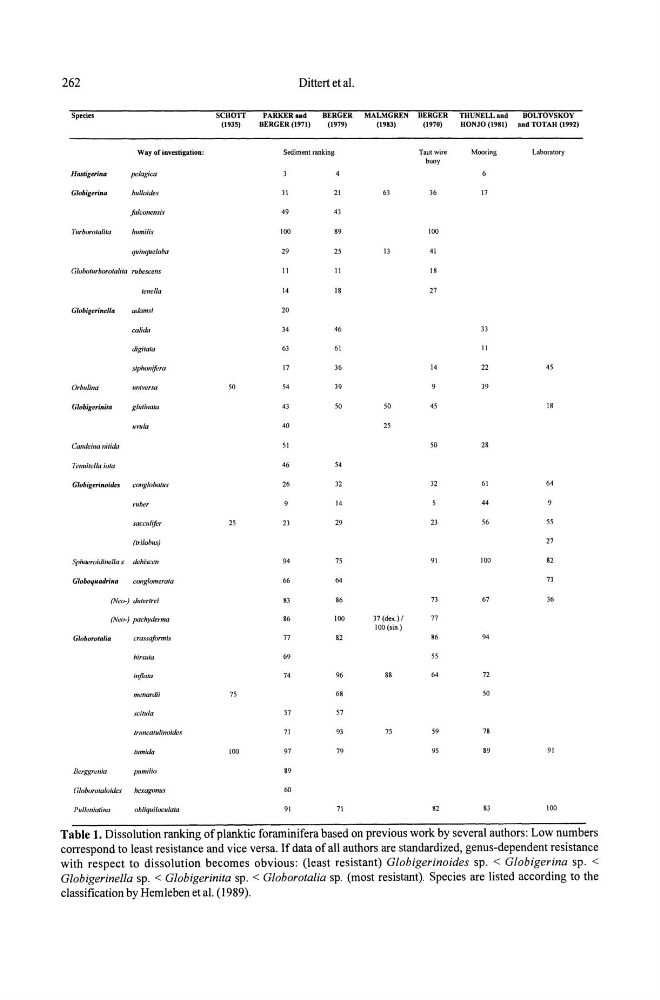
Table 1. Dissolution ranking of planktic foraminifera based on previous work by several authors: Low numbers
correspond to least resistance and vice versa. If data of all authors are standardized, genus-dependent resistance
with respect to dissolution becomes obvious: (least resistant) Globigerinoides sp. < Globigerina sp. <
Globigerinella sp. < Globigerinita sp. < Globorotalia sp. (most resistant). Species are listed according to the
classification by Hemleben et al. (1989).
Dittert et al.
Species
SCHon PARKER.ad BERGER MALMGREN BERGER TBUNELLand BOLTOVSKOY
(1935)
BERGER (1971)
(1979)
(1983)
(1970)
BONJO (1981) and TOTAH (1991)
Way ofinvestigatioa:
Sediment ranking
Taut wire
Mooring
Laboratory
buoy
Hastigerina
pe/ogica
GlobigeriJIII.
/mlloides
3\
21
63
36
17
falconensis
49
43
rllrborokllita
humilis
100
89
100
qu;nqueloha
29
25
\3
41
GloooturborotiJlita rubeseem
II
II
18
tentlla
14
18
27
Globigerillella
adams;
20
calida
34
46
33
digitata
63
61
II
siphonifera
17
36
14
22
45
Orb"/ina
,miver.va
50
54
39
39
Glob;genn;tIJ
glutinata
43
50
50
45
18
uvu/o
40
25
Candeina "i/ida
51
50
28
Temlitella;ota
46
54
Globigerinoilies
conglobalus
26
32
32
61
64
nliJer
14
44
mcculifer
25
23
29
23
56
55
(trilobus)
27
Sphaeroidinella s Jehb'Cell
94
75
91
100
82
Globoq.adri ..
conglomerala
66
64
73
(Nerr) clutertrei
83
86
73
67
36
(Neo-) pachydenna
86
100
37 (d",.) I
77
100 (sin.)
Globorotnlia
c:rassciformis
77
82
86
94
hirsuta
69
55
ill/lala
74
96
88
64
72
menardH
75
68
50
.n;itu/a
57
57
tnmcatulinoide.s
71
93
75
59
78
hmtida
100
97
79
95
89
91
Berggrcmia
pumilia
89
GlohurtJlaloitks
hexagonu'
60
P"l/enia/ina
ohliquJ!oculala
91
71
82
83
100
Table 1. Dissolution ranking of planktic foraminifera based on previous work by several authors: Low numbers
correspond to least resistance and vice versa. If data of all authors are standardized, genus-dependent resistance
with respect to dissolution becomes obvious: (least resistant) Globigerinoides sp. < Globigerina sp. <
Globigerinella sp. < Globigerinita sp. < Globorotalia sp. (most resistant). Species are listed according to the
classification by Hemleben et al. (1989).